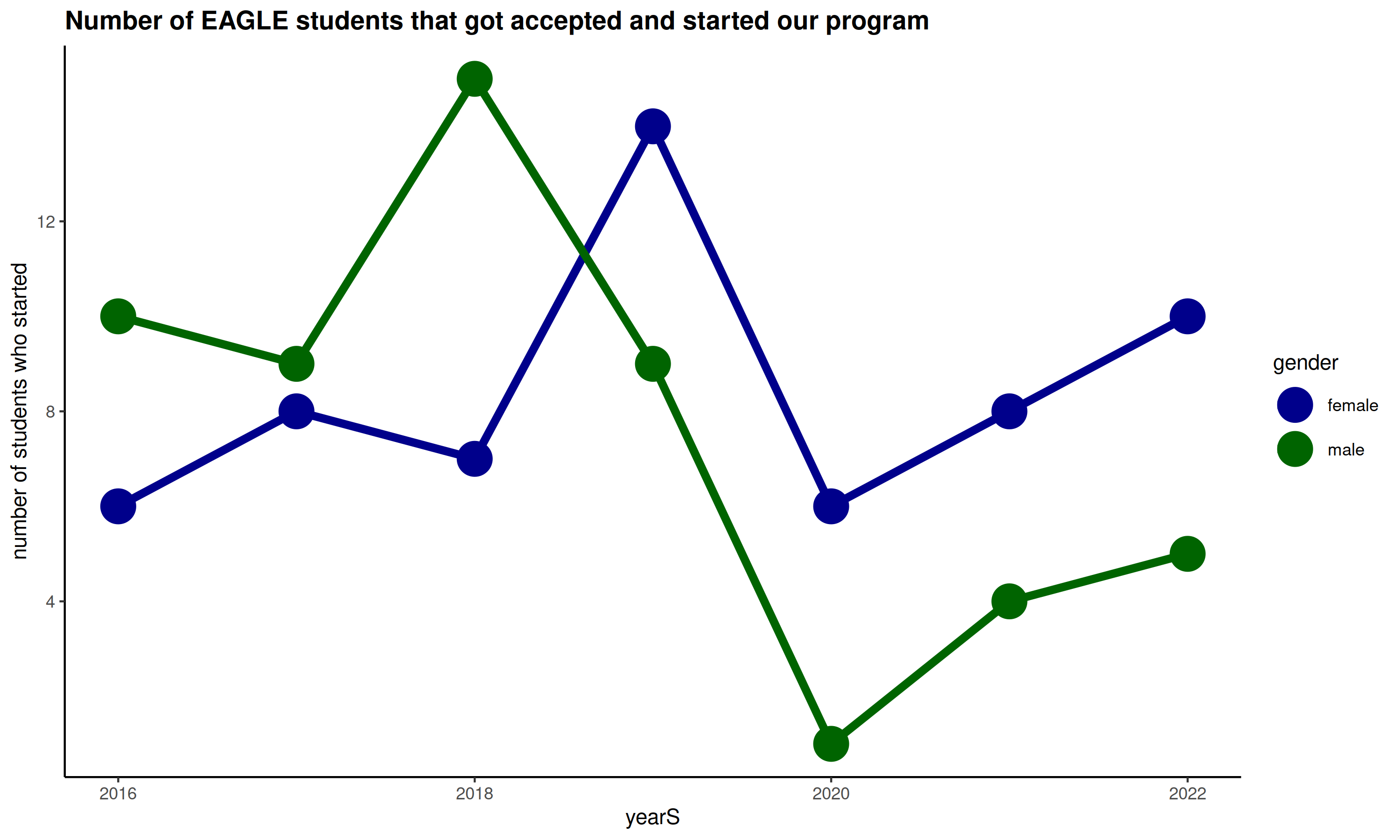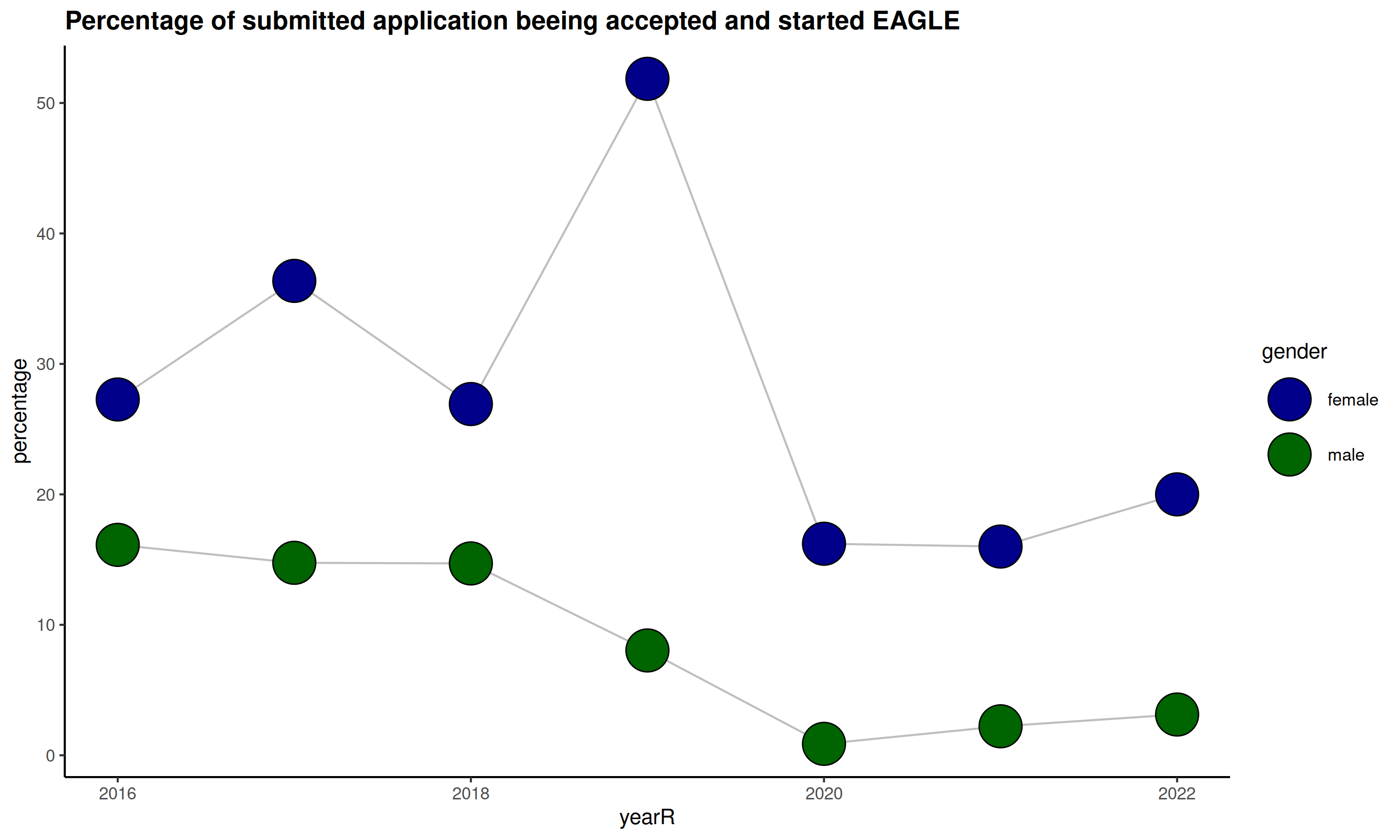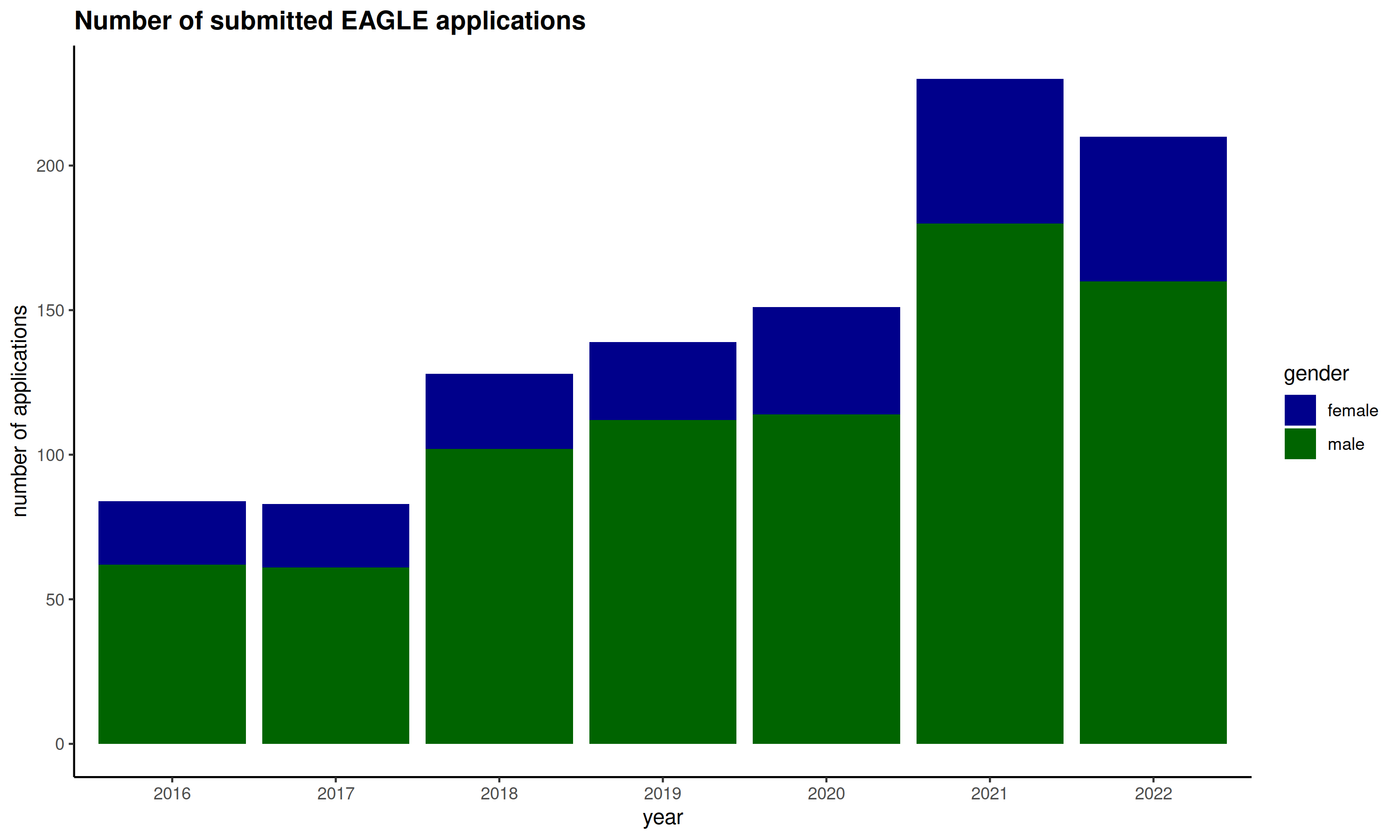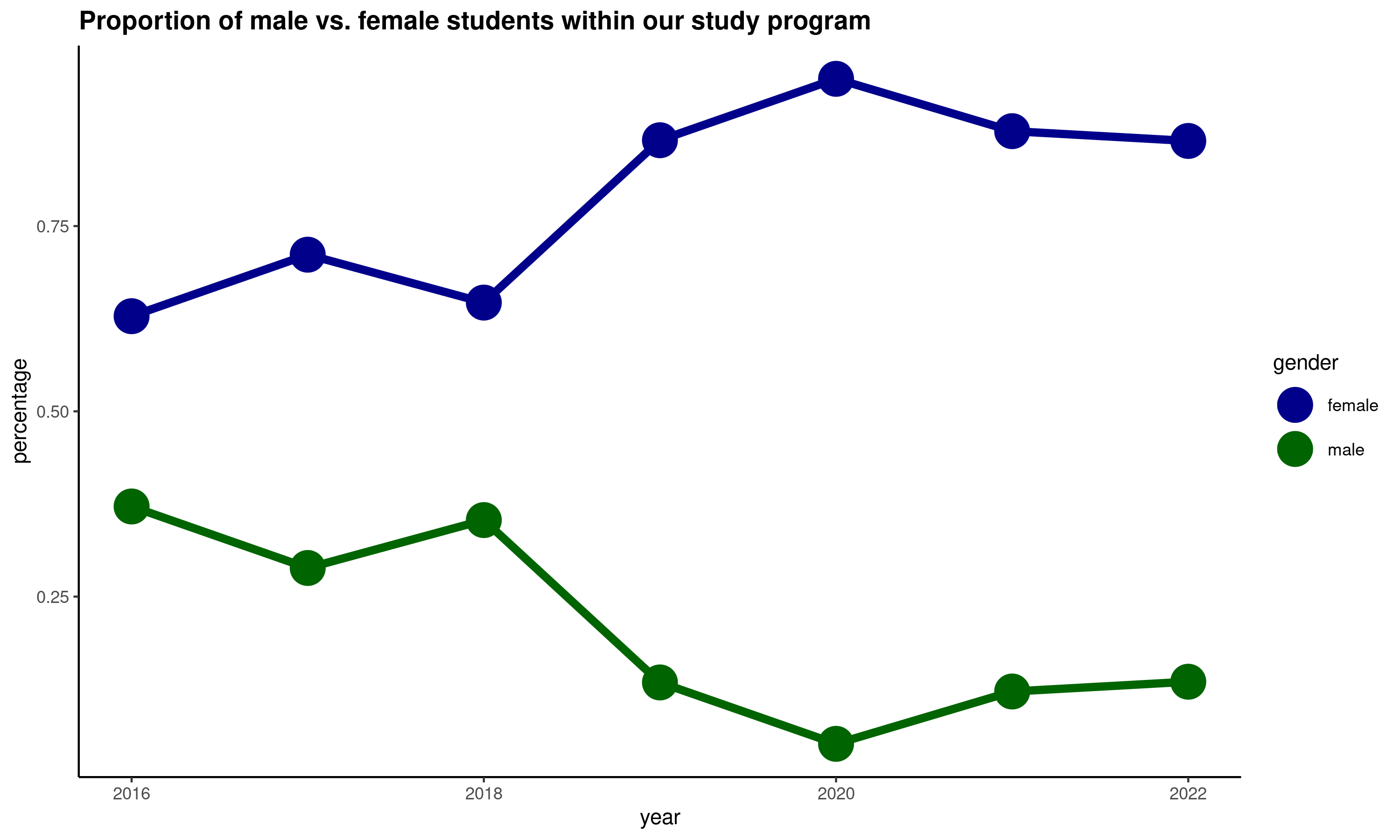

We get a constantly increasing number of applications and of course we are interested who is applying and who is actually starting our international Earth Observation MSc. program.The percentage of women in our study program did rise to around 80% while men dropped to around 20% but seems to be steady in the last years. This is also reflected by the number of students starting our study program. The percentage of accepted vs. applied students does show a similar pattern. Much more female students got accepted (around 20% in 2022 or more than 50% in 2019) than male applicants (around 5% in the last years). This is due to the very high proportion of male applicants in the last years and the comparably small proportion of female applicants, e.g. in 2021 or 2022 we had over 200 applications and more than 160 were from men.
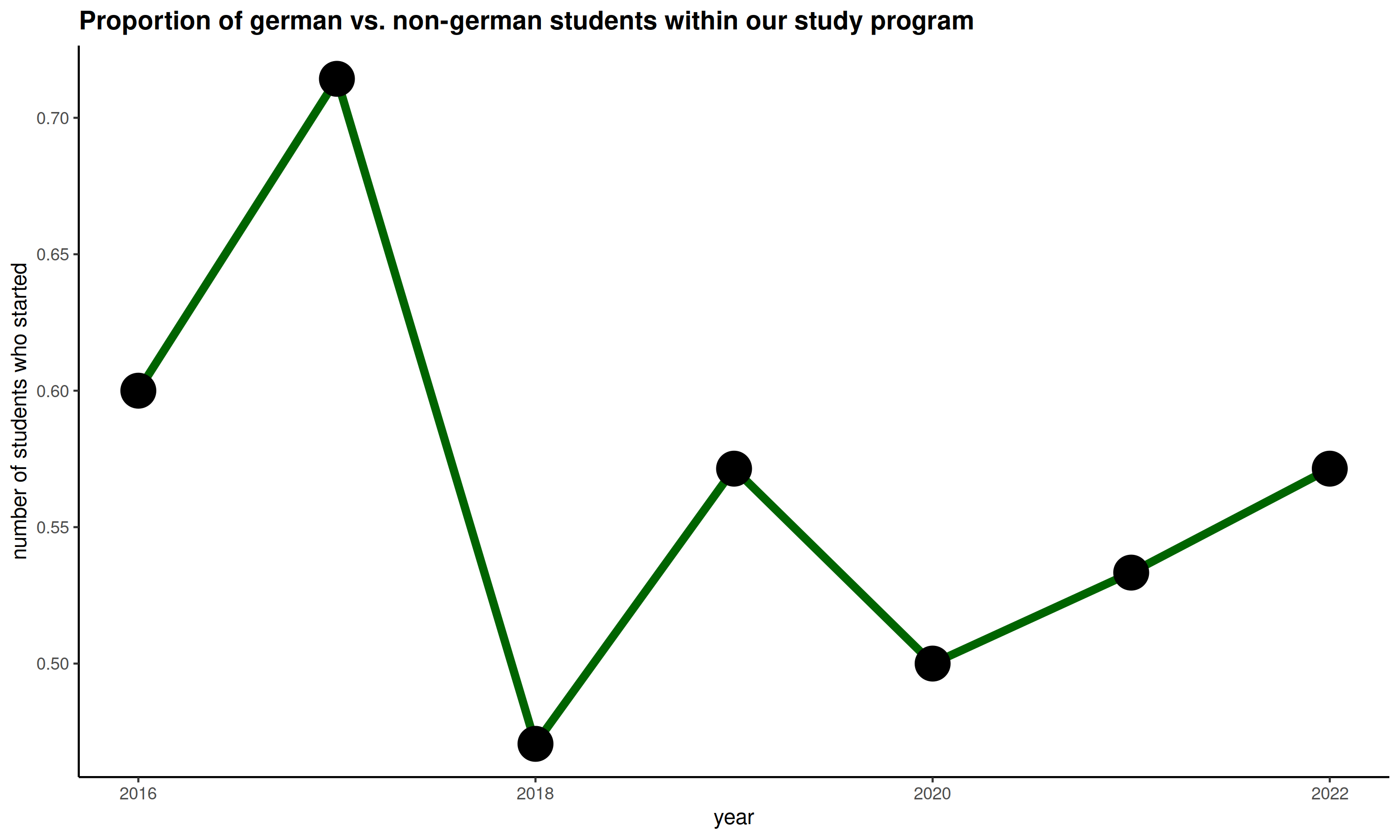
The proportion of german vs. non-german applicants is fluctuating at around 50%, with slightly more german students than foreigners. Even though we get a majority of applications from outside Germany or Europe, often the visa applications are taking months to years and hence hamper the increase in foreign students within our study program.
We are very much looking forward to our 2023 applications submitted before May 15th and looking forward to welcome our accepted new EAGLEs in autumn 2023.