
EAGLEs at DLR’s 4th Symposium “New Perspectives on Earth Observation”

EAGLEs at DLR’s 4th Symposium “New Perspectives on Earth Observation”

m

July 3, 2023

From the 26th to the 28th of June, the fourth symposium on Applied Satellite Earth Observation, organized by the DLR took place in Bonn and some of the current EAGLE generation did not miss the opportunity to make a fun trip to the former capital of Germany.

From Monday to Wednesday, they got great insights on current research and advances in Earth Observation. Interesting panel discussions, keynote speakers and presentations on ongoing projects were on the agenda, a big highlight being also the setting of the conference: the World Conference Center with the former Bundestag parliament as plenary hall.

Among all the great talks and discussion, especially the Spacewhale project (Bio Consult SH GmbH) made an impression, in which AI is used to detect and track whale species based on worldview data. Also, the eyes on Plastic project (EOMAP) presentation offered valuable insights on one of ESAs Business Applications and on a multi-sensor approach to track aquatic plastic litter up to a global scale.

With Sebastian Förtsch, a PhD candidate from the Department of Remote Sensing in Würzburg (who also contributed to the conference with a poster about his research) and other staff members, they further enjoyed the well-organized event, the great food and the opportunity to meet new people working in the field of Earth Observation.

Since the young EAGLEs chose to stay at a campsite, they even got to experience Bonn and its surrounding in a special way and filled their time around the symposium by strolling through the city or joining a pub quiz event at a lovely Irish pub.

With some great memories and impressions and (hopefully) a little inspiration they now returned to Würzburg to continue and complete the rest of the summer semester.

follow us and share it on:

you may also like:

Setting Up for the 2nd EO4CAM Nutzerworkshop

Setting Up for the 2nd EO4CAM Nutzerworkshop

Right now our staff are busy hauling cases, mounting displays and testing every cable for the 2nd EO4CAM Nutzerworkshop, “Erdbeobachtung für die Klimaanpassung, behördliche Akteure in Bayern”. The doors open tomorrow, and the exhibition...

A dashboard for multi-UAS thermal data

A dashboard for multi-UAS thermal data

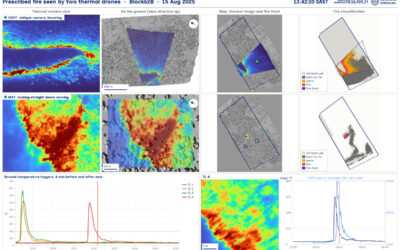
Mapping an active fire with various drones flying in parallel is hard enough. But getting the data processed, evaluated and turned into research datasets is a different story. The publication is on its way, and for now we’d like to share a dashboard by Antonio José...

Have you ever wondered how many trees there are on our campus?

Have you ever wondered how many trees there are on our campus?

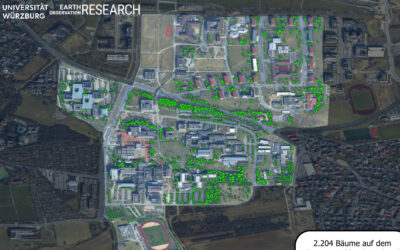
Sometimes a chat during a formal event like the one for the Urban:Pulse funding celebration, results in something totally different. Following a discussion with the vice-president of our University, we promised to look into the research by one of our PhD students...

Earth Observation at the DFG BETAFOR workshop

Earth Observation at the DFG BETAFOR workshop

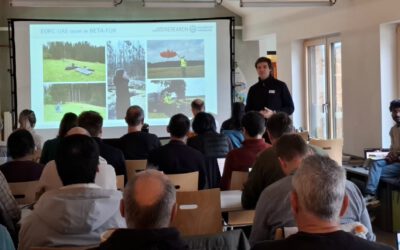
Jakob Schwalb-Willmann represented our team at the DFG BETAFOR workshop in the Bavarian Forest National Park. The room was full of biologists, which is the whole point of an interdisciplinary project, and our UAS multisensor time series drew a lot of interest from the...

Thermal Drone Data Acquisitions: CalVal project with Informatics

Thermal Drone Data Acquisitions: CalVal project with Informatics

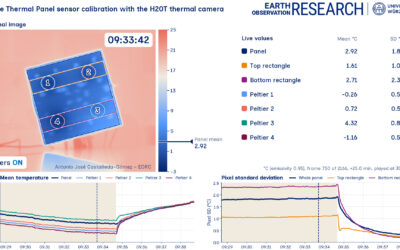
Thermal cameras on drones look very good - visually. They show us temperature of our study objects be it stressed trees, warm patches in a city or active fires. But we do not yet know for sure how far we can trust the temperature values they deliver especially when...

bzgl. Art. 50 Verordnung (EU) 2024/1689 (AI Act):

Überwiegend werden eigene originäre Texte und Bilder des EORC genutzt, jedoch sind einige Inhalte von blog post Texten teilweise mit Hilfe von KI überarbeitet worden und einige Bilder sind ganz mit KI erstellt, die jedoch deutlich keine photorealistische Darstellungen abbilden. Aussnahmen sind KI generierte fernerkundliche Datensätze, die explizit für Forschungszwecke mit KI erstellt wurden, hier wird aber durch den assoziierten Text der wissenschaftliche Grund der KI generierten Bilder erläutert.

Share This