
new publication by our EAGLE student Clara Vydra

new publication by our EAGLE student Clara Vydra

m

July 4, 2024

Our EAGLE student Clara just published an article about snow cover variability in Central Asia – great to see our young EAGLE MSc students being on a good track for their scientific career. The article is titled: “The Influence of Snow Cover Variability on the Runoff in Syr Darya Headwater Catchments between 2000 and 2022 Based on the Analysis of Remote Sensing Time Series.”

from the abstract: “Climate change is affecting the snow cover conditions on a global scale, leading to changes in the extent and duration of snow cover as well as variations in the start and end of snow cover seasons. These changes can have a paramount impact on runoff and water availability, especially in catchments that are characterized by nival runoff regimes, e.g., the Syr Darya in Central Asia. This time series analyses of daily MODIS snow cover products and in situ data from hydrological stations for the time series from 2000 through 2022 reveal the influences of changing snow cover on the runoff regime. All catchments showed a decrease in spring snow cover duration of −0.53 to −0.73 days per year over the 22-year period. Catchments located farther west are generally characterized by longer snow cover duration and experience a stronger decreasing trend. Runoff timing was found to be influenced by late winter and spring snow cover duration, pointing towards earlier snowmelt in most of the regions, which affects the runoff in some tributaries of the river. The results of this study indicate that the decreasing snow cover duration trends lead to an earlier runoff, which demands more coordinated water resource management in the Syr Darya catchment. Further research is recommended to understand the implications of snow cover dynamics on water resources in Central Asia, crucial for agriculture and hydropower production.”

follow us and share it on:

you may also like:

EAGLE students present blender for 3D globes & mountains or cities

EAGLE students present blender for 3D globes & mountains or cities

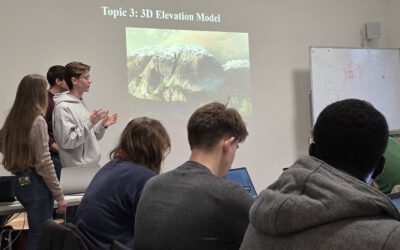
Our EAGLE M.Sc. students are in the middle of a series where they present scientific software for spatial work to each other. The idea is simple. Instead of just hearing about scientific spatial tools from a lecturer, the students pick one software, explore it and...

Photo contest – Würzburg through your lens

Photo contest – Würzburg through your lens

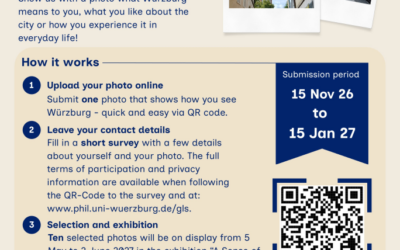
Take part in the Geolingual Studies photo contest and contribute to the exhibition "A Sense of the City". The GLS team wants to see what Würzburg looks like through your lens. Whether your photo depicts a well-known landmark or an overlooked corner, was taken by day...

Stickers have landed

Stickers have landed

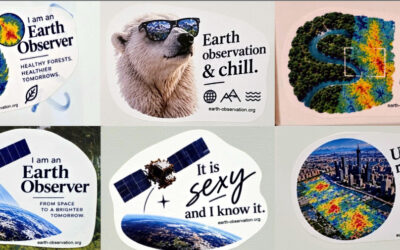
Our new EO stickers arrived last week, and they’re already out in the wild. You may spot them on laptops, water bottles and notebooks around campus. Hex logos, nerdy one-liners about satellites and code, and a few jokes only an Earth observation person will get. And...

Successful MSc Defense by Christina Krause

Successful MSc Defense by Christina Krause

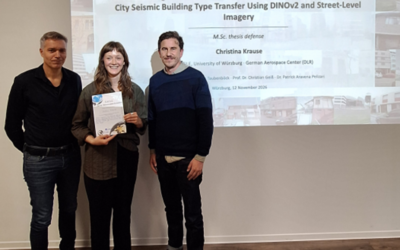
Congratulations to our EAGLE student Christina Krause, who successfully defended her MSc thesis titled "Active Learning and Parameter-Efficient Feature Adaptation for Cross-City Seismic Building Type Transfer Using DINOv2 and Street-Level Imagery" on November 12,...

Successful MSc Defense by Marlene Bauer

Successful MSc Defense by Marlene Bauer

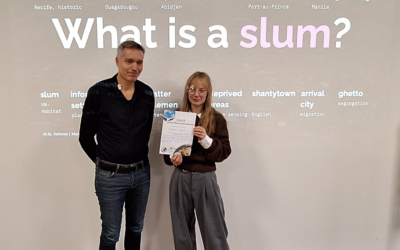
Congratulations to our EAGLE student Marlene Bauer, who successfully defended her MSc thesis titled "Robust and Uncertainty-Aware Informal Settlement Mapping – Cross-City Generalisation Across Diverse Urban Morphologies Using High-Resolution Satellite Imagery in...

bzgl. Art. 50 Verordnung (EU) 2024/1689 (AI Act):

Überwiegend werden eigene originäre Texte und Bilder des EORC genutzt, jedoch sind einige Inhalte von blog post Texten teilweise mit Hilfe von KI überarbeitet worden und einige Bilder sind ganz mit KI erstellt, die jedoch deutlich keine photorealistische Darstellungen abbilden. Aussnahmen sind KI generierte fernerkundliche Datensätze, die explizit für Forschungszwecke mit KI erstellt wurden, hier wird aber durch den assoziierten Text der wissenschaftliche Grund der KI generierten Bilder erläutert.

Share This