

follow us and share it on:

you may also like:
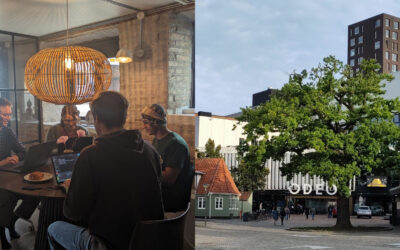
EORC at the joint NSO-GfÖ 2026 conference in Odense, Denmark
This week, the EORC is participating in the joint NSO-GfÖ 2026 conference in Odense, Denmark. The conference brings together researchers of all career stages from all across ecology research, representing a wide range of methods and applications, including topics at...

From Alternative Crops to Drone Monitoring: Field Day on Drought-Resistant Agriculture
The drought of 2026 has once again highlighted the challenges that increasingly frequent dry periods and heat waves pose to agriculture. Against this background, the Bavarian State Research Center for Agriculture (LfL) organized a field day in Schwarzenau on 10...
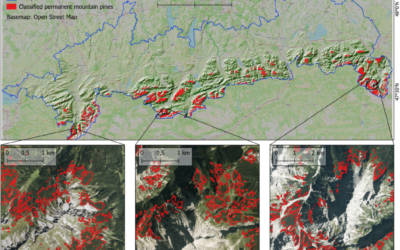
New publication on mapping mountain pine dynamics and upslope shifts in the German Alps
Mapping mountain pine remains a challenge, particularly in steep Alpine terrain where Pinus mugo forms dense krummholz thickets that are difficult to separate from surrounding vegetation and hard to survey on the ground. In our new study led by Basil Tufail, we...
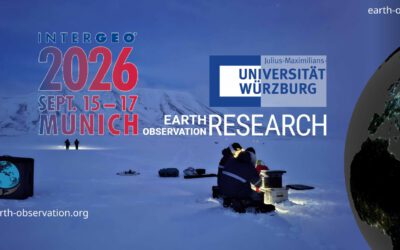
EORC at InterGeo 2026
We will be actively participating at InterGeo this September: we've got a small booth right next to Wingtra's exhibition space, over in Hall B6, booth B6E045. Come by and have a look on what we've been working on across the EORC especially focused on our UAS earth...
Save the Date: EORC Talk with Stephan J. Schmidt on “Urban Form and the Heat Island Effect”
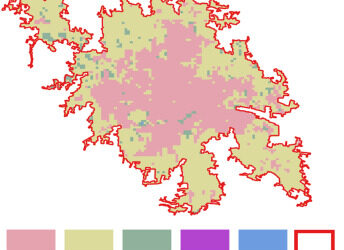
Save the date for our next EORC Talk! On 6 October 2026, we will welcome Stephan J. Schmidt from Cornell University to the Earth Observation Research Cluster (EORC) in Würzburg. In his talk “Urban Form and the Heat Island Effect”, he will explore how the shape and...
Research and Workshop in the Alps
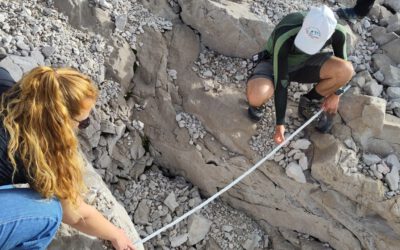
Last week a group of PhD and EAGLE MSc students visited the Umweltforschungsstation Schneefernerhaus (UFS) at the Zugspitze for a workshop on research in high alpine ecosystems. The workshop was kicked-off by presentations from some of our students, who are conducting...