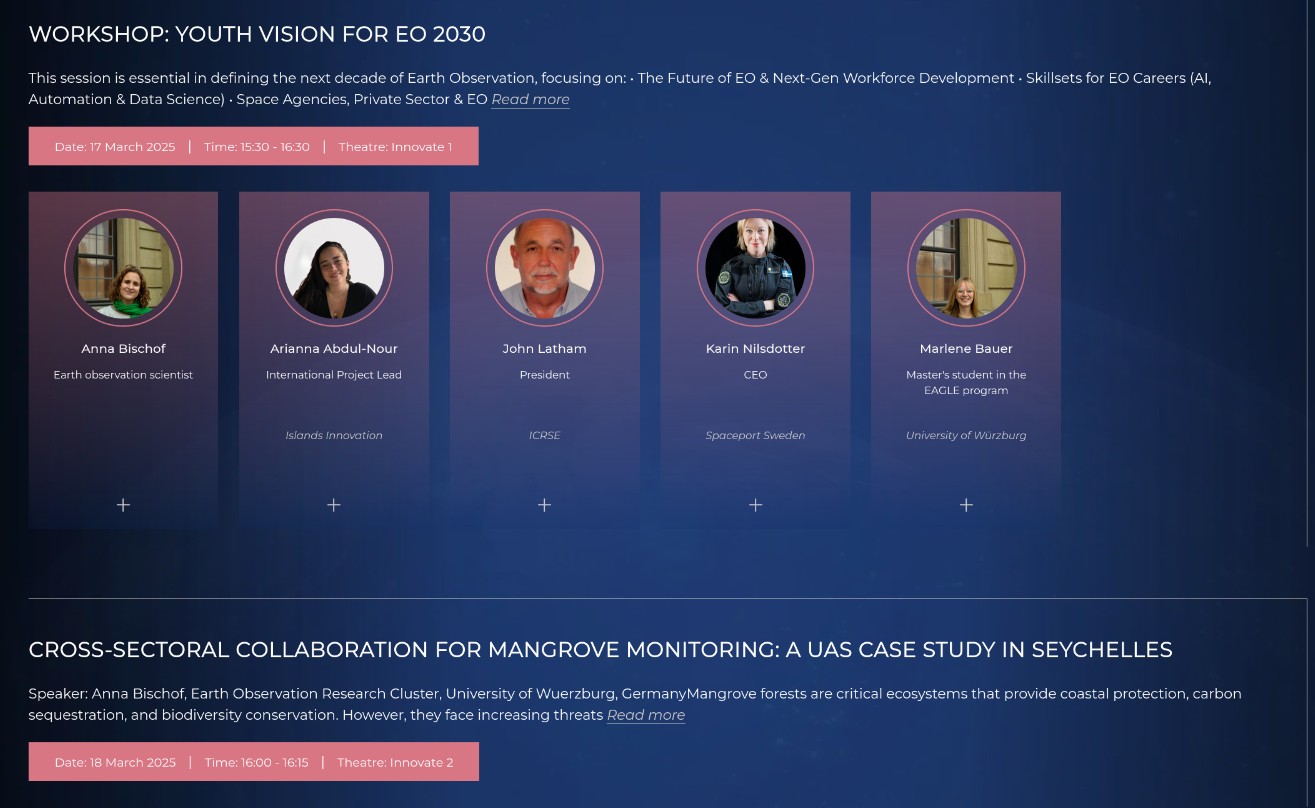

EAGLE Students Marlene Bauer and Anna Bischof to Participate in ISRSE 2025

EAGLE Students Marlene Bauer and Anna Bischof to Participate in ISRSE 2025

m

March 16, 2025

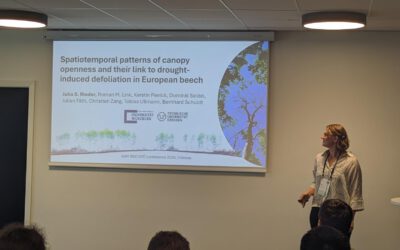
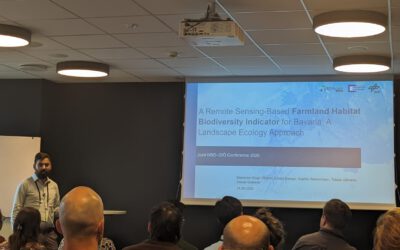
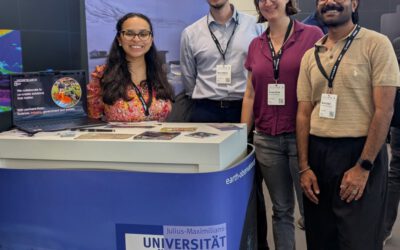
We are very pleased to share that two of our students, Marlene Bauer and Anna Bischof, will be actively contributing to the International Symposium on Remote Sensing of Environment (ISRSE) 2025 in the UK next week. As part of their involvement with talks and posters, they also had the chance to be involved in the Organizing Board, and experience how to shape a conference.

Marlene and Anna will also take part in two expert panels, where they will join discussions on various topics within the field of remote sensing. Their contributions aim to provide insights into current developments and challenges, reflecting the research conducted within the EAGLE program.

Presenting Research on UAS Data Analysis

In addition to their organizational insigts, they will present their UAS (Unoccupied Aerial Systems) data analysis research, which has been carried out in Kruger National Park and the Seychelles. Their work, supervised by Dr. Mirjana Bevanda and Antonio Gomez Castaneda, explores the application of remote sensing technologies for environmental monitoring and conservation.

Their research highlights how UAS data can support environmental assessments and contribute to conservation strategies. By applying advanced data analysis techniques, their findings offer valuable perspectives for ecological monitoring.

Representing the EAGLE Program

Marlene and Anna’s participation in ISRSE 2025 underlines the quality of research and education provided by the EAGLE program. Their engagement demonstrates the program’s emphasis on practical applications of remote sensing and the contribution of young researchers to the field.

We look forward to their presentations and discussions at ISRSE 2025 and wish them success in their contributions. More about their presentations as well as other members of our Earth Observation Research Cluster will be posted here in the next days.

follow us and share it on:

you may also like:

EORC researchers teaching drone remote sensing at UNIS, Svalbard

EORC researchers teaching drone remote sensing at UNIS, Svalbard

During their current visit to Svalbard, EORC researchers have been teaching UNIS students from all over Europe on how drones can be used for remote sensing in the high Arctic. Invited by our UNIS collaborators Prof. Dr. Simone Lang (UNIS) and Prof. Dr. Eero Rinne...

Upcoming PhD Defense by Sebastian Buchelt on 11th February

Upcoming PhD Defense by Sebastian Buchelt on 11th February

We are happy to announce that our colleague Sebastian Buchelt will defend his PhD thesis "Potential of Synthetic Aperture Radar time series for mapping and monitoring of small-scale periglacial processes in alpine environments" on February 11th at 12 pm at...

Talk by Dr. Philipp on AI at Airbus

Talk by Dr. Philipp on AI at Airbus

Our former EAGLE M.Sc. graduate and EORC PhD graduate Dr. Marius Philipp will give talk about AI, ML and NLP within his current work at Airbus. The talk will take place next Wednesday, 11th of Feb., at 2pm in John-Skilton Str. 4a. It will take place either in seminar...

Urban Earth Observation Lecture: Understanding Cities from Above

Urban Earth Observation Lecture: Understanding Cities from Above

As part of the EAGLE M.Sc. programme, our international students attended this winter term the Urban Earth Observation lecture by EORC professor Hannes Taubenböck. The session offered a comprehensive overview of how remote sensing has evolved into a central tool for...

EORC research on biogeomorphology highlighted by EGU blog

EORC research on biogeomorphology highlighted by EGU blog

In a recent blog by the Geomorphology Division of the European Geosciences Union (EGU), the research of our EORC PI Florian Betz, working on generally on river systems and specifically on fluvial biogeomorphology, was featured in the community blog:...

Privacy Policy

Lehrstuhl für Fernerkundung & Lehrstuhl für Urbane Fernerkundung

Erdbeobachtung an der Universität Würzburg

Share This