
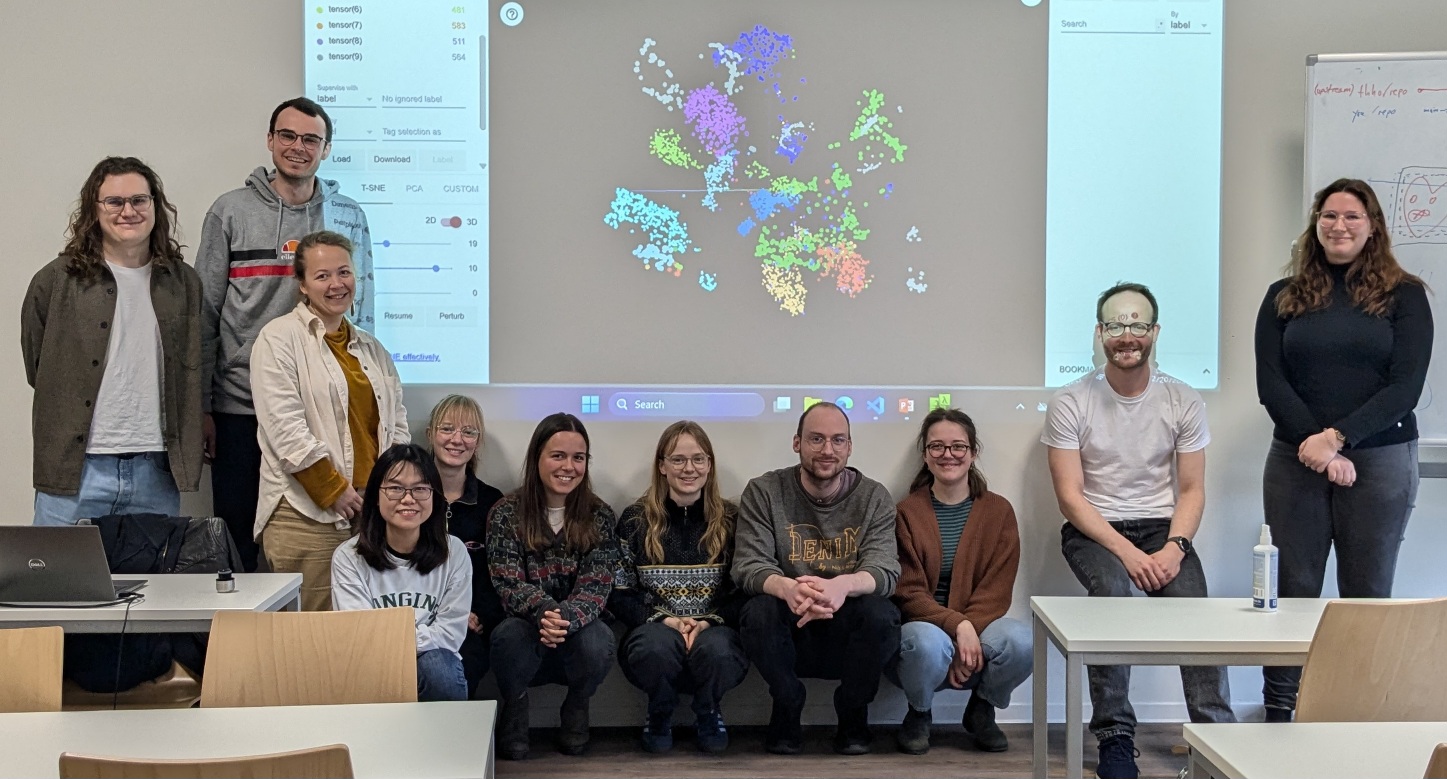

This week Thorsten Hoeser, an expert in deep learning and data science, taught AI methods in remote sensing at our International EAGLE Earth Observation MSc Program. In this special module, Thorsten covered essential topics on the cutting-edge techniques for implementing scalable deep learning pipelines using PyTorch on the DLR High-Performance Computing cluster, Terrabyte.
Thorsten’s sessions dived into advanced areas of deep learning, providing students with hands-on experience in utilizing the high-performance resources of the DLR cluster to train models efficiently at scale. The focus of the module included:
-
Implementing Scalable Deep Learning Pipelines with PyTorch: Students learned how to leverage the DLR Terrabyte cluster to accelerate model development and handle massive datasets for Earth observation tasks.
-
Experiment Tracking and Training Metrics Interpretation: Thorsten guided students on how to manage and track their experiments effectively. Participants learned to interpret key training metrics for improved decision-making and model performance optimization.
-
A Data-Centric Approach to Model Training and Improvements: Moving beyond traditional model-centric views, Thorsten emphasized the importance of data quality and optimization. This perspective will enable students to understand how to refine and improve models through careful data manipulation and understanding.
This training, powered by the DLR Terrabyte cluster, aims to equip students with the skills needed to implement robust, scalable, and efficient deep learning solutions, critical for addressing complex Earth observation challenges.
follow us and share it on:

you may also like:
DBU scholar Josipa Subotic
Almost a year ago, Josipa Subotic showed up at EORC as a DBU scholar, and now her stay with us is coming to an end. Josipa spent her time digging into snow cover properties around the Zugspitze, working with Sentinel-2 time series data. Multispectral imagery, lots of...
Collaboration in the Field: Exploring Crop Resilience with Earth Observation
Developing resilient agricultural systems requires close collaboration between research institutions, industry, and agricultural practice. At the Earth Observation Research Cluster (EORC), University of Würzburg, an ongoing joint study with the Bavarian State Research...
GLS-team visits Planetary Health exhibition
One of the aims of Geolingual Studies Geolingual Studies - Geolingual Studies is to ensure effective science communication beyond the scientific community and into the wider society. The Geolingual Studies team was given the opportunity to look at concepts and methods...
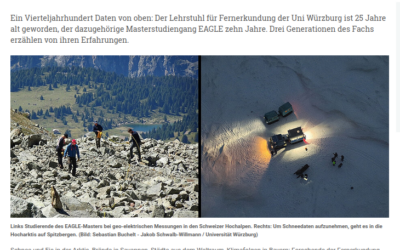
University press covered our anniversaries
Einblick, the University of Würzburg's press medium, published an article on our double anniversary, 25 years of Earth observation research and 10 years of EAGLE M.Sc. program, today. Recently, they has visited us at our EORC to hear about our research and teaching...
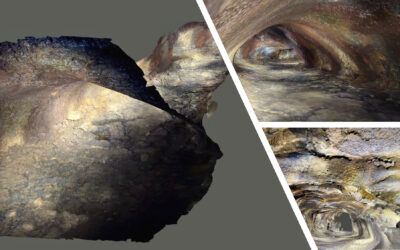
Mapping Lava Tubes on Mauritius with iPhone Pro LiDAR
Lava tube structures on Mauritius are quite hard to survey - tight, dark, and largely inaccessible to classical scanning equipment. As part of ongoing research by Dr. Kim Lea Holzmann (Chair of Animal Ecology and Tropical Biology, University of Würzburg), we're...
Johannes Mast wins Bernd Rendel Prize
Johannes Mast is awarded the 2026 Bernd Rendel Prize for Geosciences by the Deutsche Forschungsgemeinschaft (DFG) for outstanding research as part of his dissertation. Johannes’s highly interdisciplinary work bridges the Geosciences, Linguistics, Data Science, and...