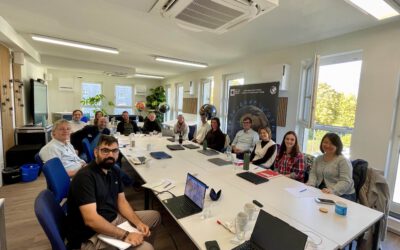
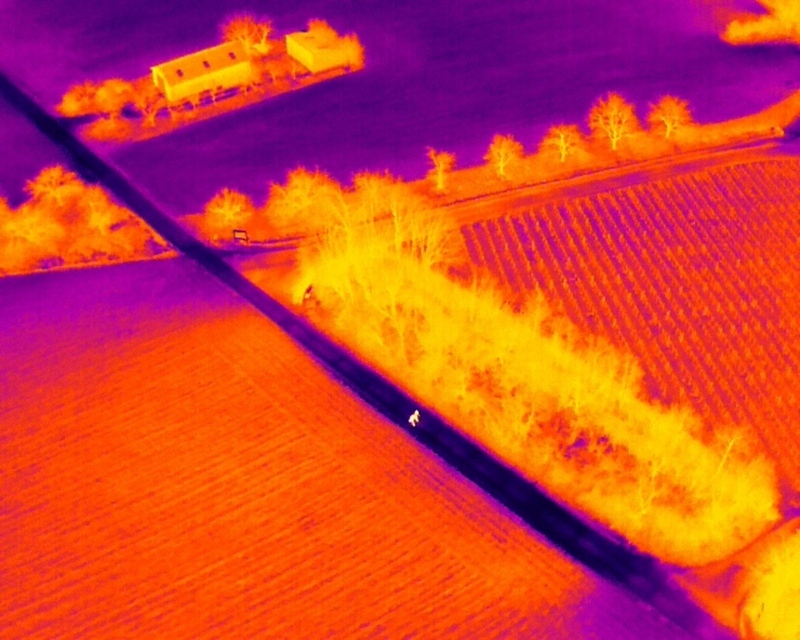
The first flyable days of the new year were used to train our new staff members Elio Rauth and Baturalp Arisoy in UAS data collection. We are happy that both will join the EORC UAS team. Dr. Mirjana Bevanda explained them the different systems and payloads, from small UAS systems up to large M600 or VTOL systems. Also the different payloads, multi-spectral, thermal and Lidar, were introduced, including their specific properties. However, the actual flight mission planning and sensor geometry settings were the focus of this day, in order to take advantage of the good weather. Our new pilots started with small Mavic multi-spectral and thermal systems and will progress in the next weeks and months to the larger systems to cover 700ha and more. Actual experiences are critical within UAS data collection, hence Elio and Baturalp will assist in actual field data collections and analysis of on-going projects from Antonio, Jakob and Mirjana to be able to take over the responsibility to fly within their own study sites soon.
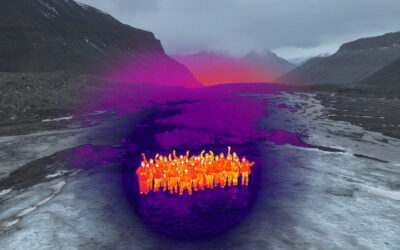
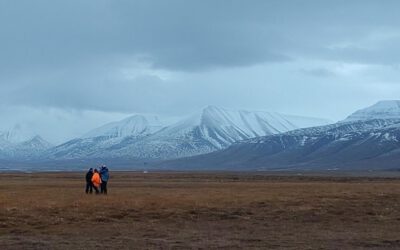
Recently, EORC researches and partners participated in the SvalbardMonitoring workshop, a four-day event organized by the Norwegian Institute for Nature Research (NINA) in Longyearbyen, Svalbard. The workshop focused on Arctic vegetation and biomass research, with a...
As part of our seminar “Perspectives on Innovative Science Communication”, in which we are developing an exhibition on young scientists and future-oriented topics in Würzburg and its partner city Mwanza in Tanzania, we recently visited Würzburg City Hall. City...
Perennial wildflower mixtures are gaining importance as an alternative to maize in biogas production. As highlighted in the praxis-agrar article on crop diversification with biogas flowering mixtures, they combine agricultural use with clear ecological benefits....
EORC Contributions to the Centenary Atlas of the Geographical Society of Würzburg (with German version below) Satellite-based Earth observation has become a cornerstone of contemporary geographical research, particularly for analyzing global dynamics, environmental...
We are pleased to share that our PhD student Julia Rieder has successfully submitted her doctoral thesis! Her dissertation, entitled “Abiotic and biotic drivers of drought responses in European beech (Fagus sylvatica L.) inferred from field and LiDAR data”,...
In a newly launched research project funded by the KSB Foundation, we focus on the automated identification of mining areas based on remote sensing data. The aim is to systematically detect large-scale mining activities and to track their spatial and temporal...
We use cookies to ensure that we give you the best experience on our website. If you continue to use this site we will assume that you are happy with it.