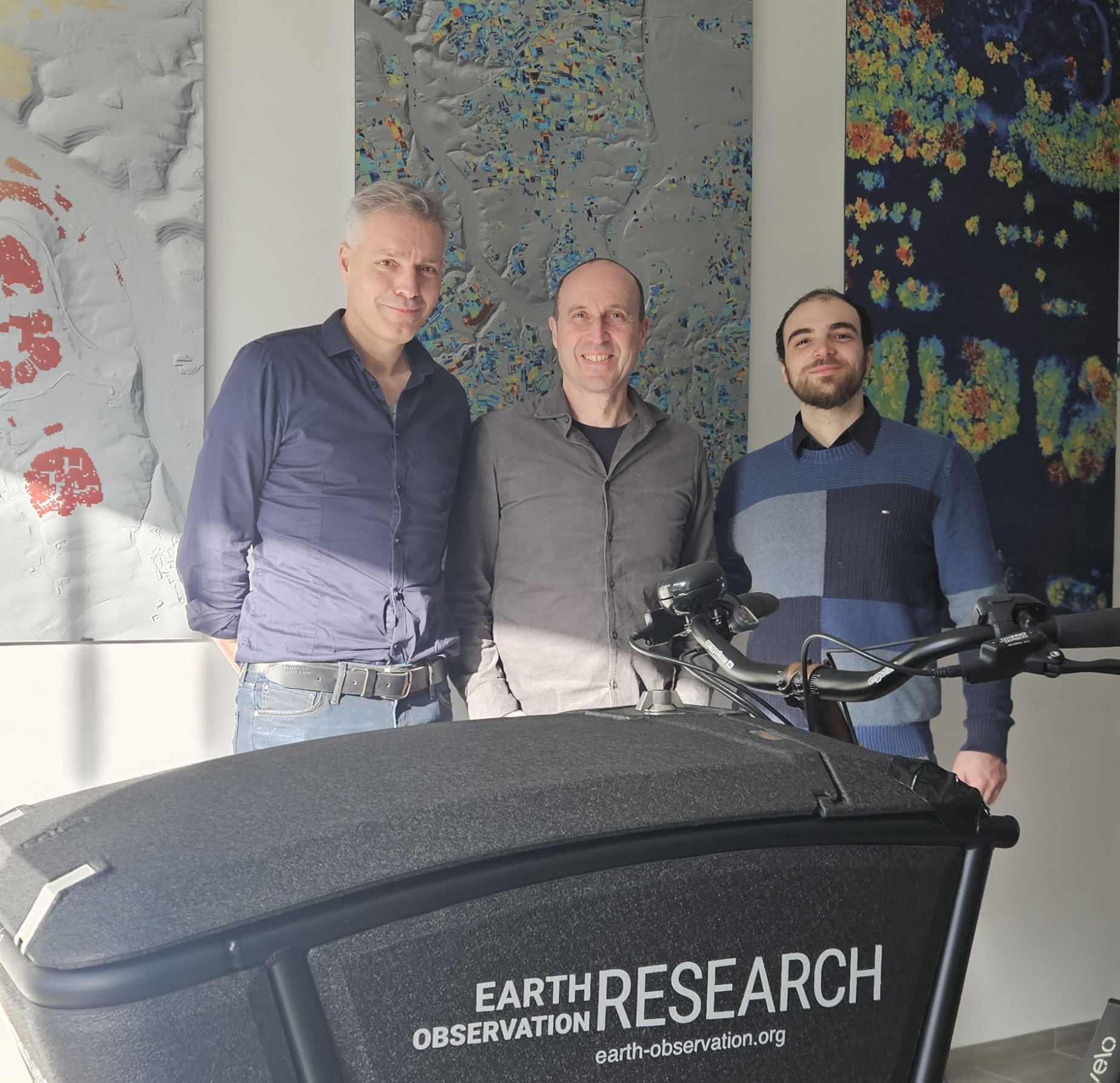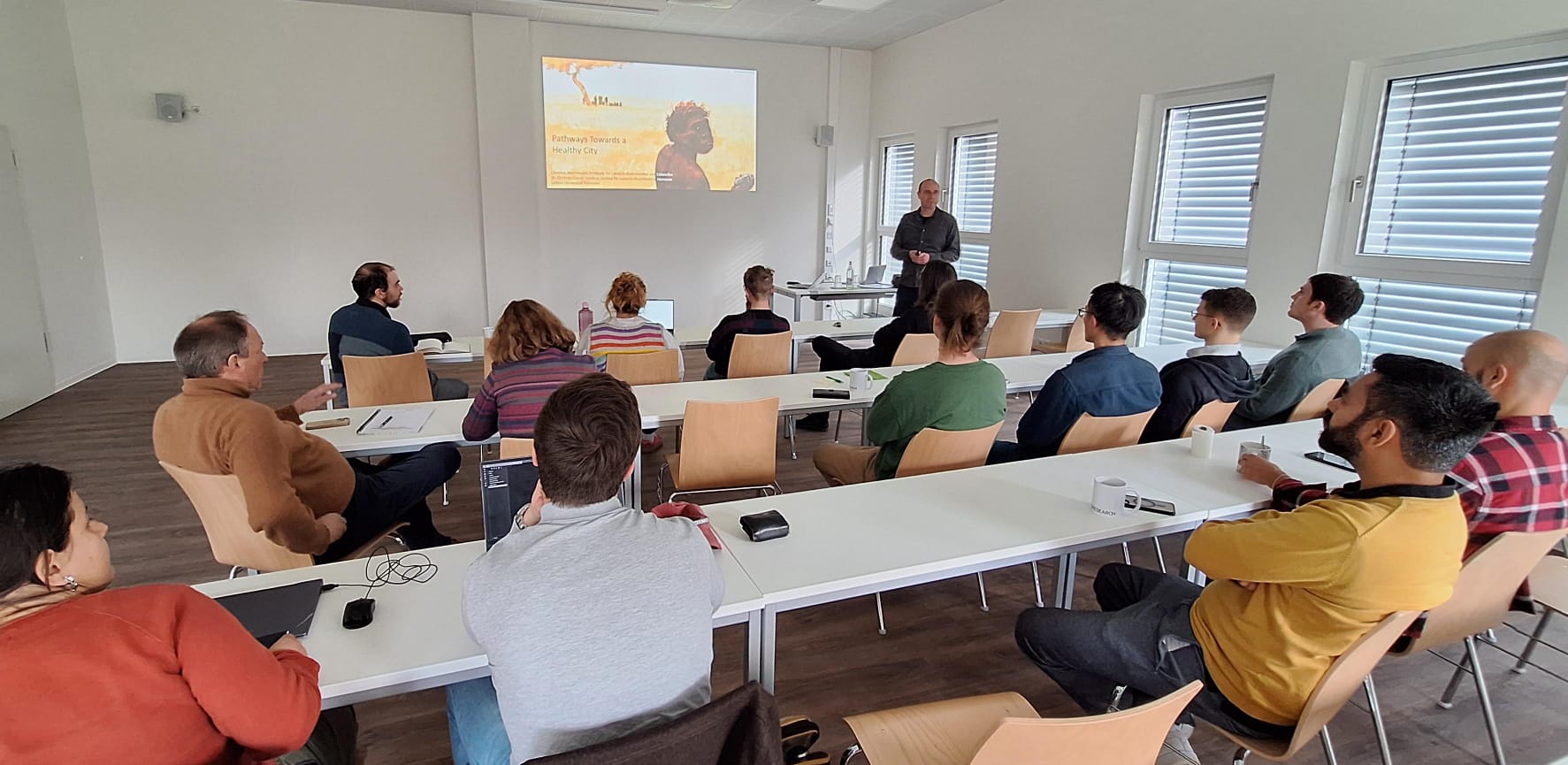

How healthy is a city? This question was at the center of a recent EORC Talk at the Earth Observation Research Cluster (EORC) at the University of Würzburg, where landscape architects Christian Werthmann and Christian Corral Burau from the Institute of Landscape Architecture at Leibniz University Hannover presented their talk titled “Pathways towards a Healthy City.”
Cities today face a growing combination of pressures. Climate change, biodiversity loss, and increasing social inequality are transforming urban environments and challenging traditional planning approaches. As the speakers emphasized, many current planning strategies struggle to address these interconnected challenges in dense and rapidly evolving urban systems.
To rethink how cities can respond to these pressures, Christian Werthmann and Corral Burau introduced the One Health City Framework, an interdisciplinary approach that brings together perspectives from ecology, urban planning, landscape architecture, GIS, anthropology, and public health. The framework conceptualizes the city as an interconnected system in which human and non-human actors, the natural and built environments, interact closely. Urban health, in this view, emerges from the relationships between these components rather than from individual elements considered in isolation.
To translate this conceptual framework into a practical analytical tool, the researchers developed the One Health City Index, which enables the spatial assessment of urban health conditions. The index evaluates urban environments using indicators of proximity, environmental exposure, and biodiversity, enabling analysis at different spatial scales, from the citywide level to individual neighborhoods or urban spaces. In doing so, it helps identify spatial deficiencies, highlight planning priorities, and support strategies to create more resilient and sustainable urban environments.
For researchers working in Earth observation and geospatial sciences, the approach highlights the important role of spatial data and analysis in understanding and improving urban health. By linking landscape architecture with spatial analysis and environmental monitoring, the One Health City concept provides a promising framework for integrating design, data, and sustainability in future urban planning.
The talk provided an inspiring perspective on how interdisciplinary collaboration can help rethink cities as complex socio-ecological systems. It also illustrated how Earth observation and spatial analysis can support the development of healthier and more resilient urban environments in the face of ongoing global change. Moreover, it sparked an engaged discussion among participants, with many questions and reflections from the audience. We thank Christian Werthmann and Christian Corral Burau for visiting the EORC and sharing their insights on pathways toward healthier cities.