
PhD thesis of Carina Kübert awarded by GGW

PhD thesis of Carina Kübert awarded by GGW

December 12, 2019

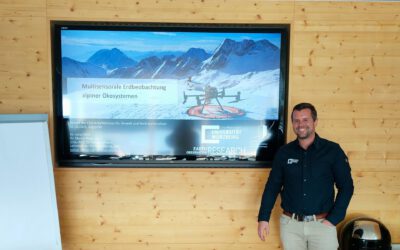
Carina Kübert was awarded with the Promotionspreis of the Geographical Society Würzburg (GGW).

In her thesis, Carina worked on the derivation of phenological metrics from MODIS data in Germany. Her research focused on the reliable estimation of Start of Season (SOS) using different time series generation methods. Time series generation is an important and critical step, that aims at removing noise while preserving the seasonal vegetation signal. Based on different landcover classes, the best method was used to derive annual SOS layers and further phenological datasets. The results of her theses are now used in the Landklif project as input data for further investigations on the condition of different ecosystems and the susceptibility or resilience to expected climate changes.

The prize was awarded on Monday, Dec 2nd 2019, by Prof. Dr. Hubertus Job during the GGW’s last meeting in 2019. Dr. Konrad Schliephake kindly provided the picture.

follow us and share it on:

you may also like:

Space Days in Würzburg: EORC on site

Space Days in Würzburg: EORC on site

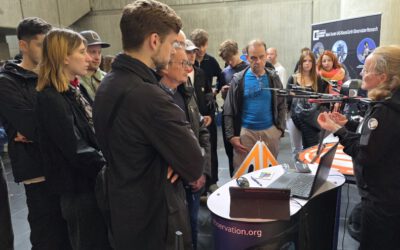
This Saturday turned out busier than we expected. At the Space Days at the University of Würzburg, Sarah Schoenbrodt-Stitt and Mirjana Bevanda represented EORC with a small booth, and the visitors were quite numerous. Students and colleagues stopped by, as expected....

EORC at the Zugspitze

EORC at the Zugspitze

The CSU Working Group for Environment and Consumer Protection recently visited the Environmental Research Station Schneefernerhaus (UFS) on the Zugspitze. The visit provided an opportunity to present current research activities connected to this unique high-alpine...

bzgl. Art. 50 Verordnung (EU) 2024/1689 (AI Act):

Überwiegend werden eigene originäre Texte und Bilder des EORC genutzt, jedoch sind einige Inhalte von blog post Texten teilweise mit Hilfe von KI überarbeitet worden und einige Bilder sind ganz mit KI erstellt, die jedoch deutlich keine photorealistische Darstellungen abbilden. Aussnahmen sind KI generierte fernerkundliche Datensätze, die explizit für Forschungszwecke mit KI erstellt wurden, hier wird aber durch den assoziierten Text der wissenschaftliche Grund der KI generierten Bilder erläutert.

Share This