
Workshop Report at the Department of Remote Sensing – November 27, 2019

Workshop Report at the Department of Remote Sensing – November 27, 2019

m

November 13, 2019

We are glad to announcing our next workshop at the Department of Remote Sensing for Wednesday, 27th November 2019.

The presentation will be about

Analyses Ready Data – Follow‐up on Implementing the Open Data Cube for Research and Education

Abstract

Analyses ready data (ARD) are on the way forward to provide multi-sensor satellite data for different applications. However, the integration of ARD process chains and interfaces into image analyses frameworks is still challenging for academic, commercial and public organizations. The Open Data Cube (ODC) software provides a framework to automate Earth Observation (EO) data pre-processing and interfaces for developers and users. Currently, we are operating two data cubes using the ODC software at the Remote Sensing Department hosted at the Leibniz Supercomputing Centre (LRZ) of the Bavarian Academy of Sciences and Humanities in Garching.
The presentation will provide an update of the recent developments on implementing disruptive technologies on cloud-based EO data management and ARD data provision for in-house research activities as well as R&D projects.
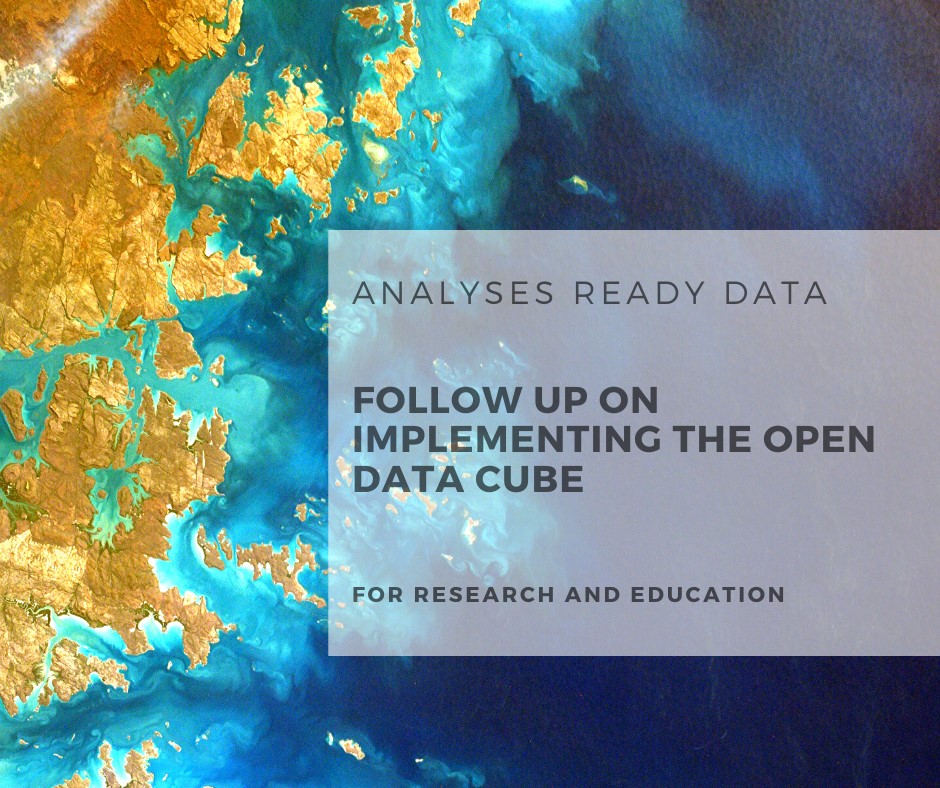
Title of presentation: Analyses Ready Data – Follow-up on Implementing the Open Data Cube for Research and Education

Presenter: Christian Hüttich, Department of Remote Sensing, University of Würzburg

Date: Wednesday, 27th November Time: 10 – 11:00 am s.t. Place: Josef-Martin-Weg 52 (1), Campus Hubland Nord, Würzburg

Presentation language: English Slides: English

All interested persons are cordially invited! We are looking forward to seeing you.

follow us and share it on:

you may also like:

Setting Up for the 2nd EO4CAM Nutzerworkshop

Setting Up for the 2nd EO4CAM Nutzerworkshop

Right now our staff are busy hauling cases, mounting displays and testing every cable for the 2nd EO4CAM Nutzerworkshop, “Erdbeobachtung für die Klimaanpassung, behördliche Akteure in Bayern”. The doors open tomorrow, and the exhibition...

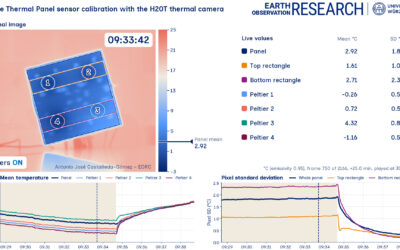
A dashboard for multi-UAS thermal data

A dashboard for multi-UAS thermal data

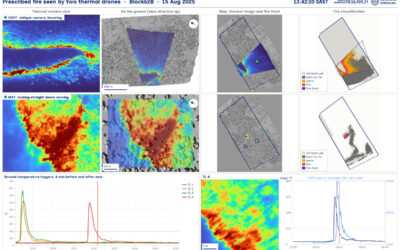
Mapping an active fire with various drones flying in parallel is hard enough. But getting the data processed, evaluated and turned into research datasets is a different story. The publication is on its way, and for now we’d like to share a dashboard by Antonio José...

Have you ever wondered how many trees there are on our campus?

Have you ever wondered how many trees there are on our campus?

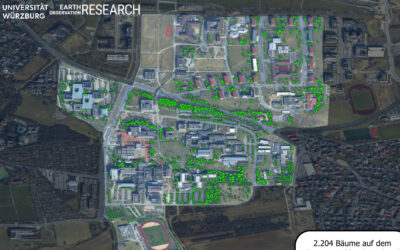
Sometimes a chat during a formal event like the one for the Urban:Pulse funding celebration, results in something totally different. Following a discussion with the vice-president of our University, we promised to look into the research by one of our PhD students...

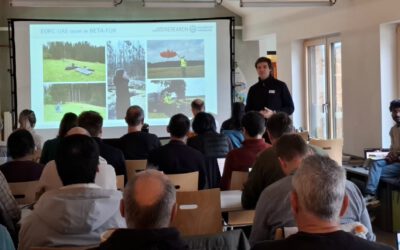
Earth Observation at the DFG BETAFOR workshop

Earth Observation at the DFG BETAFOR workshop

Jakob Schwalb-Willmann represented our team at the DFG BETAFOR workshop in the Bavarian Forest National Park. The room was full of biologists, which is the whole point of an interdisciplinary project, and our UAS multisensor time series drew a lot of interest from the...

Thermal Drone Data Acquisitions: CalVal project with Informatics

Thermal Drone Data Acquisitions: CalVal project with Informatics

Thermal cameras on drones look very good - visually. They show us temperature of our study objects be it stressed trees, warm patches in a city or active fires. But we do not yet know for sure how far we can trust the temperature values they deliver especially when...

bzgl. Art. 50 Verordnung (EU) 2024/1689 (AI Act):

Überwiegend werden eigene originäre Texte und Bilder des EORC genutzt, jedoch sind einige Inhalte von blog post Texten teilweise mit Hilfe von KI überarbeitet worden und einige Bilder sind ganz mit KI erstellt, die jedoch deutlich keine photorealistische Darstellungen abbilden. Aussnahmen sind KI generierte fernerkundliche Datensätze, die explizit für Forschungszwecke mit KI erstellt wurden, hier wird aber durch den assoziierten Text der wissenschaftliche Grund der KI generierten Bilder erläutert.

Share This