
online-survey “Spaceborne Remote Sensing at the Science-Policy Interface”

online-survey “Spaceborne Remote Sensing at the Science-Policy Interface”

December 6, 2021

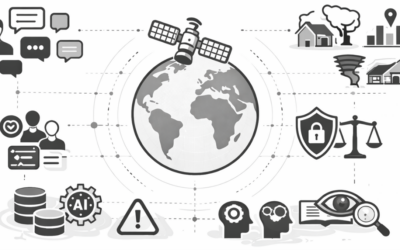
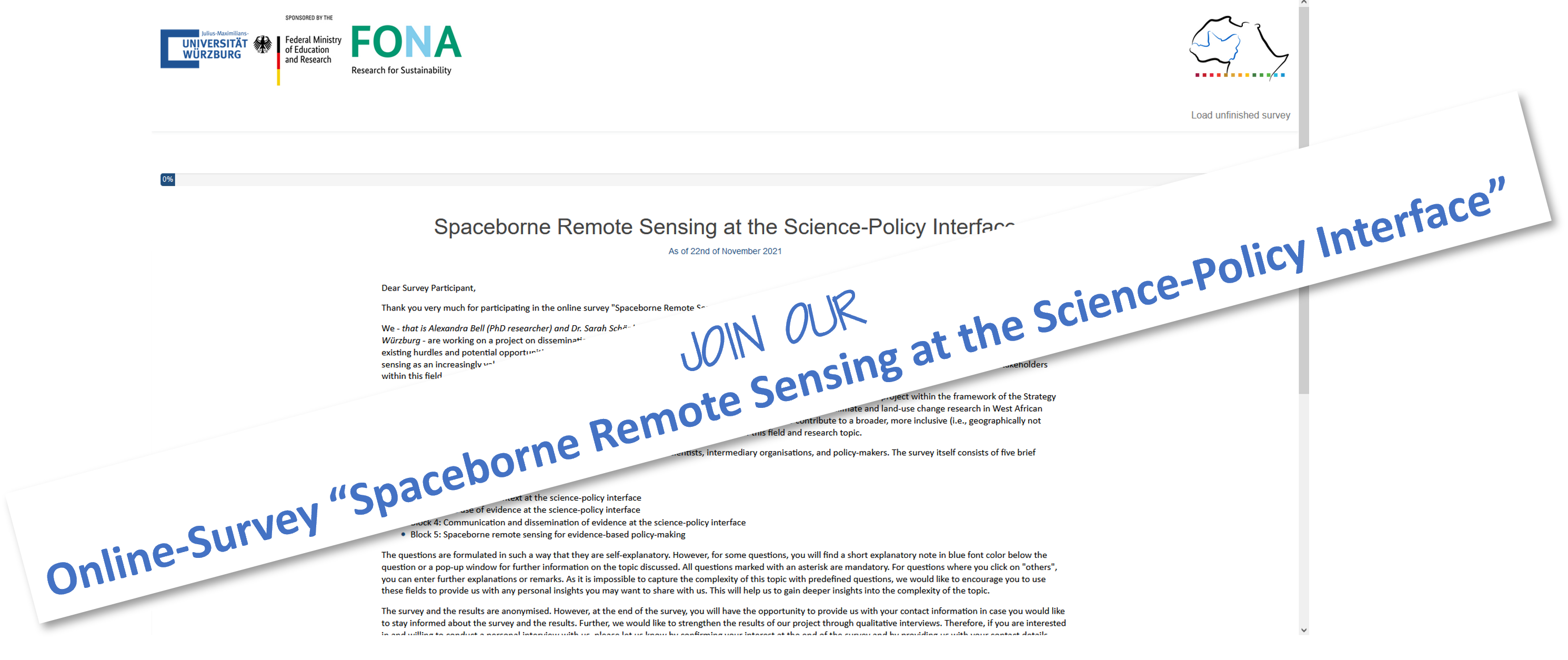
Wondering how remote sensing and earth observation contribute to evidence-based policy-making? Pondering about existing hurdles and requirements of stakeholders at the science-policy interface? So are we! Around 20 minutes of your time will help us in finding out more. Please join our online-survey Spaceborne Remote Sensing at the Science-Policy Interface.

Alexandra Bell and Sarah Schönbrodt-Stitt from the Department of Remote Sensing at the University of Würzburg are working on dissemination strategies of scientific evidence at the science-policy interface. To gain more insights into existing hurdles and potential opportunities to strengthen the collaboration at the science-policy interface, they have developed the online survey “Spaceborne Remote Sensing at the Science-Policy Interface”. A focus is placed on spaceborne (i.e., satellite-based) remote sensing as an increasingly valued EO tool for providing scientific evidence for evidence-based policy-making, and the requirements of different stakeholders (i.e., academics and researchers, people working at intermediary organizations, and policy-makers) within this field.

Their work contributes to the project “WASCAL-DE-Coop“, which is funded by the German Federal Ministry of Education and Research (BMBF) within the framework of the Strategy “Research for Sustainability” (FONA). WASCAL-DE-Coop contributes to climate and land-use change research in West African countries. However, through the development of the above web-based survey and your participation, Alexandra and Sarah aim to contribute to a broader, more inclusive (i.e., geographically not restricted and covering different environmental-related disciplines) view and understanding of this field and research topic.

We would be delighted if you would participate in our online survey. The survey will be kept active until 31st of January 2022.

follow us and share it on:

you may also like:

EORC at the Smart Forest Conference: Research meets Practive

EORC at the Smart Forest Conference: Research meets Practive

This week, our EO4CAM staff Sonja and Julian attended the Smart Forest Conference in Freising, a meeting that brings together researchers, forestry practitioners, and technology developers working at the interface of forest science and digital innovation. Over two...

EO4CAM Data Portal Launched to Support Climate Adaptation in Bavaria

EO4CAM Data Portal Launched to Support Climate Adaptation in Bavaria

New Earth observation platform provides satellite-based information for public authorities and planners A new Earth observation data portal is bringing satellite-derived environmental information closer to climate adaptation planning. On 9 March 2026, the EO4CAM data...

Demography Meets Spatial Analysis: Insights from today’s EORC Talk

Demography Meets Spatial Analysis: Insights from today’s EORC Talk

A recent EORC Talk at the Earth Observation Research Cluster (EORC) at the University of Würzburg brought together perspectives from demography, geography, and spatial analysis. Sebastian Klüsener and Tamilwai Kolowa from the Federal Institute for Population Research...

A Fresh Look of the Foyer and Seminarroom for our Events

A Fresh Look of the Foyer and Seminarroom for our Events

Over the past weeks, our foyer and seminar rooms have received a thoughtful upgrade that reflects both the spirit and the scope of our research community. The spaces now feature large-scale prints that visually showcase the diverse research topics within our group,...

Physical 3D building model of Würzburg at the EORC

Physical 3D building model of Würzburg at the EORC

As part of the "Allianz New Space Mainfranken" initiative by the Würzburg-Schweinfurt Chamber of Industry and Commerce (IHK) (see e.g. here: https://remote-sensing.org/exploring-new-space-opportunities-in-mainfranken/ ), we have established a collaboration between...

Share This