
Keynote presentation at the Advanced Urban Remote Sensing Workshop in Hongkong

Keynote presentation at the Advanced Urban Remote Sensing Workshop in Hongkong

December 3, 2022

Keynote presentation at the Advanced Urban Remote Sensing Workshop in Hongkong, China


The Advanced Urban Remote Sensing Workshop is currently (3rd and 4th of December 2022) held in Hongkong, China. The workshop, organized by the University of Hongkong and IEEE GRSS, aims at introducing the status, development, advances, opportunities, and challenges in urban remote sensing. The conference chairs Prof. Peng Gong and Prof. Qihao Weng bring together the leading scientists from academic institutions and end users from the industry for a comprehensive urban remote sensing discussion and in-situ field survey experience.


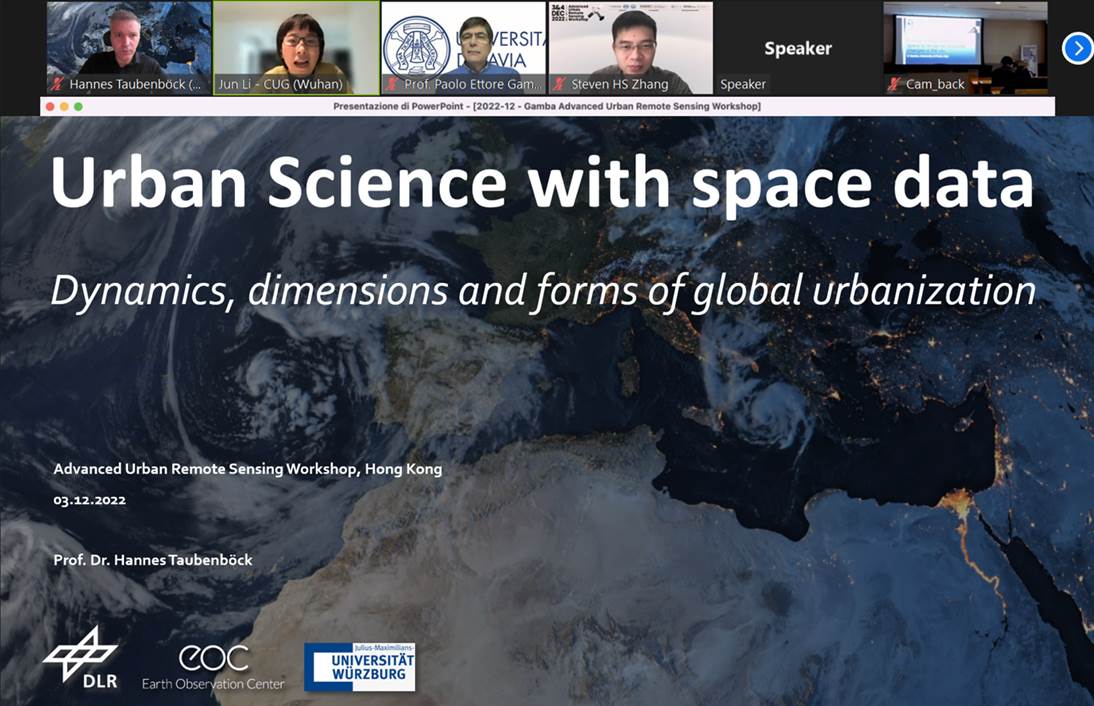
Prof. Dr. Hannes Taubenböck gave a keynote lecture titled “Urban Science with Space Data – Dynamics, dimensions and forms of global urbanization” promoting remote sensing data, mapping products and applications for new findings in urban geography. In his presentation, he introduced a new ranking of the largest cities in the world based on EO-data which deviates from official UN-statistics. And, he discussed the implications of different settlement types on our environment. This presentation was followed by a keynote lecture given by Prof. Dr. Paolo Gamba from the University of Pavia in Italy. Through both presentations, capabilities and challenges of remote sensing data, methodological and application aspects for urban geography were discussed and illustrated.   


follow us and share it on:

you may also like:

Help Us Understand Ticks: Join the MONID HABITRACK Study

Help Us Understand Ticks: Join the MONID HABITRACK Study

Lyme borreliosis and tick-borne encephalitis (TBE) are the most common tick-borne diseases in Germany, and they are becoming more relevant. Many infections go unnoticed because they cause mild symptoms or none at all. The MONID HABITRACK project, funded by the BMFTR,...

Setting Up for the 2nd EO4CAM Nutzerworkshop

Setting Up for the 2nd EO4CAM Nutzerworkshop

Right now our staff are busy hauling cases, mounting displays and testing every cable for the 2nd EO4CAM Nutzerworkshop, “Erdbeobachtung für die Klimaanpassung, behördliche Akteure in Bayern”. The doors open tomorrow, and the exhibition...

A dashboard for multi-UAS thermal data

A dashboard for multi-UAS thermal data

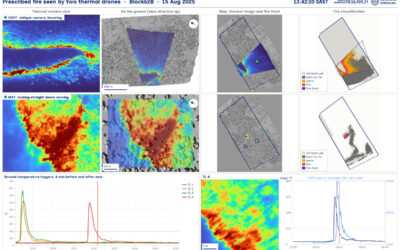
Mapping an active fire with various drones flying in parallel is hard enough. But getting the data processed, evaluated and turned into research datasets is a different story. The publication is on its way, and for now we’d like to share a dashboard by Antonio José...

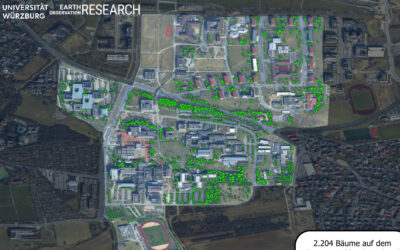
Have you ever wondered how many trees there are on our campus?

Have you ever wondered how many trees there are on our campus?

Sometimes a chat during a formal event like the one for the Urban:Pulse funding celebration, results in something totally different. Following a discussion with the vice-president of our University, we promised to look into the research by one of our PhD students...

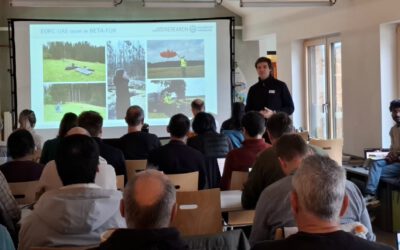
Earth Observation at the DFG BETAFOR workshop

Earth Observation at the DFG BETAFOR workshop

Jakob Schwalb-Willmann represented our team at the DFG BETAFOR workshop in the Bavarian Forest National Park. The room was full of biologists, which is the whole point of an interdisciplinary project, and our UAS multisensor time series drew a lot of interest from the...

bzgl. Art. 50 Verordnung (EU) 2024/1689 (AI Act):

Überwiegend werden eigene originäre Texte und Bilder des EORC genutzt, jedoch sind einige Inhalte von blog post Texten teilweise mit Hilfe von KI überarbeitet worden und einige Bilder sind ganz mit KI erstellt, die jedoch deutlich keine photorealistische Darstellungen abbilden. Aussnahmen sind KI generierte fernerkundliche Datensätze, die explizit für Forschungszwecke mit KI erstellt wurden, hier wird aber durch den assoziierten Text der wissenschaftliche Grund der KI generierten Bilder erläutert.

Share This