
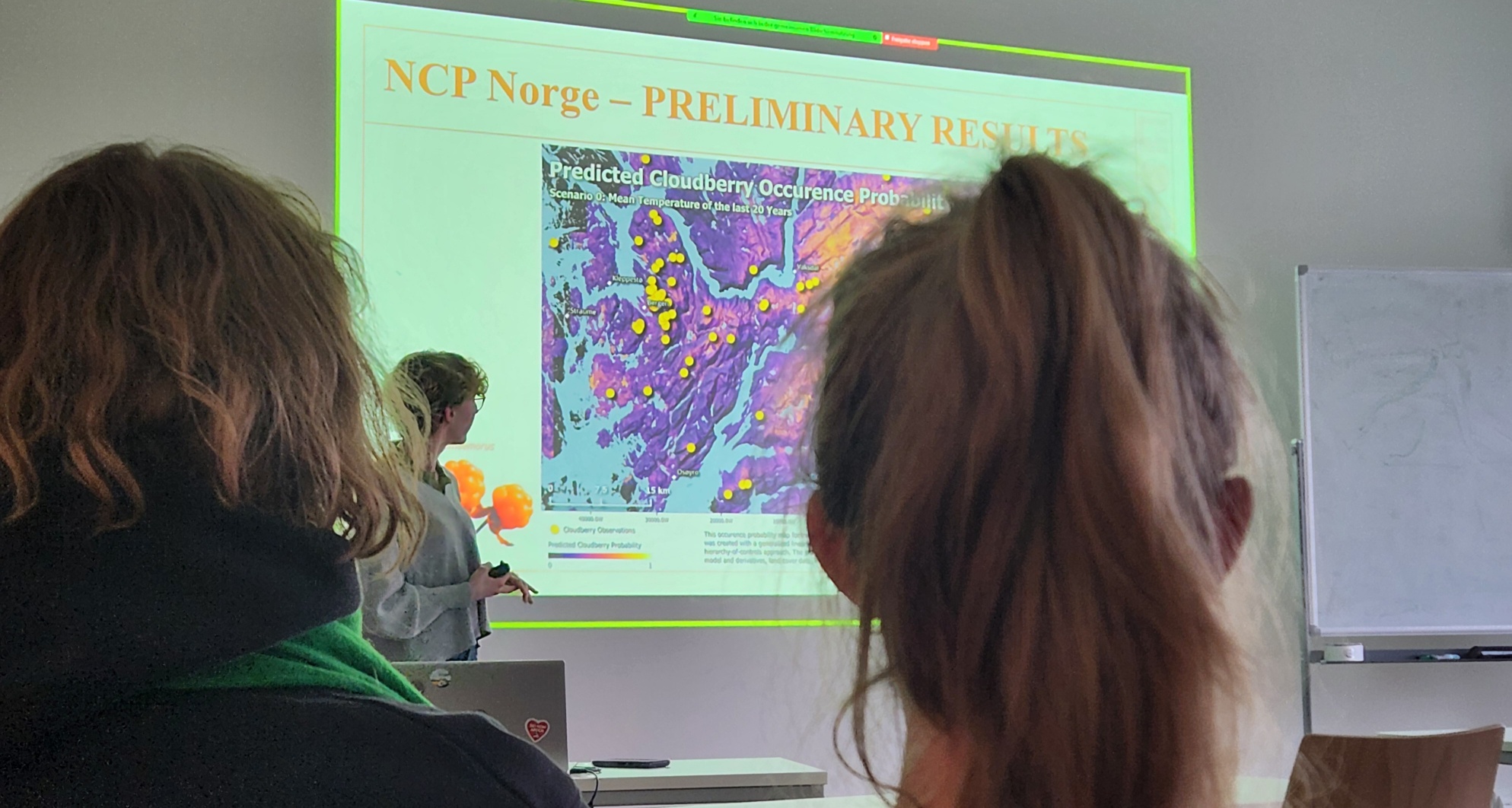

On January 28, 2025, Sonja Maas delivered an insightful presentation on her internship project titled “Mapping Ecosystem Services in Norway.” Hosted by the University of Bergen, this internship focused on the critical role that nature plays in supporting human well-being through various ecosystem services.
Understanding Ecosystem Services and Nature’s Contributions to People (NCPs)
The concept of ecosystem services refers to the essential benefits that nature provides to humanity, such as food and materials, climate regulation, and cultural benefits. These services are crucial for both the environment and society. In her presentation, Sonja Maas discussed how the primary goal of her internship was to identify, quantify, and model these services—referred to as nature’s contributions to people (NCPs).
Her work was part of the “NCP Norge” project, which aims to create a comprehensive predictive model for all of Norway. The model will assess the impacts of changes in climate, land use, biodiversity, and ecosystem management on NCPs, ultimately informing how these factors affect Norwegian society.
Core Tasks: Data Preparation and Model Development
Sonja’s internship work primarily involved preparing core datasets, which are essential for building a robust model. She also developed a workflow using R, GEE and Python to guide the selection of a semi-mechanistic model tailored to the NCPs being studied. This approach allows for more accurate simulations and predictions of how various environmental changes might influence ecosystem service supply in Norway.
Furthermore, Sonja collaborated on the “BEF-Up II” project, which focuses on scaling up ecosystem service assessments for the German Biodiversity Exploratories. Here, she assisted with parameter selection and data preparation, contributing to the larger research effort of understanding ecosystem service supply across broader landscapes.
The Importance of This Research
The research conducted during this internship is crucial for understanding how ecosystem services are distributed across Norway and how they may be impacted by various human and environmental factors. By creating a semi-mechanistic model of NCPs, the project offers a tool for policymakers, land managers, and researchers to make more informed decisions regarding land use, conservation strategies, and sustainable development practices.
Conclusion
Sonja Maas’s internship at the University of Bergen provided a unique opportunity to contribute to the cutting-edge NCP Norge project, which will ultimately help shape Norway’s approach to managing and preserving its natural resources. By identifying and modeling ecosystem services, her work helps to bridge the gap between science and policy, ensuring that the importance of nature’s contributions to society is acknowledged and understood.
This internship is a great example of how data-driven research can help guide conservation and land management efforts, ultimately contributing to a more sustainable future for both Norway and the world.
follow us and share it on:

you may also like:
DBU scholar Josipa Subotic
Almost a year ago, Josipa Subotic showed up at EORC as a DBU scholar, and now her stay with us is coming to an end. Josipa spent her time digging into snow cover properties around the Zugspitze, working with Sentinel-2 time series data. Multispectral imagery, lots of...
Collaboration in the Field: Exploring Crop Resilience with Earth Observation
Developing resilient agricultural systems requires close collaboration between research institutions, industry, and agricultural practice. At the Earth Observation Research Cluster (EORC), University of Würzburg, an ongoing joint study with the Bavarian State Research...
GLS-team visits Planetary Health exhibition
One of the aims of Geolingual Studies Geolingual Studies - Geolingual Studies is to ensure effective science communication beyond the scientific community and into the wider society. The Geolingual Studies team was given the opportunity to look at concepts and methods...
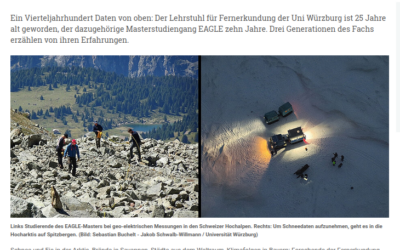
University press covered our anniversaries
Einblick, the University of Würzburg's press medium, published an article on our double anniversary, 25 years of Earth observation research and 10 years of EAGLE M.Sc. program, today. Recently, they has visited us at our EORC to hear about our research and teaching...
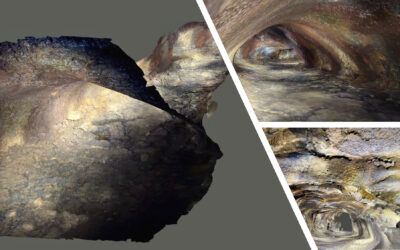
Mapping Lava Tubes on Mauritius with iPhone Pro LiDAR
Lava tube structures on Mauritius are quite hard to survey - tight, dark, and largely inaccessible to classical scanning equipment. As part of ongoing research by Dr. Kim Lea Holzmann (Chair of Animal Ecology and Tropical Biology, University of Würzburg), we're...
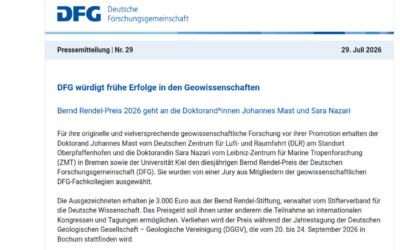
Johannes Mast wins Bernd Rendel Prize
Johannes Mast is awarded the 2026 Bernd Rendel Prize for Geosciences by the Deutsche Forschungsgemeinschaft (DFG) for outstanding research as part of his dissertation. Johannes’s highly interdisciplinary work bridges the Geosciences, Linguistics, Data Science, and...