
New Research Published: A Spatial Decision Support System for Climate-Adapted Agriculture in West Africa ​

New Research Published: A Spatial Decision Support System for Climate-Adapted Agriculture in West Africa ​

June 25, 2025

We are excited to announce the publication of a groundbreaking study titled A Spatial Decision Support System for Climate-Adapted Agriculture Designed with and for Stakeholders in West Africa in the journal Climate Services. ​ This research introduces a user-friendly Spatial Decision Support System (SDSS) developed to empower local stakeholders in West Africa to tackle the challenges posed by climate change. ​The work has been conducted by the LANDSURF project team, funded by the BMBF under the grant number 01LG2080A.

What’s the SDSS About?

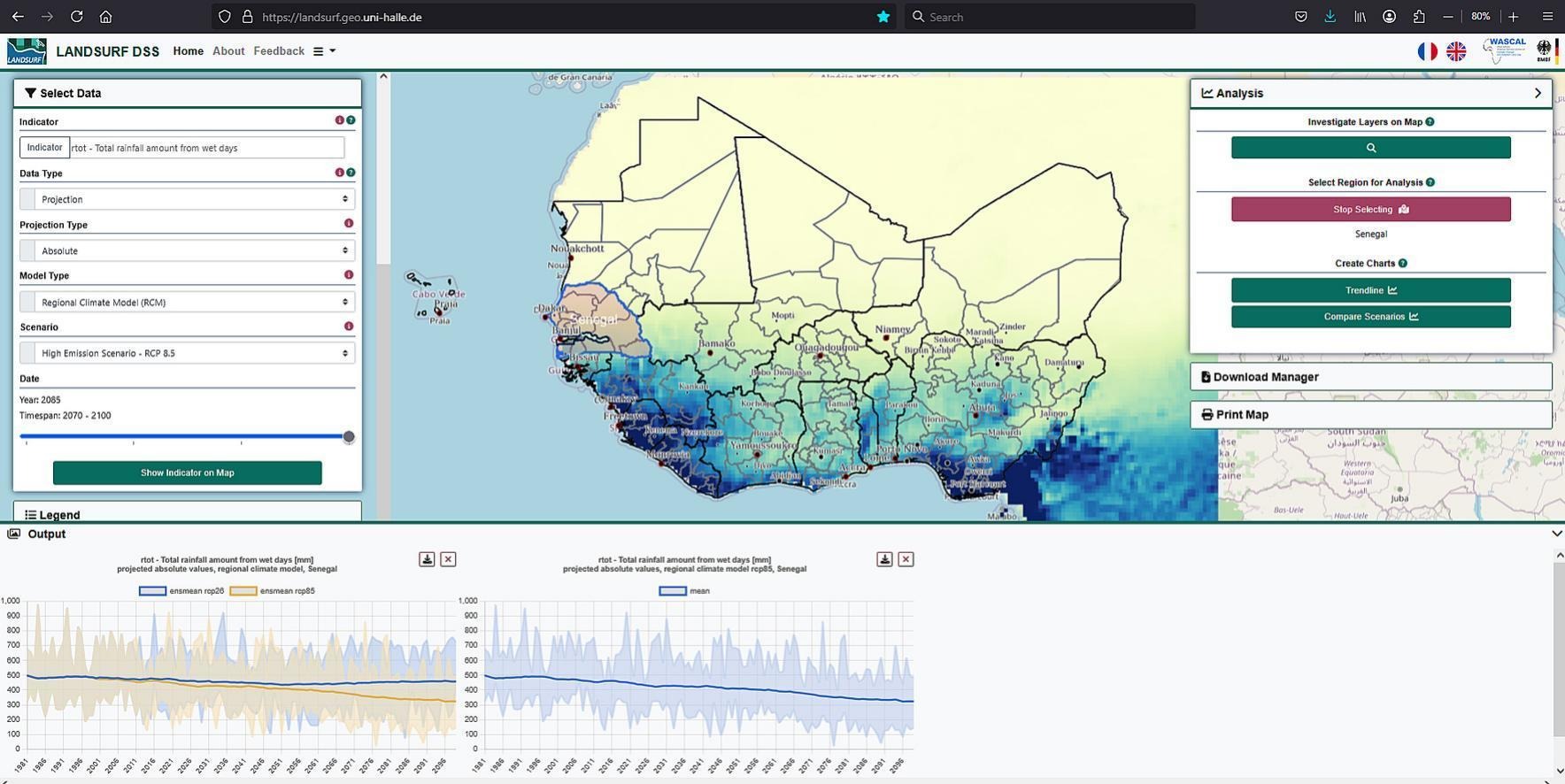
The SDSS is a web-based tool designed to provide farmers, policymakers, NGOs, and researchers with easy access to climate, crop, and land-use data. ​ It integrates observational data, high-resolution climate models, and remote sensing information to offer 28 practical indicators, such as rainfall patterns, irrigation needs, and vegetation health. ​ The system is free, accessible in English and French, and compatible with smartphones, ensuring inclusivity for diverse users. ​

Why Is This Important?

West Africa’s agriculture is highly vulnerable to extreme weather events like droughts and heatwaves. ​ The SDSS bridges the gap between complex scientific data and actionable insights, enabling stakeholders to make informed decisions about crop management, water use, and climate adaptation strategies. ​ For example, farmers can assess future irrigation needs, while planners can evaluate the impact of droughts and heatwaves on regional water resources. ​

What’s Next?

The SDSS will continue to evolve, with plans to enhance data quality, incorporate next-generation climate models, and expand indicators to include socio-economic and health-related data. This tool represents a significant step toward building resilience in agriculture and other sectors across West Africa. ​

Explore the full study and learn more about the SDSS at LANDSURF Portal. ​

This research is a testament to the power of collaboration between scientists and stakeholders, paving the way for sustainable development in one of the world’s most climate-vulnerable regions.

follow us and share it on:

you may also like:

A reply to the Programming Hero Syndrome post

A reply to the Programming Hero Syndrome post

A while back there was a post about the "Programming Hero Syndrome." This is a small extension to it, from a female perspective to provide a different view. When I started EAGLE, in those first weeks and months, I'd join internship talks or MSc defenses, listen to...

Getting Ready for 25 + 10

Getting Ready for 25 + 10

Next week's the big one. Twenty five years of EORC and ten years of EAGLE, all in one event, and we're expecting around 250 people through the door. Sabine Oppmann's been leading the prep meetings, and we've split things into clear teams: setup, catering, AV and...

Dr. Ariane Droin in front of the camera: RTL reports on HABITRACK

Dr. Ariane Droin in front of the camera: RTL reports on HABITRACK

A film crew from RTL showed up in the Oberpfalz this spring, and joint a field campaign by the Habitrack BMFTR funded project. Dr. Ariane Droin, who leads the Würzburg side of the MONID HABITRACK project at EORC, walked the RTL team through what the project is...

A Weekend together: Where the Institute Talks About Itself

A Weekend together: Where the Institute Talks About Itself

Once a year, or at least that's the idea, the Institute of Geography packs up and heads out to a remote place, this time Burg Rothenfels, an old castle not far from Würzburg, to spend a weekend doing something that almost never happens in the day to day grind:...

Graduation Day: EORC and EAGLE Celebrate at the Faculty Ceremony

Graduation Day: EORC and EAGLE Celebrate at the Faculty Ceremony

Last week the faculty held its formal graduation ceremony, and EORC and EAGLE were well represented on stage. Two of our PhD students, Dr. Ariane Droin and Dr. Johannes Mast, both joint the ceremony for their doctoral degrees, and it was great to see them walk across...

Share This