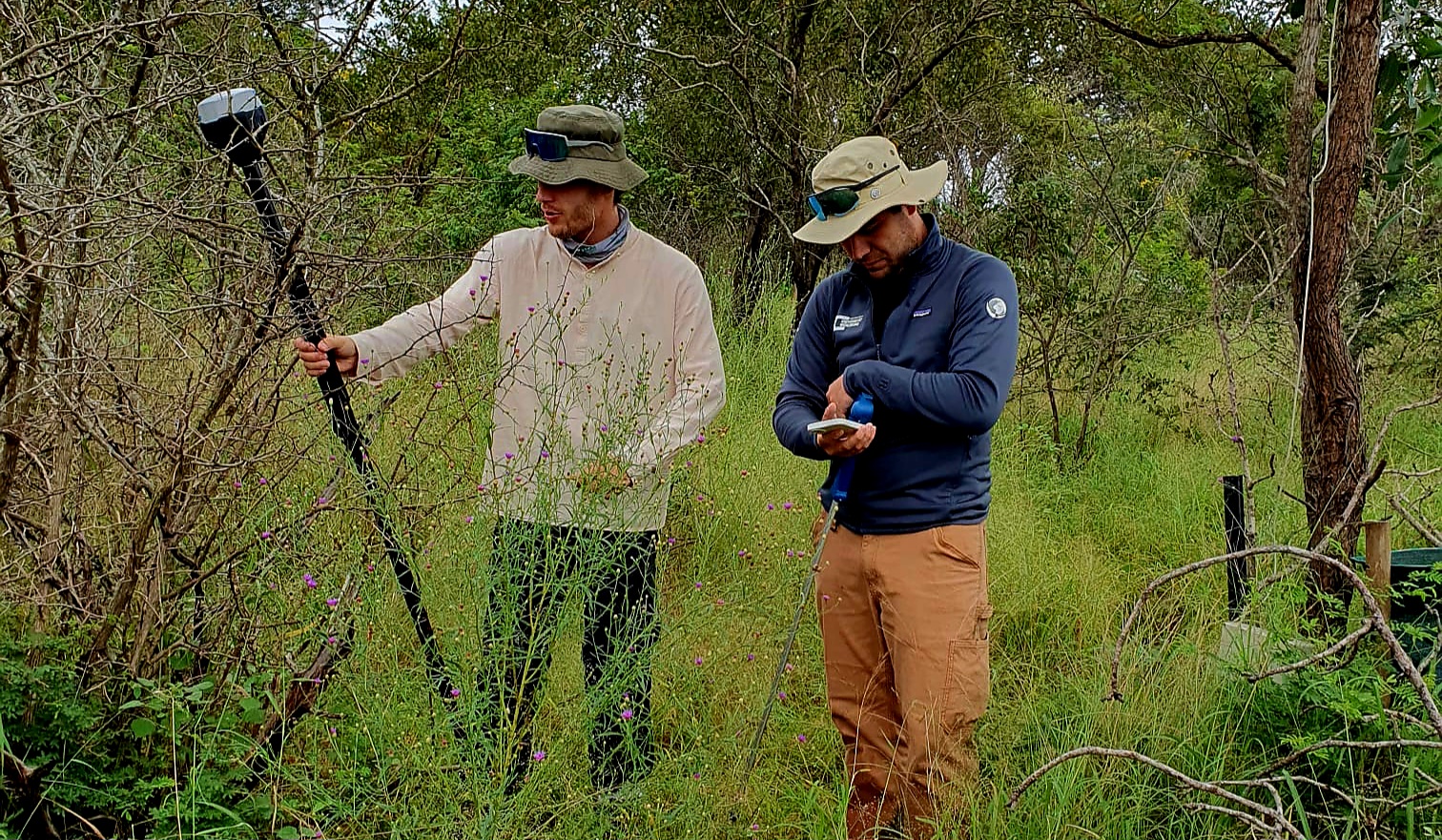

After completing the fieldwork, the data was cleaned and processed. The results of the campaign were then presented to their local supervisors at SANParks, together with first generated products such as a LiDAR-based vegetation structure and height classification. This interdisciplinary research environment helped link remote sensing based geospatial analysis with ecological processes and improved the interpretation of results within a conservation-focused research setting.
Living in Kruger National Park provided Sebastian and Clemens with a unique field environment, including daily exposure to wildlife and the surrounding savanna ecosystem. At the same time, regular exchange with international researchers from ecology, conservation, and related disciplines created a collaborative and interdisciplinary atmosphere. This interaction contributed additional value beyond the technical work and supported a broader understanding of ongoing research in the park.