
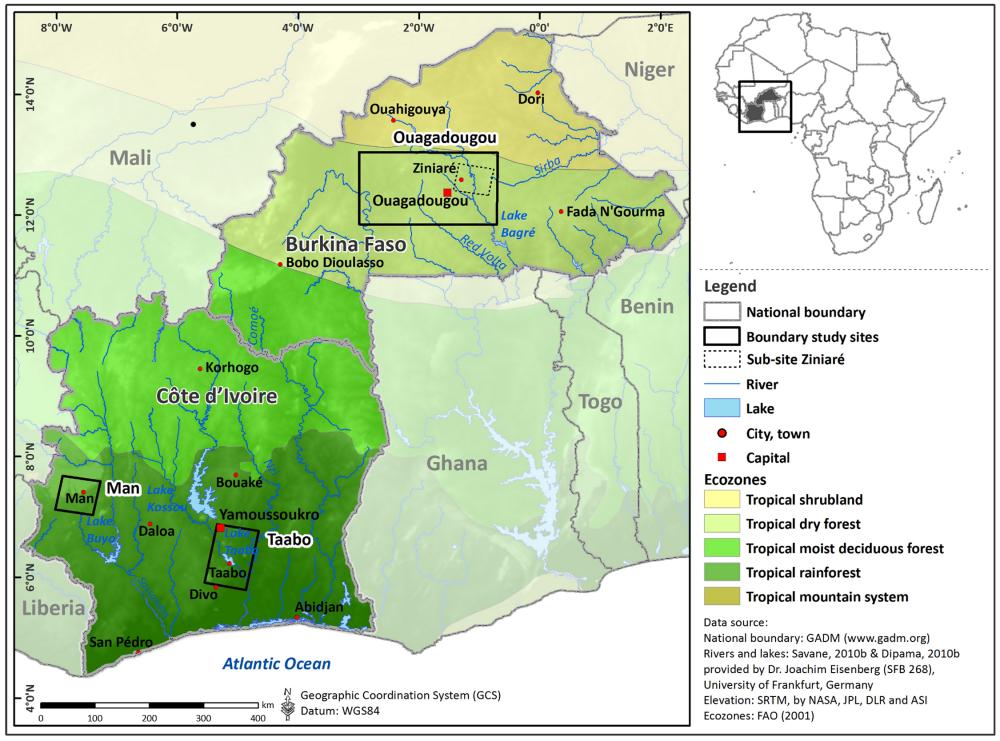
 Another publication from the Phd by Yvonne Walz just got published. Read the abstract and check out the online availability: Schistosomiasis is the most widespread water-based disease in sub-Saharan Africa. Transmission is governed by the spatial distribution of specific freshwater snails that act as intermediate hosts and human water contact patterns. Remote sensing data have been utilized for spatially explicit risk profiling of schistosomiasis. We investigated the potential of remote sensing to characterize habitat conditions of parasite and intermediate host snails and discuss the relevance for public health.

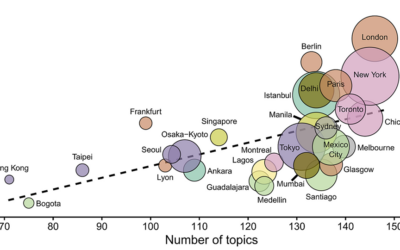
New publication on Global regularities and regional patterns in social media discourse
Cities are complex entities that are defined and distinguished by their physical, social, economic, environmental and other structural characteristics. Our remote approach to the city is primarily from a physical-structural perspective. Through Geolingual Studies, we...