
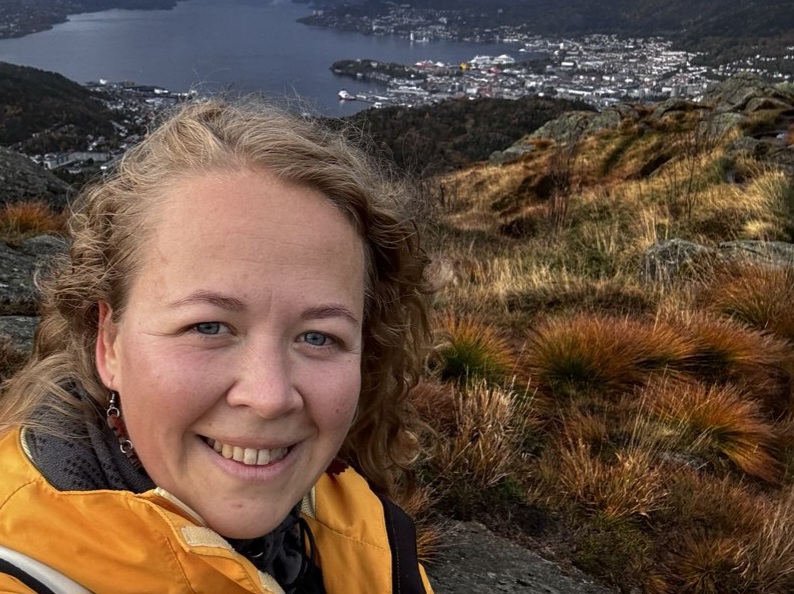

Our EAGLE student Daria recently wrapped up an internship at the University of Bergen in the Remote Sensing research group.
With the support of her supervisor, Dr. Benjamin Abreu Robson, she got to work on the Jostedalsbreen glacier using drone and satellite data. Her focus was on studying changes in glacier elevation, velocity, and roughness, as well as analyzing Snow Line Altitude (SLA) and Snow Cover Ratio (SCR) over the past 20 years. She also explored radar backscatter and glacier elevation changes using various datasets. “Being able to contribute to such meaningful research while working with cutting-edge technology has been truly rewarding,” Daria shared.
In August, she had the incredible opportunity to participate in a field trip to the glacier, where they used drones for hands-on data collection—an unforgettable adventure! “The field trip was definitely a highlight. It felt surreal to see the glaciers up close and collect data in such a dynamic, real-world setting,” Daria reflected.
Beyond the technical work, Daria met so many inspiring scientists and students from around the world. They had great discussions, weekly presentations, and even some fun group activities like hiking and cultural evenings. “The people I met during this internship made the experience even more special. Collaborating with such a diverse and passionate group of individuals was truly inspiring,” she said.
The city of Bergen was the perfect backdrop for this internship. With its stunning mountains and fjords, it’s a haven for nature lovers and hiking enthusiasts. Exploring trails like Mount Fløyen and enjoying breathtaking views made every day special. “Bergen’s natural beauty added a whole new dimension to this experience. Hiking through the mountains was the perfect way to unwind after a busy day of research,” Daria recalled.
Moreover, she was lucky to see the Aurora. “Witnessing the Northern Lights was a magical moment. It felt like nature was celebrating my time in Bergen with me.”
This internship was a mix of learning, connecting, and adventure. Daria is super grateful for the opportunity and all the wonderful memories she’s made. “I’ll always look back on this experience with gratitude. It’s been a perfect blend of professional growth and personal adventure.”
follow us and share it on:

you may also like:

Small Gesture, Big Thanks: Chocolate in the Polar Bear Kitchen
Pulling off a party for 250 people doesn't happen by magic. It happens because a bunch of people quietly say yes to the boring jobs, the carrying, the setting up, the standing around answering questions, the cleaning up afterward. Our combined 25th anniversary for...

From the lecture hall into the forest
A recent visit to the University Forest Sailershausen brought students together with Forest Management to discuss current challenges in forestry under a changing climate. Hosted by the head of the forest administration Daniel Kraus, the day combined presentations by...

Can We Teach Everything Except the Most Important Thing?
Over the past years, we have had many discussions within our research group and with colleagues at other universities about the changing culture in academia. These conversations often revolve around funding, publication pressure, career perspectives, or the increasing...
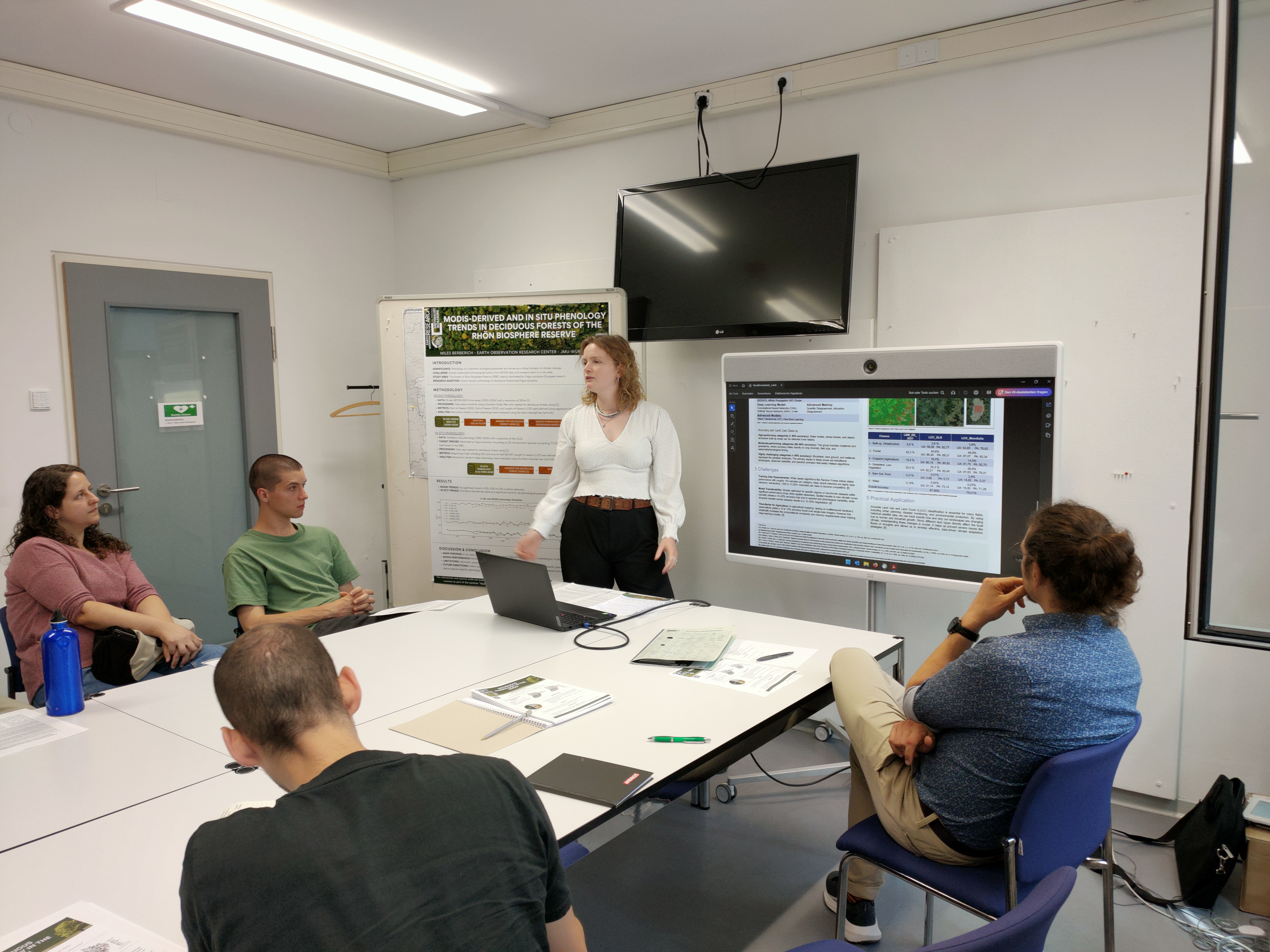
Linking Science and Practice: Exploring Earth Observation for Water Management
How can Earth observation support sustainable water management in times of climate change? This question was at the center of a recent visit by participants of the EAGLE block course "Linking Science and Practice in Earth Observation for Climate Adaptation" to the...

“MainPro” working meeting on municipalities dealing with flooding and heavy rainfall
How do the municipalities in the Lower Franconian Main valley deal with flooding and heavy rainfall? This question was the focus of a working meeting of the Remote Sensing and Social Geography working groups on July 15, 2026, for the "MainPro" research project...
Four Paths, One EAGLE: An Alumni Plenary Worth Talking About
We got to sit in on something really special during our 10 year of EAGLE anniversary: a plenary discussion with four EAGLE alumni, moderated by Will, one of our 10th generation students. And honestly, it was one of those sessions where you look around the room and...