
How can Earth observation help make urban inequalities visible — and actionable?
On Monday, 9 February 2026, the Earth Observation Research Cluster (EORC) welcomes Angela Abascal from the Public University of Navarra (Pamplona, Spain) for a talk that sits right at the intersection of remote sensing, urban studies, and social equity
In her research, Angela Abascal develops scalable Earth Observation (EO) methods to map intra-urban inequalities, with a strong focus on informal settlements and slums, where conventional socio-economic statistics are often sparse, outdated, or spatially unreliable. By combining multisensor satellite data — including optical, radar, thermal imagery, and nighttime lights — with AI-based models, she derives fine-scale indicators related to urban morphology, accessibility, environmental exposure, urban heat, and energy services.
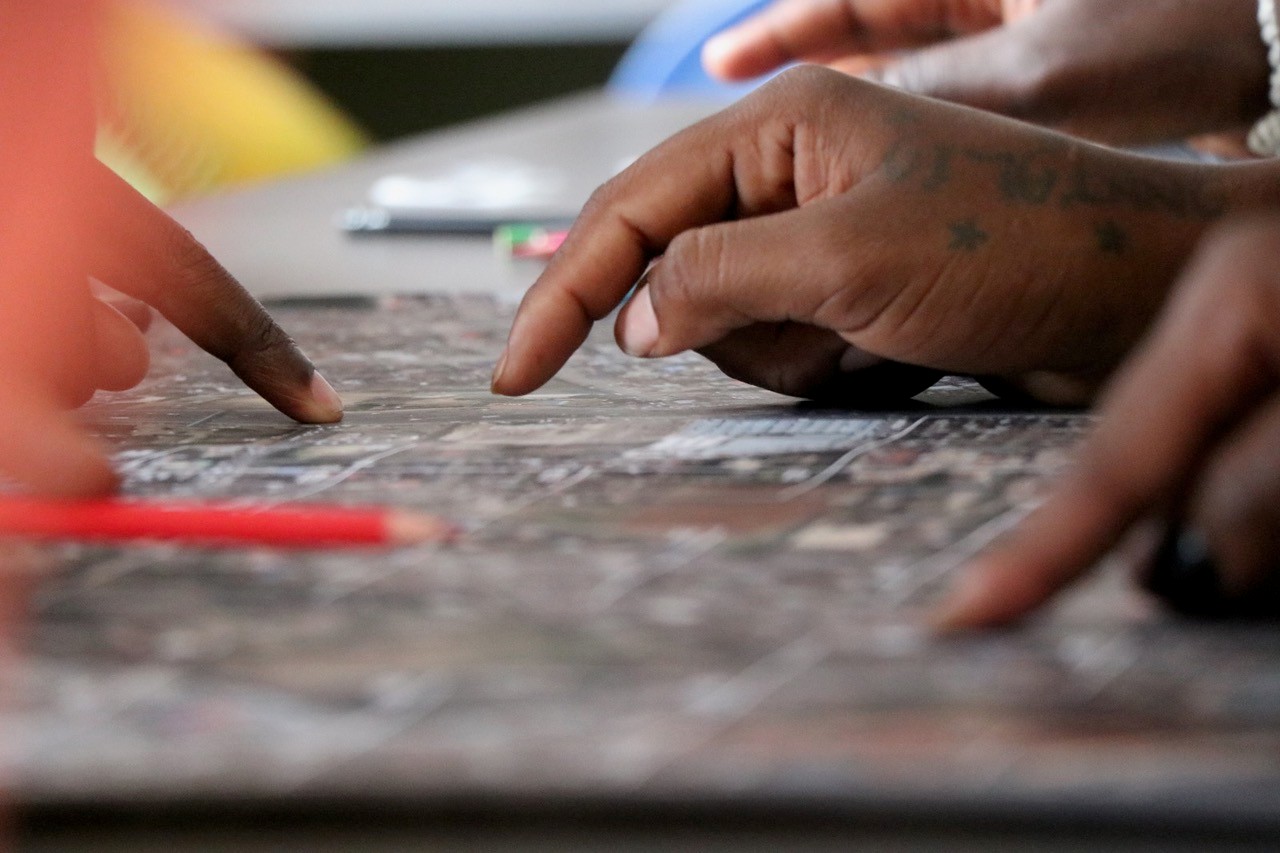
A distinctive feature of her work is the integration of citizen-generated and participatory data. These data are used for calibration and validation, helping to bridge the gap between observable physical conditions and lived experience. This approach enables EO models that reflect locally meaningful definitions of liveability and deprivation, rather than relying solely on externally defined metrics.
Methodologically, the talk will highlight challenges and solutions related to model transferability across cities, uncertainty-aware mapping, and temporal analysis, including causal inference frameworks that assess whether urban interventions actually reduce deprivation over time. The overarching goal is to deliver reproducible, policy-relevant EO analytics that support more equitable urban planning and contribute to the Sustainable Development Goals (SDGs).
📍 What: EORC Talk on “Mapping Intra-Urban Inequalities with Earth Observation and Citizen Science”
📍 Who: Angela Abascal, Public University of Navarra, Pamplona, Spain
📍 When: Monday, 9 February 2026, 3:00 p.m.
📍 Where: Seminar Room 2, Earth Observation Research Cluster, John-Skilton-Str. 4a