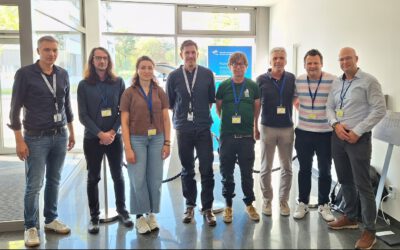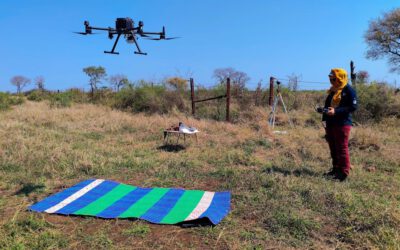

As part of our course on Earth Observation data acquisition, EAGLE students experience first-hand that even the best planning is ultimately shaped by the weather. While flight plans, measurement strategies, and schedules can be carefully prepared in advance, field work in alpine (or arctic or tropic) environments always requires flexibility and the ability to adapt quickly to changing conditions.
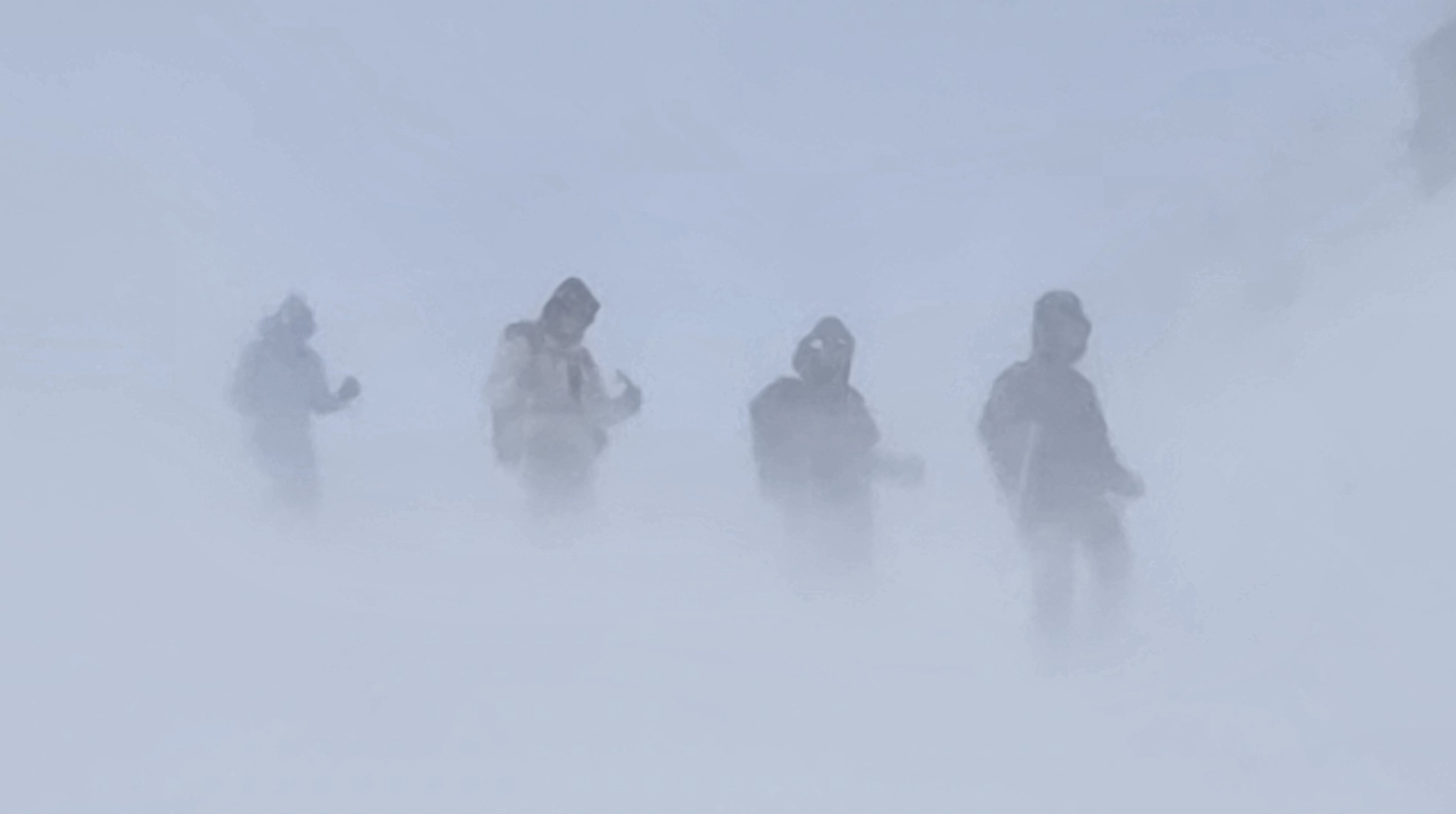
During our recent activities at the Schneefernerhaus Research Station on the Zugspitze, suitable weather conditions were short-lived. The situation changed rapidly, and a slight snowstorm developed, bringing wind and snowfall that made UAS data acquisition impossible and field work increasingly challenging. These conditions highlighted a key lesson of environmental field research: every minute of good weather matters, and opportunities to collect data must be used efficiently when they arise.
Such experiences are invaluable for our students. Beyond technical skills, they learn that field campaigns rarely unfold exactly as planned and that adapting to unexpected situations is part of scientific work. Importantly, the students also experienced how weather conditions directly affect their own well-being and physical limits in the field.
Our EAGLE students demonstrated strong situational awareness by recognizing when conditions became potentially unsafe and deciding collectively to stop the field work once physical limits were reached. Learning to identify risky situations and having the confidence to cancel planned activities is a crucial skill for young scientists, especially when working in remote or extreme environments. These lessons, gained through real-world experience, are an essential part of our Earth Observation EAGLE education.
During our recent activities at the Schneefernerhaus Research Station on the Zugspitze, suitable weather conditions were short-lived. The situation changed rapidly, and a slight snowstorm developed, bringing wind and snowfall that made UAS data acquisition impossible and field work increasingly challenging. These conditions highlighted a key lesson of environmental field research: every minute of good weather matters, and opportunities to collect data must be used efficiently when they arise.
Such experiences are invaluable for our students. Beyond technical skills, they learn that field campaigns rarely unfold exactly as planned and that adapting to unexpected situations is part of scientific work. Importantly, the students also experienced how weather conditions directly affect their own well-being and physical limits in the field.
Our EAGLE students demonstrated strong situational awareness by recognizing when conditions became potentially unsafe and deciding collectively to stop the field work once physical limits were reached. Learning to identify risky situations and having the confidence to cancel planned activities is a crucial skill for young scientists, especially when working in remote or extreme environments. These lessons, gained through real-world experience, are an essential part of our Earth Observation EAGLE education.