LaVaCCA Introductory GIS / R course in Almaty, Kazakhstan

LaVaCCA Introductory GIS / R course in Almaty, Kazakhstan

April 27, 2015

LaVaCCA_Project_Logo

Logo of the LaVaCCA project

After the kick-off meeting of the Volkswagen Foundation funded LaVaCCA project in Almaty (see post), an intensive R/GIS training was held in the GIS lab of the Al ́Farabi Kazakh National University, organized and led by staffers from the Department of Remote Sensing, Würzburg University. Young scientific staffers, post-docs and PhD students as well as invited guests from SIC-ICWC, Al´Farabi University and CAREC joined the training course from February 12th to 17th 2015.

The focus of the course was on methods and techniques for the application of satellite remote sensing in agricultural management, including the use of the statistical and open source programming language R:


  • Introduction to the statistical software R
  • Spatial statistics in R
  • Working with vector data in R
  • Working with raster data in R
  • Visualizing and manipulating satellite data in R

This course served as a preparatory course for another, intensive training to be held in Urgench, Uzbekistan, in summer 2015. The feedback from the participants for the first course in Almaty was very positive and participants were given the opportunity to propose the topics and schedule of the second course in Urgench, Uzbekistan in summer 2015.

More information on the LaVaCCA project can be found here. Information on the R project for statistical computing, including download links can be found here.
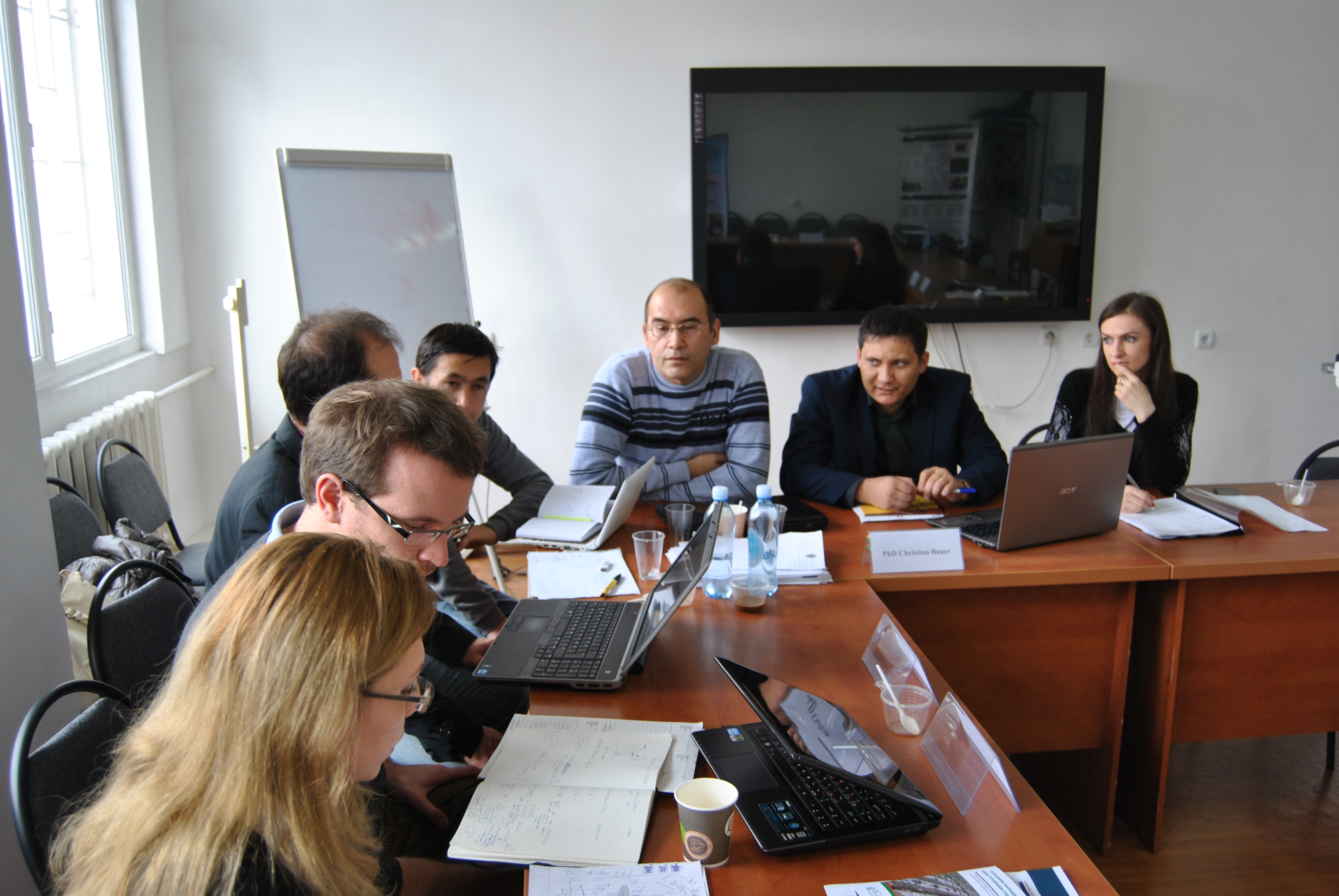
GIS/R_training_LaVaCCA

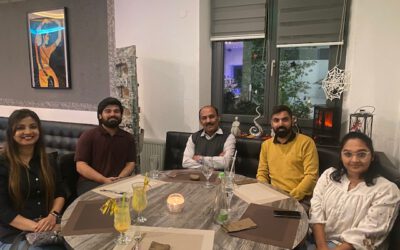
Participants of the LaVaCCA R/GIS course in Almaty, Kazakhstan


follow us and share it on:

you may also like:

Drone manufacturer Wingtra visits EORC

Drone manufacturer Wingtra visits EORC

Is it possible to combine the efficiency of a fixed-wing drone with the precision of a laser scanner? That question brought researchers from EORC together with Wingtra, a Swiss company designing and manufacturing fixed-wing UAS, to exchange on UAS research and discuss...

How We Learned to Fly: The Story Behind UAS Research at EORC

How We Learned to Fly: The Story Behind UAS Research at EORC

Every research group that's ever bought a drone has a story about the first one it lost. We're no different. So let's just get that out of the way up front: this is the inside story of how UAS (Unoccupied Aerial System) research grew up at the Earth Observation...

MainPro workshop on TLS and LiDAR UAS

MainPro workshop on TLS and LiDAR UAS

This week, a workshop organized by Sebastian Buchelt within our EFRE project MainPro brought together students, researchers, and interested project partners to explore modern UAV technologies. The workshop took place in vineyards close to Würzburg and gave the...

25 Years of Remote Sensing in Würzburg

25 Years of Remote Sensing in Würzburg

Our chair of remote sensing, Professor Stefan Dech, likes to say "science is rarely a sprint, it's a marathon". And if you look at what's grown out of Würzburg over the last 25 years, you'll see exactly what he means. In 2026 the Julius-Maximilians-Universität...

Starkregen in Bayern: Beobachtungen und Dokumentation zählen

Starkregen in Bayern: Beobachtungen und Dokumentation zählen

Starkregenereignisse treten immer häufiger lokal, kurzfristig und mit hoher Intensität auf. Innerhalb weniger Stunden können sie erhebliche Überschwemmungen und Schäden verursachen. Um solche Ereignisse künftig besser zu verstehen und die wissenschaftliche Grundlage...

Seeing the World in Points: Lidar Course for the EAGLEs

Seeing the World in Points: Lidar Course for the EAGLEs

Lidar has a funny way of sneaking up on you. You think you know what it is, a laser that measures distance, fine, but then someone shows you a point cloud of a forest canopy with individual branches floating in 3D space and suddenly you realize there's a whole...

Share This