
Lidar and Multispectral UAV

Lidar and Multispectral UAV

m

UAV

December 2, 2020

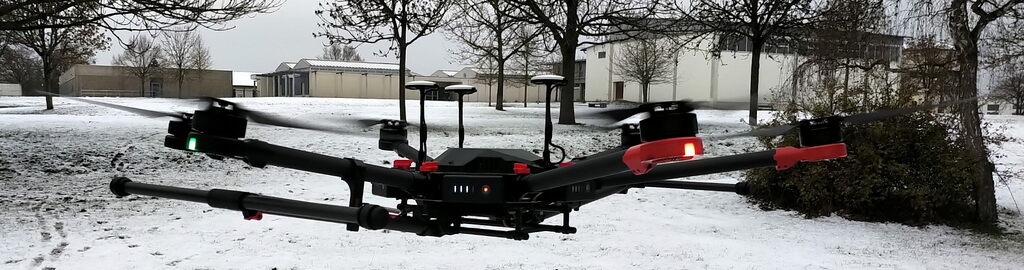
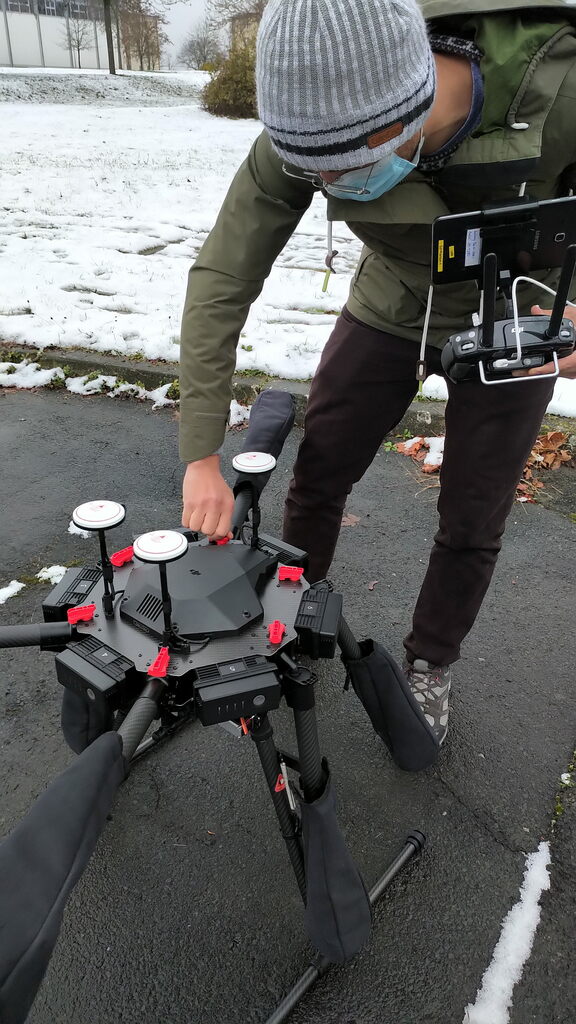
Our new LIDAR UAV arrived and is expanding the flight time and payload for the already working multispectral UAV. We first fly without payload in order to get a feeling and keep the stress level low but soon we will monitor urban, forest and other areas with LIDAR and multispectral plus thermal UAV-based sensors.


Great tools for scientific project as well as teaching activities. Learning new very high resolution data analysis as well as the mission planning, data processing etc. is crucial for our international EAGLE students.


follow us and share it on:

you may also like:

EORC at the joint NSO-GfÖ 2026 conference in Odense, Denmark

EORC at the joint NSO-GfÖ 2026 conference in Odense, Denmark

This week, the EORC is participating in the joint NSO-GfÖ 2026 conference in Odense, Denmark. The conference brings together researchers of all career stages from all across ecology research, representing a wide range of methods and applications, including topics at...

Drone manufacturer Wingtra visits EORC

Drone manufacturer Wingtra visits EORC

Is it possible to combine the efficiency of a fixed-wing drone with the precision of a laser scanner? That question brought researchers from EORC together with Wingtra, a Swiss company designing and manufacturing fixed-wing UAS, to exchange on UAS research and discuss...

How We Learned to Fly: The Story Behind UAS Research at EORC

How We Learned to Fly: The Story Behind UAS Research at EORC

Every research group that's ever bought a drone has a story about the first one it lost. We're no different. So let's just get that out of the way up front: this is the inside story of how UAS (Unoccupied Aerial System) research grew up at the Earth Observation...

Ticks from Above: UAS Fieldwork for the MONID Habitrack Project

Ticks from Above: UAS Fieldwork for the MONID Habitrack Project

Forest edges are tricky places. They're where woodland meets open ground, where light and shade trade off every few meters, and where, it turns out, ticks tend to do really well. That last bit is exactly why Dr. Ariane Droin, Sofía García de León, Dr. Jakob...

Share This