
New publication: improving crop discrimination in West Africa

New publication: improving crop discrimination in West Africa

December 23, 2015

Sudanian Savanna

Foto by Michael Thiel

In our new publication “Evaluating the sequential masking classification approach for improving crop discrimination in the Sudanian Savanna of West Africa” we investigated the benefit of sequential masking on the accuracy of crop mapping in the heterogeneous landscapes of the Sudanian Savanna in West Africa.

Please find abstract and paper under: http://www.sciencedirect.com/science/article/pii/S0168169915002951

follow us and share it on:

you may also like:

Photo contest – Würzburg through your lens

Photo contest – Würzburg through your lens

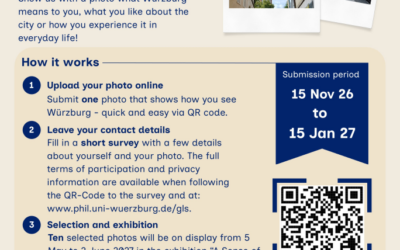
Take part in the Geolingual Studies photo contest and contribute to the exhibition "A Sense of the City". The GLS team wants to see what Würzburg looks like through your lens. Whether your photo depicts a well-known landmark or an overlooked corner, was taken by day...

Help Us Understand Ticks: Join the MONID HABITRACK Study

Help Us Understand Ticks: Join the MONID HABITRACK Study

Lyme borreliosis and tick-borne encephalitis (TBE) are the most common tick-borne diseases in Germany, and they are becoming more relevant. Many infections go unnoticed because they cause mild symptoms or none at all. The MONID HABITRACK project, funded by the BMFTR,...

New publication on the physiology of grapevines

New publication on the physiology of grapevines

We are happy that Marco Lutz, one of our external PhD candidates supervised by Tobias Ullmann, has published a new article in Scientific Reports, together with Daniel Heßdörfer, Tobias Ullmann and Melanie Brandmeier. The work was done within the THWS Project AIVY...

Earth Observation at the DFG BETAFOR workshop

Earth Observation at the DFG BETAFOR workshop

Jakob Schwalb-Willmann represented our team at the DFG BETAFOR workshop in the Bavarian Forest National Park. The room was full of biologists, which is the whole point of an interdisciplinary project, and our UAS multisensor time series drew a lot of interest from the...

bzgl. Art. 50 Verordnung (EU) 2024/1689 (AI Act):

Überwiegend werden eigene originäre Texte und Bilder des EORC genutzt, jedoch sind einige Inhalte von blog post Texten teilweise mit Hilfe von KI überarbeitet worden und einige Bilder sind ganz mit KI erstellt, die jedoch deutlich keine photorealistische Darstellungen abbilden. Aussnahmen sind KI generierte fernerkundliche Datensätze, die explizit für Forschungszwecke mit KI erstellt wurden, hier wird aber durch den assoziierten Text der wissenschaftliche Grund der KI generierten Bilder erläutert.

Share This