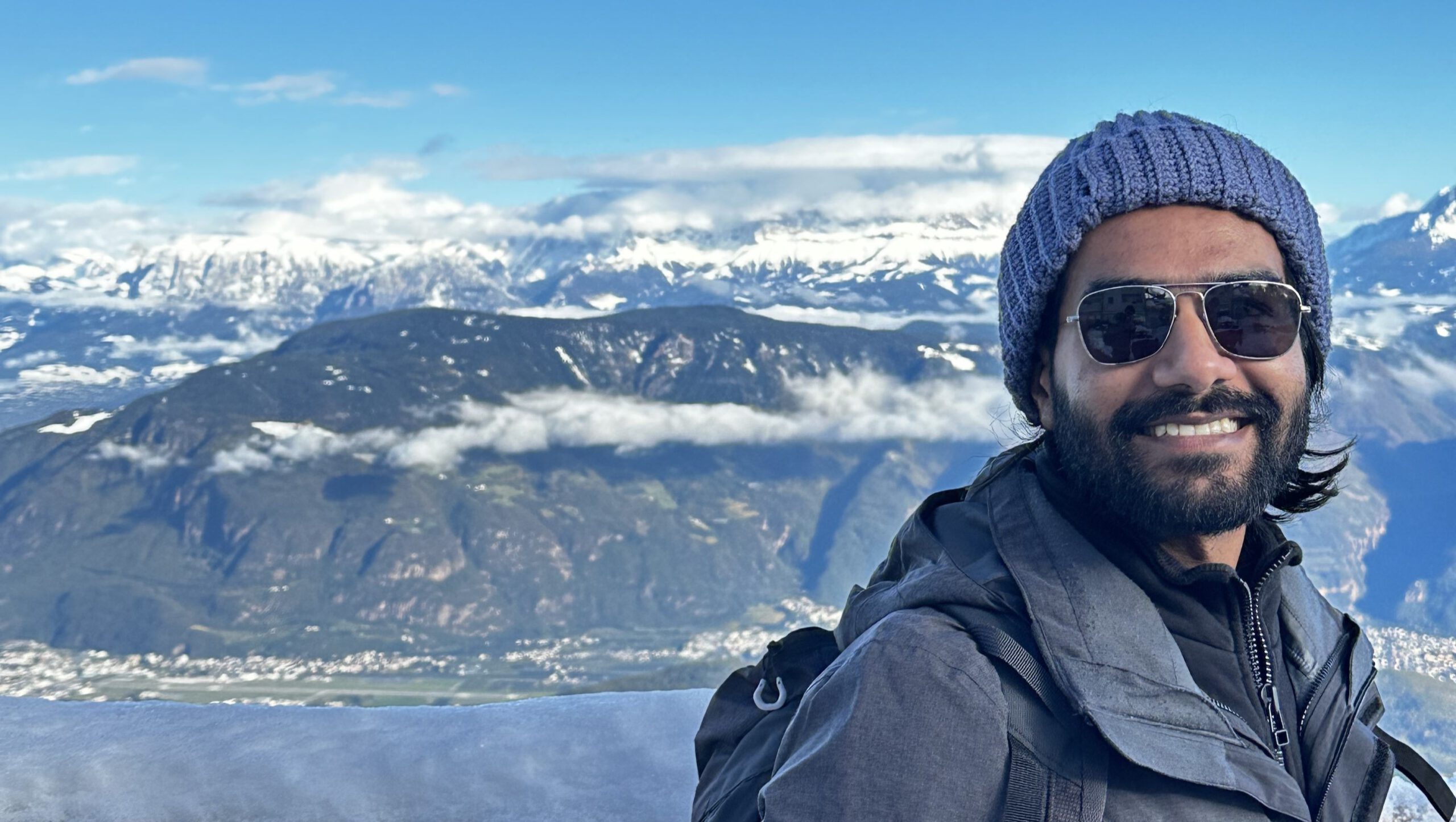

New team member: Basil Tufail

New team member: Basil Tufail

December 11, 2024

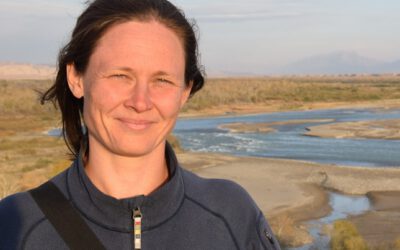
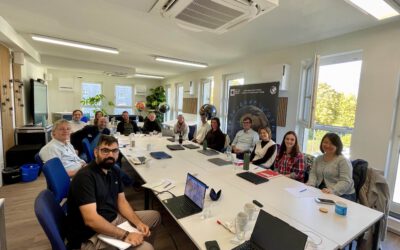
Basil Tufail joined the Earth Observation Research Cluster (EORC) as a doctoral student in late October. Basil earned his Bachelor’s in Space Sciences from the Institute of Space Technology, Islamabad, Pakistan. He then completed the EAGLE Masters at the University of Würzburg in 2021. Since then, he has been part of the Institute of Earth Observation at Eurac Research in Bolzano, Italy, working on various vegetation-related projects and advanced computing for EO data. At the EORC, Basil’s research focuses on Alpine vegetation above the tree line, specifically the sub-nival vegetation and its role in the ecosystem.

follow us and share it on:

you may also like:

An Evening with Professor Jarugu Narasimha Moorthy

An Evening with Professor Jarugu Narasimha Moorthy

It was a pleasure to have dinner with Professor Jarugu Narasimha Moorthy, who received an honorary doctorate from the Faculty of Chemistry and Pharmacy in recognition of his achievements. The ceremony took place on 29 September 2026 in the Chemistry Central Building....

Ecology or Sampling Bias? A Roadside Perspective on Invasion Risk

Ecology or Sampling Bias? A Roadside Perspective on Invasion Risk

At the 2026 annual meeting of the AK Fernerkundung (German Working Group on Remote Sensing), which was hosted by the Thünen Institute in Braunschweig, our EORC team member Dr. Insa Otte presented research results on sampling bias in species distribution models in...

Space Days in Würzburg: EORC on site

Space Days in Würzburg: EORC on site

This Saturday turned out busier than we expected. At the Space Days at the University of Würzburg, Sarah Schoenbrodt-Stitt and Mirjana Bevanda represented EORC with a small booth, and the visitors were quite numerous. Students and colleagues stopped by, as expected....

bzgl. Art. 50 Verordnung (EU) 2024/1689 (AI Act):

Überwiegend werden eigene originäre Texte und Bilder des EORC genutzt, jedoch sind einige Inhalte von blog post Texten teilweise mit Hilfe von KI überarbeitet worden und einige Bilder sind ganz mit KI erstellt, die jedoch deutlich keine photorealistische Darstellungen abbilden. Aussnahmen sind KI generierte fernerkundliche Datensätze, die explizit für Forschungszwecke mit KI erstellt wurden, hier wird aber durch den assoziierten Text der wissenschaftliche Grund der KI generierten Bilder erläutert.

Share This