
Remote Sensing and GIS for Ecologists – book submitted

Remote Sensing and GIS for Ecologists – book submitted

April 23, 2015

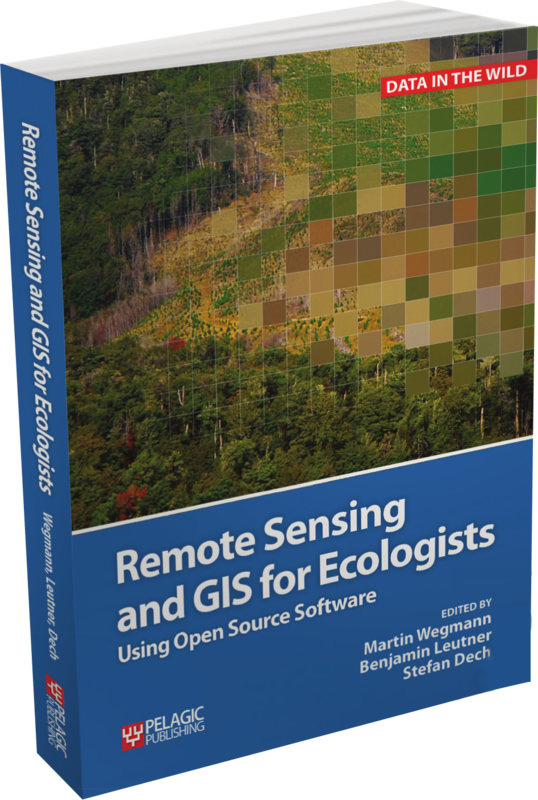
book_remote_sensing_gis_ecologists_wegmann_leutner_dechWe finally submitted our book “Remote Sensing and GIS for Ecologists” to the publisher. It took longer than anticipated and we learned a lot. Looking forward to the printed version.


More details how to order and the expected publishing date can be found at http://www.pelagicpublishing.com/remote-sensing-and-gis-for-ecologists.htmlRemote_Sensing_GIS_Ecology_book_preorder

we will post news and updates about the book and its content at book.ecosens.org

follow us and share it on:

you may also like:

UrbanPulse in the Mainpost, and invitation to the festivities

UrbanPulse in the Mainpost, and invitation to the festivities

If you open the printed Mainpost today, keep an eye out for the Universitätsbund Würzburg’s invitation to the Festkonzert. Among the topics on the page, there’s one we’re rather proud of: our newly funded project URBAN:Pulse, which will be officially celebrated at the...

Field work for MONID-HABITRACK project

Field work for MONID-HABITRACK project

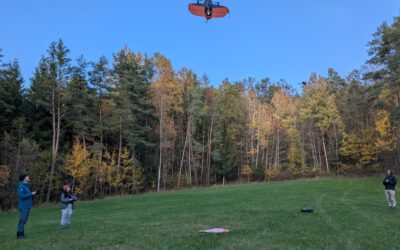
Today our researchers from the department working on the MONID-HABITRACK project, that is funded by the BMFTR, went to the field to acquire LiDAR, thermal and multispectral data with their drones. Within our department the project is located at the Chair of Remote...

Remote Sensing for Germany #2

Remote Sensing for Germany #2

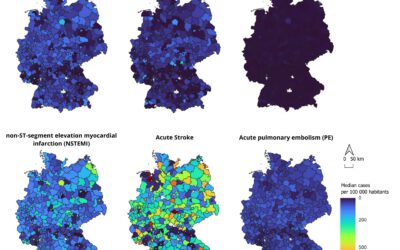
Last year, we gave an overview of our remote sensing work on environmental issues having a special focus on Germany – https://remote-sensing.org/remote-sensing-for-germany-1/ . To follow on from this, we present today a selection of studies on spatial patterns...

bzgl. Art. 50 Verordnung (EU) 2024/1689 (AI Act):

Überwiegend werden eigene originäre Texte und Bilder des EORC genutzt, jedoch sind einige Inhalte von blog post Texten teilweise mit Hilfe von KI überarbeitet worden und einige Bilder sind ganz mit KI erstellt, die jedoch deutlich keine photorealistische Darstellungen abbilden. Aussnahmen sind KI generierte fernerkundliche Datensätze, die explizit für Forschungszwecke mit KI erstellt wurden, hier wird aber durch den assoziierten Text der wissenschaftliche Grund der KI generierten Bilder erläutert.

Share This