Studying Land-use Transitions: Revealing Patterns, Drivers and Implications of Global Farmland Abandonment

Studying Land-use Transitions: Revealing Patterns, Drivers and Implications of Global Farmland Abandonment

m

October 24, 2025

The Earth Observation Research Cluster (EORC) invites you to a talk by Prof. Dr. Alexander V. Prishchepov from the University of Copenhagen (Section Geography) and Research Fellow at the University of Giessen, entitled “Studying land-use transitions: Revealing patterns, drivers and implications of global farmland abandonment“. The talk will be given in presence at the EORC (John-Skilton-Str. 4a) on Thursday, November 06th, at 03:00 p.m.

We look forward to seeing you and having an interesting joint discussion. Save the date!


About the EORC Talk:


Prof. Dr. Alexander V. Prishchepov with “Studying land-use transitions: Revealing patterns, drivers and implications of global farmland abandonment”


Summary: Land-use transitions take many forms, some of which may appear negligible but can have substantial environmental and societal impacts. Among these, farmland abandonment has emerged as a particularly significant process.. The world’s population continues to grow, and while further agricultural expansion contributes to increased food production, it can also lead to environmental degradation and biodiversity loss. At the same time, evidence indicates that farmland abandonment is becoming a widespread global phenomenon, driven by diverse factors with far-reaching implications for both the environment and societal well-being. In this talk, Alexander V. Prishchepov will provide an overview of the current state of knowledge on global patterns of farmland abandonment, discuss the challenges involved in studying this process, particularly from a remote sensing perspective, and explore whether abandoned farmland could serve as a panacea for conserving global biodiversity and reducing carbon emissions. Finally, he will outline potential directions for future research.

 

follow us and share it on:

you may also like:

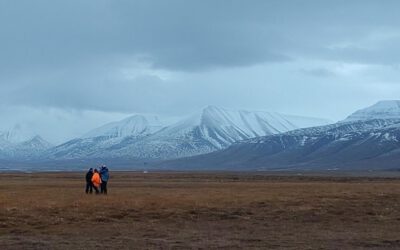
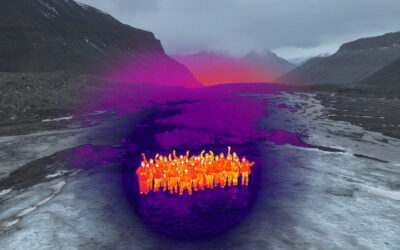
EORC researchers teaching drone remote sensing at UNIS, Svalbard

EORC researchers teaching drone remote sensing at UNIS, Svalbard

During their current visit to Svalbard, EORC researchers have been teaching UNIS students from all over Europe on how drones can be used for remote sensing in the high Arctic. Invited by our UNIS collaborators Prof. Dr. Simone Lang (UNIS) and Prof. Dr. Eero Rinne...

Upcoming PhD Defense by Sebastian Buchelt on 11th February

Upcoming PhD Defense by Sebastian Buchelt on 11th February

We are happy to announce that our colleague Sebastian Buchelt will defend his PhD thesis "Potential of Synthetic Aperture Radar time series for mapping and monitoring of small-scale periglacial processes in alpine environments" on February 11th at 12 pm at...

Talk by Dr. Philipp on AI at Airbus

Talk by Dr. Philipp on AI at Airbus

Our former EAGLE M.Sc. graduate and EORC PhD graduate Dr. Marius Philipp will give talk about AI, ML and NLP within his current work at Airbus. The talk will take place next Wednesday, 11th of Feb., at 2pm in John-Skilton Str. 4a. It will take place either in seminar...

Urban Earth Observation Lecture: Understanding Cities from Above

Urban Earth Observation Lecture: Understanding Cities from Above

As part of the EAGLE M.Sc. programme, our international students attended this winter term the Urban Earth Observation lecture by EORC professor Hannes Taubenböck. The session offered a comprehensive overview of how remote sensing has evolved into a central tool for...

EORC research on biogeomorphology highlighted by EGU blog

EORC research on biogeomorphology highlighted by EGU blog

In a recent blog by the Geomorphology Division of the European Geosciences Union (EGU), the research of our EORC PI Florian Betz, working on generally on river systems and specifically on fluvial biogeomorphology, was featured in the community blog:...

Share This