
Urban Form and Urban Heat: Insights from the Latest EORC Talk

Urban Form and Urban Heat: Insights from the Latest EORC Talk

m

October 7, 2026

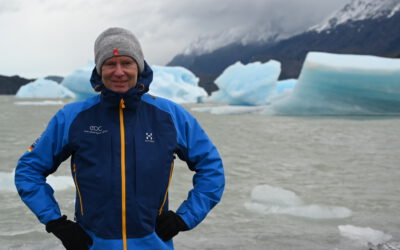
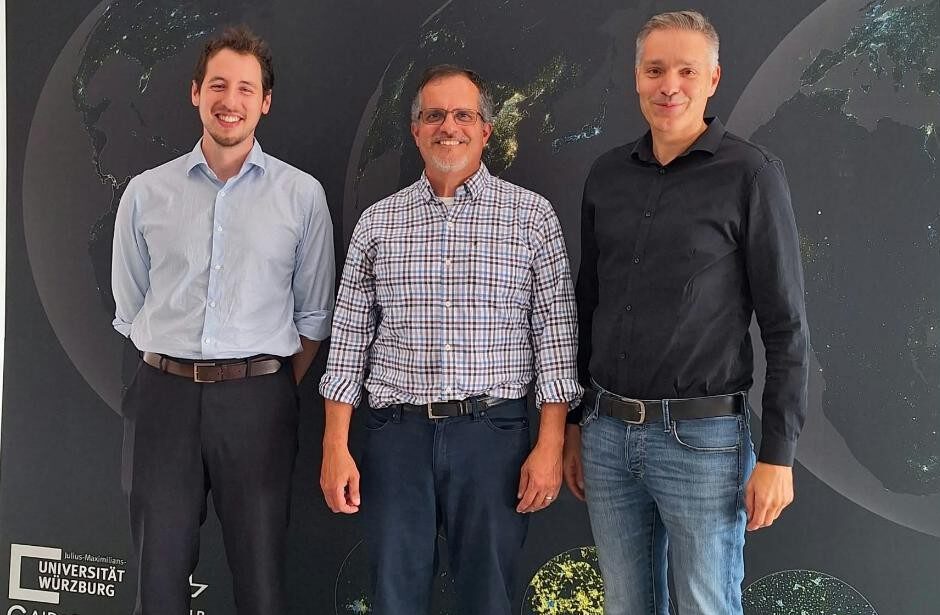
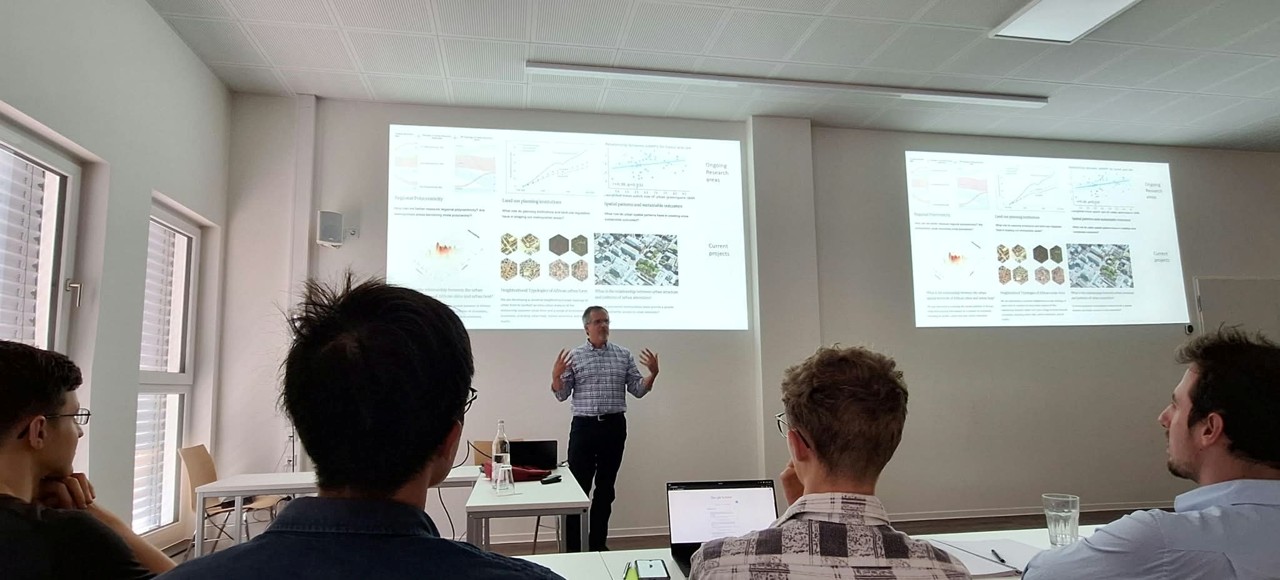
On 6 October 2026, the Earth Observation Research Cluster (EORC) welcomed Stephan J. Schmidt from the Department of City and Regional Planning at Cornell University for an EORC Talk on “Urban form and the heat island effect”.

Urban heat is becoming an increasingly important challenge for cities worldwide. In his talk, Stephan Schmidt provided fascinating insights into how the spatial structure and morphology of cities influence urban heat patterns. Drawing on satellite-derived land surface temperature, land-cover information, and spatial metrics, he presented research from Europe and Africa investigating the role of urban aggregation and fragmentation, land-use mixing, green-space configuration and polycentric urban development.

A particular highlight was the perspective on African cities, including recent work using remote sensing, machine learning and large-scale morphological indicators to investigate urban form across thousands of cities and to develop a morphology-based typology of African urban regions.

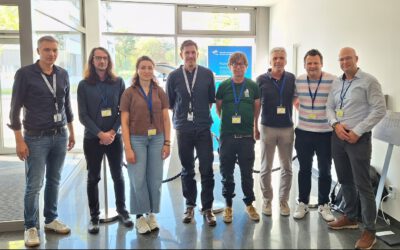
The talk was followed by an engaging discussion, providing an opportunity to exchange perspectives on remote sensing, urban morphology and the challenges of understanding and mitigating urban heat.

A big thank you to Stephan J. Schmidt for visiting the EORC and sharing his research with us, and to everyone who joined the talk and contributed to the discussion.

We are looking forward to continuing the exchange and to welcoming you again at one of our next EORC Talks.


follow us and share it on:

you may also like:

UAS analysis of fire and drought stress under controlled conditions

UAS analysis of fire and drought stress under controlled conditions

New update from the field work of our PhD researcher Luisa Pflumm in Kruger National Park! After weeks of fieldwork in the open savanna, Luisa's work now moves into a more controlled setting, a burn chamber experiment carried out together with our collaborators from...

Welcome, Prof. Dr. Stefan Dech!

Welcome, Prof. Dr. Stefan Dech!

Big news at the EORC: as of today, October 1st, 2026, Stefan Dech is officially a senior professor at the University of Würzburg, and he's staying right where he belongs, with us at the EORC. Stefan will keep working with us on a whole range of Earth Observation...

EO4CAM Meeting with LfU and StMUV at DLR

EO4CAM Meeting with LfU and StMUV at DLR

On 30 September 2026, representatives from the Bavarian State Ministry of the Environment and Consumer Protection (StMUV), the Bavarian Environment Agency (LfU), the EORC of the University Würzubrg (JMU), and the...

Field campaign for DFG Fire and Savanna project

Field campaign for DFG Fire and Savanna project

Our PhD candidate Luisa Pflumm is back in Kruger National Park for her third field campaign. Her PhD focuses on how savanna trees respond to combined fire and drought stress for which she is flying UAVs equipped with multispectral and LiDAR sensors. With this round of...

Successful MSc Defense by Henning Riecken

Successful MSc Defense by Henning Riecken

Congratulations to Henning Riecken, who successfully defended his MSc thesis on September 28, 2026: "Mapping and Structural Assessment of Woody Vegetation in Bavaria Using Digital Elevation Models and Multisource Geodata" Henning's thesis explores how newly available...

bzgl. Art. 50 Verordnung (EU) 2024/1689 (AI Act):

Überwiegend werden eigene originäre Texte und Bilder des EORC genutzt, jedoch sind einige Inhalte von blog post Texten teilweise mit Hilfe von KI überarbeitet worden und einige Bilder sind ganz mit KI erstellt, die jedoch deutlich keine photorealistische Darstellungen abbilden. Aussnahmen sind KI generierte fernerkundliche Datensätze, die explizit für Forschungszwecke mit KI erstellt wurden, hier wird aber durch den assoziierten Text der wissenschaftliche Grund der KI generierten Bilder erläutert.

Share This