
Contributions to the Joint Urban Remote Sensing Event #1

Contributions to the Joint Urban Remote Sensing Event #1

m

May 17, 2023

Today was the first day of the Joint Urban Remote Sensing Event (JURSE). This event is committed to introduce innovative methodologies and technological resources recently employed to investigate the manifold aspects of the urban environment through orbital and airborne remote sensing data. The 2023 edition of JURSE takes place in Heraklion in Greece. You can follow the event at http://jurse2023.org/ or at Twitter via #JURSE2023 

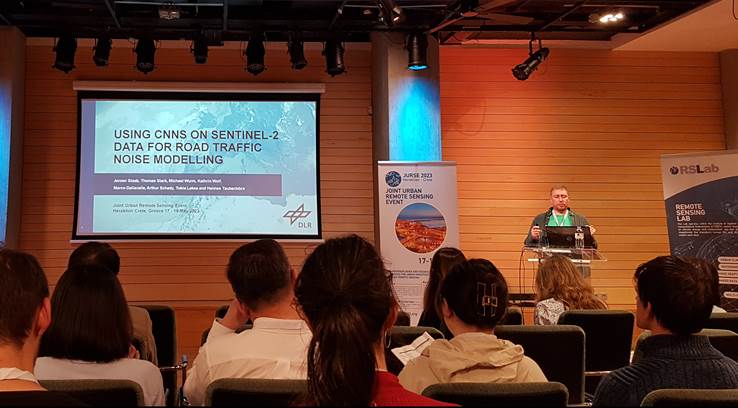
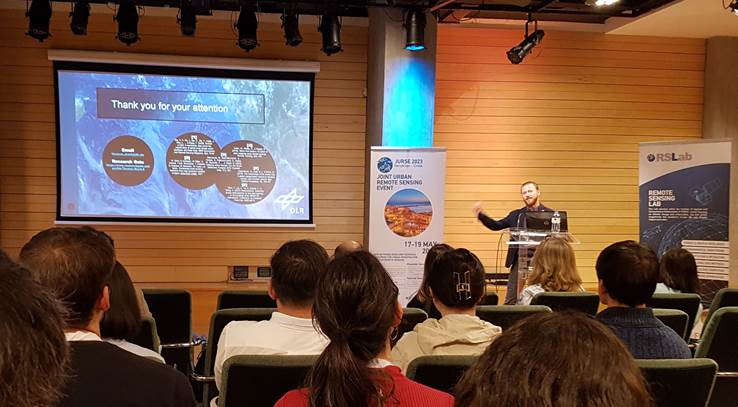
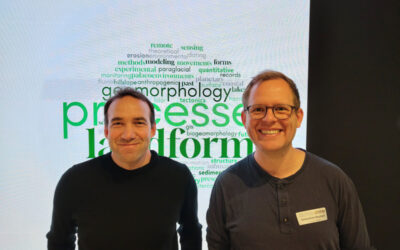
The Earth Observation Research Hub and the Earth Observation Center of the German Aerospace Center provided today a lot of contributions. Hannes Taubenböck gave on behalf of the fellow conference chairs Monika Kuffer, Clement Mallet and Devis Tuia a talk in the introductory session on the vision and the history of the JURSE.  
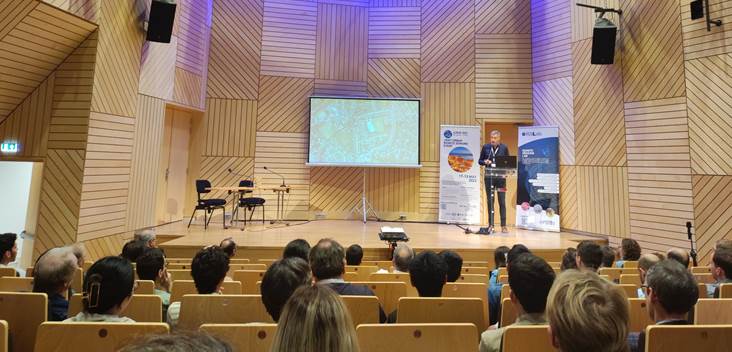
 

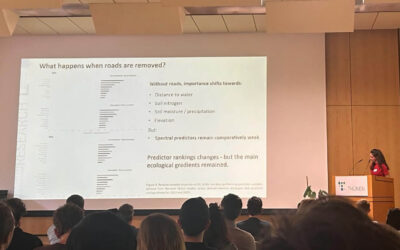
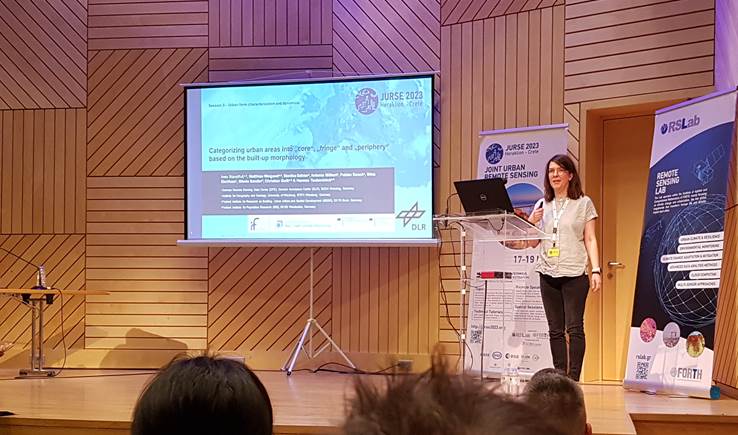
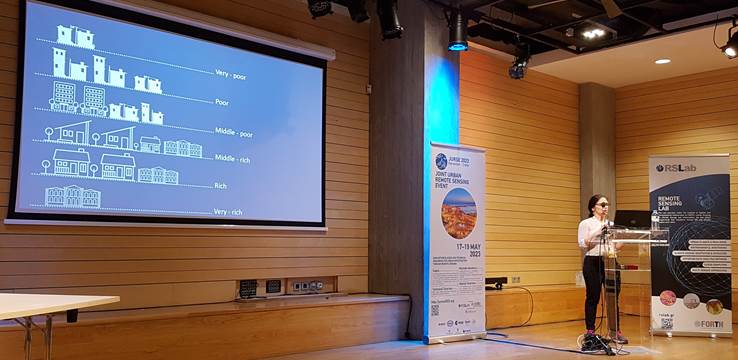
Ines Standfuß gave a presentation titled “Categorizing urban areas into “core”, “fringe” and “periphery” based on the built-up morphology“. Jeroen Staab presented his work in a talk on “Using CNNs on Sentinel-2 data for noise modelling“. Thomas Stark gave a talk on “Detecting challenging urban environments using a few-shot meta-learning approach“. Yrneh Ulloa-Torrealba presented her research work on “Solid waste on the streets and socioeconomic class using remote sensing“. 
 

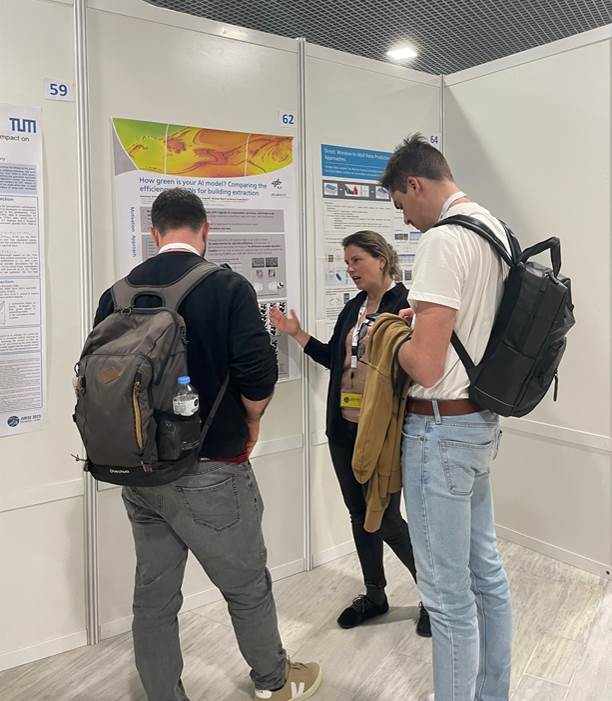
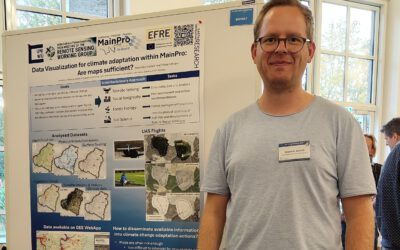
Dorothee Stiller presented a poster titled “Performance, Time, Efficiency: Comparative Analysis of CNNs for Building Extraction“. Johannes Mast presented a poster titled “Linking remote sensing data and online engagement in flood events in Nigeria“.

Hannes Taubenböck presented a poster on “The ‘ghost city’ phenomenon in China: mapping and categorization at intra-urban scale“.  


follow us and share it on:

you may also like:

Hackathon within the Super-Test-Site Project

Hackathon within the Super-Test-Site Project

What happens when researchers and developers sit down together to explore a multidisciplinary urban dataset? Our researchers from the EORC joined a hackathon that took place within the Super-Test-Site Project, organised by Prof. Dr. Gunther Gust from the Chair of...

Field Days in the Oberpfalz: Exploring FSME Hotspots

Field Days in the Oberpfalz: Exploring FSME Hotspots

On April 17th and 29th our researchers Sofía and Ariane had two field days in the areas around Amberg and Schwandorf, one of Germany's most well-known TBE (tick-borne encephalitis) risk regions. They joined Prof. Dr. Gerhard Dobler and Dr. Lidia Chitimia-Dobler from...

Johannes Mast has successfully defended his PhD Thesis

Johannes Mast has successfully defended his PhD Thesis

Johannes Mast defended his PhD Thesis titled "Geographical Migration Research using Remote Sensing and Social Media Data" at the Julius-Maximilians-University Würzburg successfully on the 29th of April 2026. We congratulate him very much for his...

EAGLEs at SANParks – Kruger National Park

EAGLEs at SANParks – Kruger National Park

Our EAGLEs Sebastian Rothaug and Clemens Schömig just finished their 2+ months for the internship/InnoLab in Kruger National Park. The work was done with SANparks, Dr. Coetsee and Dr. Wigley within a year-long collaboration of EORC researcher Dr. Bevanda. The...

Fieldwork in Focus: Our New “Hex Wall” Installation

Fieldwork in Focus: Our New “Hex Wall” Installation

At EORC, the transition from physical reality to digital analysis is a core part of our methodology. While our primary output consists of Earth Observation data the foundation of this work is laid in the field. To document this essential aspect of our research, we...

Share This