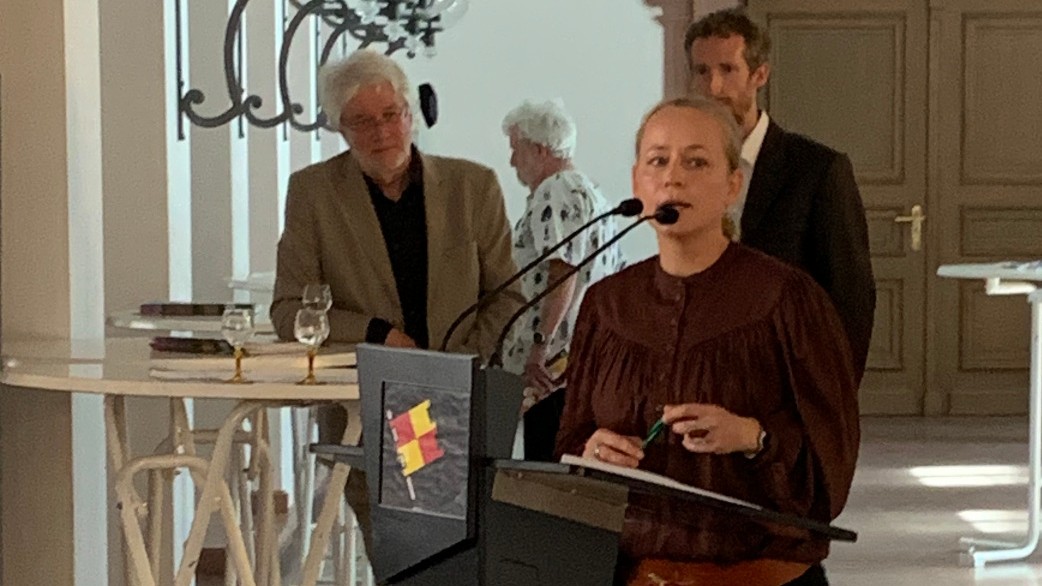

This week marked the official opening of the exhibition “Stories from Two Cities – Living with Science!” at Würzburg City Hall. The exhibition is part of the celebrations marking 60 years of partnership between Würzburg and Mwanza, bringing together stories, research, and creative contributions from students, researchers, and partners in both cities.
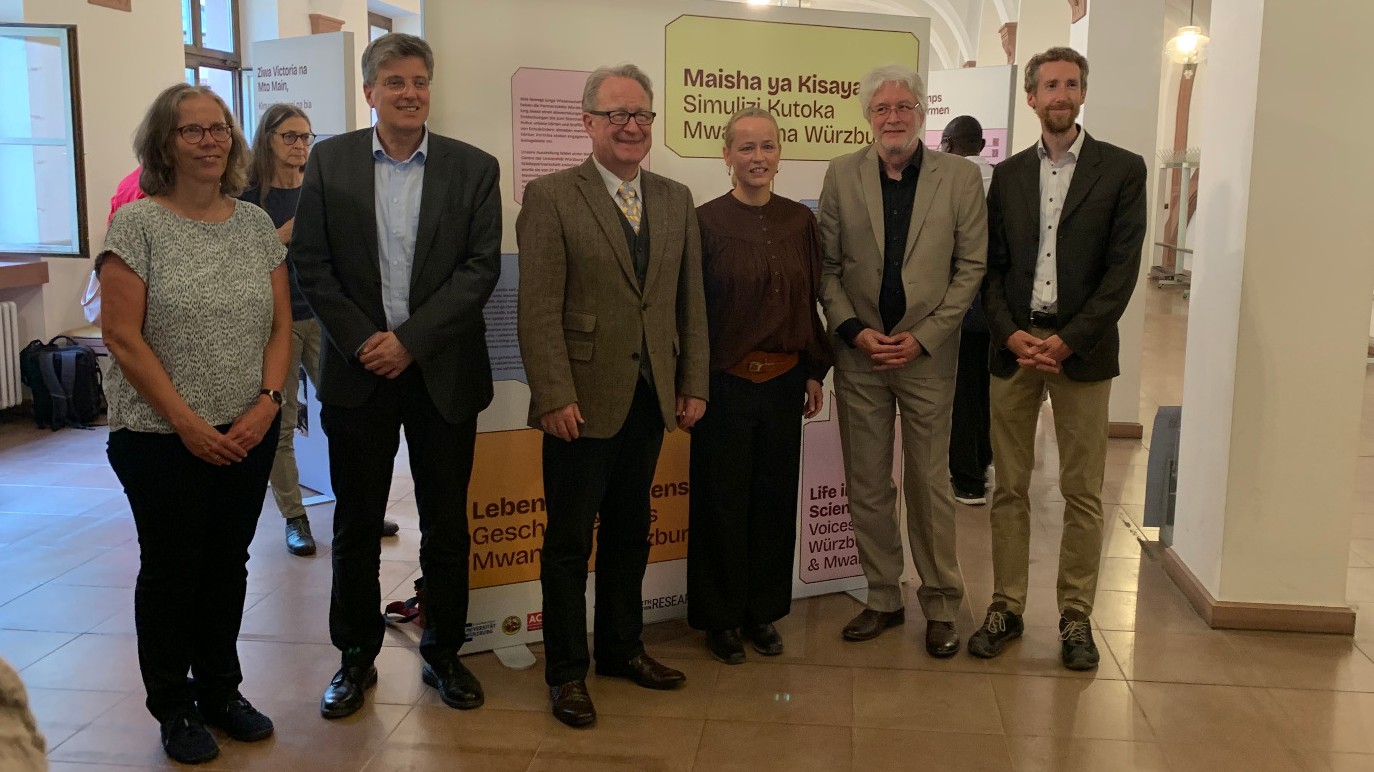
Developed as part of an interdisciplinary and intercultural teaching and research project on science communication by our EORC members Sarah Schönbrodt-Stitt and Michael Thiel, the exhibition explores how science connects with everyday life. Rather than presenting research as something distant or abstract, the project highlights the people, experiences, and stories behind scientific work and community engagement. We were honored to have the event officially inaugurated by a great panel, including our team member Dr. Sarah Schönbrodt-Stitt, co-organizer and representative of the project’s academic vision, Professor Baier, Dean of the faculty, the Vice President for Internationalization Prof. Fischer, highlighting the university’s commitment to global partnerships and the Mayor Mr Spatz of the City of Würzburg, who welcomed our international guests and underscored the city’s role as a home for global intellectual exchange.
The exhibition was created through a collaboration between the University of Würzburg and St. Augustine University of Tanzania in Mwanza. Under the guidance of Dr. Sarah Schönbrodt-Stitt, Dr. Michael Thiel, and Prof. Dr. Guido Fackler, students from the EAGLE MSc programme, Museum Studies, Erasmus+ programmes, and partner institutions in Tanzania worked together over the winter semester to develop the exhibition.
Working in interdisciplinary teams, the students researched topics, conducted interviews, and transformed their findings into engaging exhibition materials. Their work reflects a remarkable diversity of themes, from sustainability, biology, and social sciences to student life, urban spaces, culture, and the shared experiences that connect people across continents.
The result is a collection of 24 exhibition banners that showcase both scientific topics and personal perspectives. A central feature of the exhibition is a series of portraits of young researchers from Würzburg and Mwanza. Through interviews and storytelling, visitors gain insight not only into research projects but also into the motivations, aspirations, and everyday experiences of the people behind them.
One of the exhibition’s strengths lies in its ability to reveal unexpected connections between the two partner cities. Whether through environmental themes, cultural practices, or everyday life, the stories demonstrate that science is deeply intertwined with society and that meaningful collaboration often begins with curiosity and conversation.
The opening ceremony brought together representatives from the university, the city, and the wider partnership network. Speakers highlighted the importance of international exchange, interdisciplinary cooperation, and the role of science communication in building understanding across cultures.
The exhibition is also designed to be accessible to a broad audience. Content is available in German, English, and Swahili, reflecting the project’s commitment to inclusivity and dialogue. Alongside texts and images, visitors will find digital and multimedia elements that invite them to explore the stories from different perspectives.
Above all, “Stories from Two Cities – Living with Science!” is a celebration of collaboration. It showcases what can emerge when students, researchers, and communities from different backgrounds come together to learn from one another and share their experiences.
We congratulate all students, staff, and partners who contributed to this inspiring project and invite everyone to visit the exhibition and discover the many stories that connect Würzburg and Mwanza.