
Crop growth animations using ggplot and gganimate

Crop growth animations using ggplot and gganimate

m

March 22, 2019

For winter wheat crop modelling, I designed some animations in R. To make growth curves and bubble plots, I used some R packages such as “ggplot2” and “gganimate“. The code description of these animations is given on below mentioned Github links.

Bubble plots in R

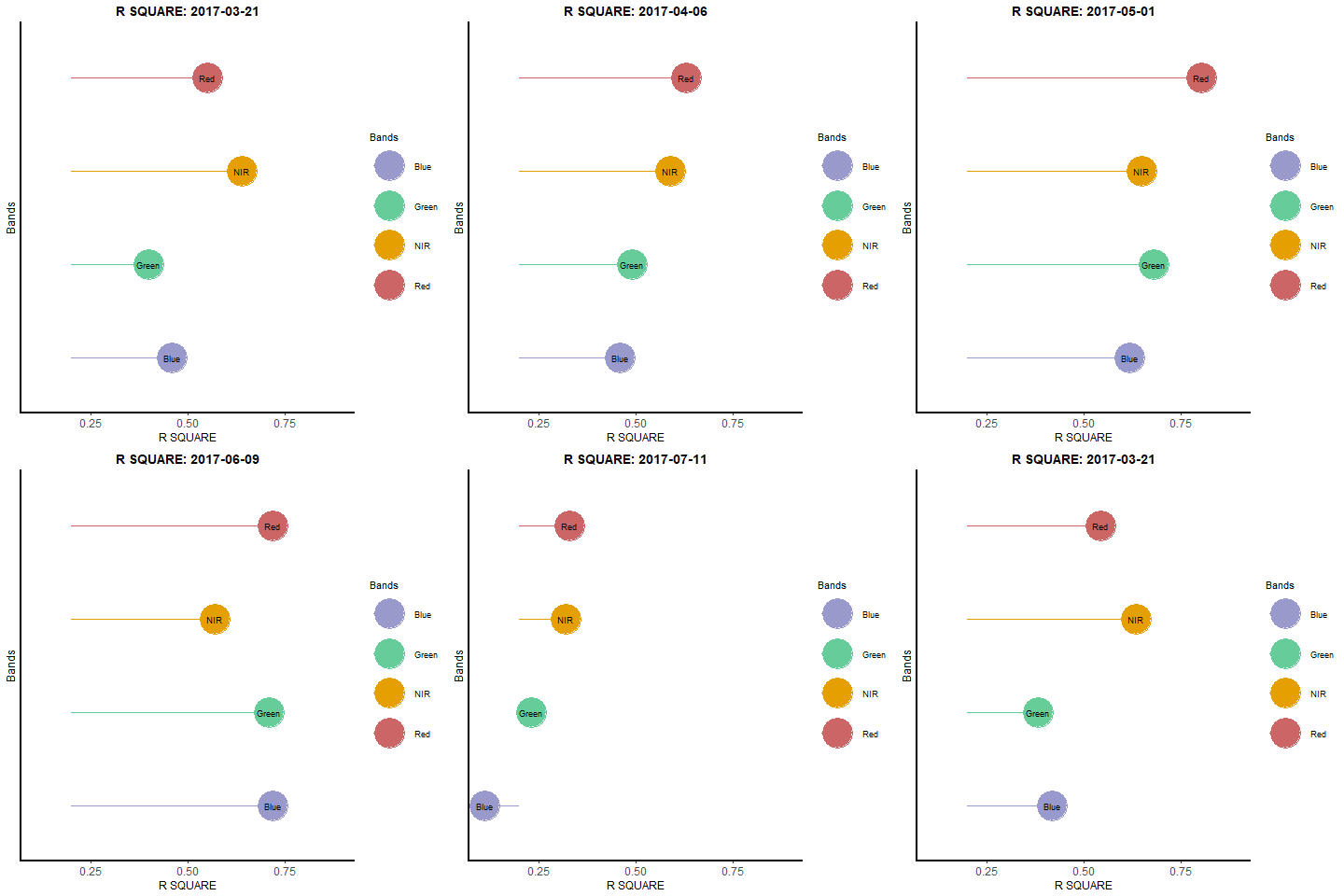
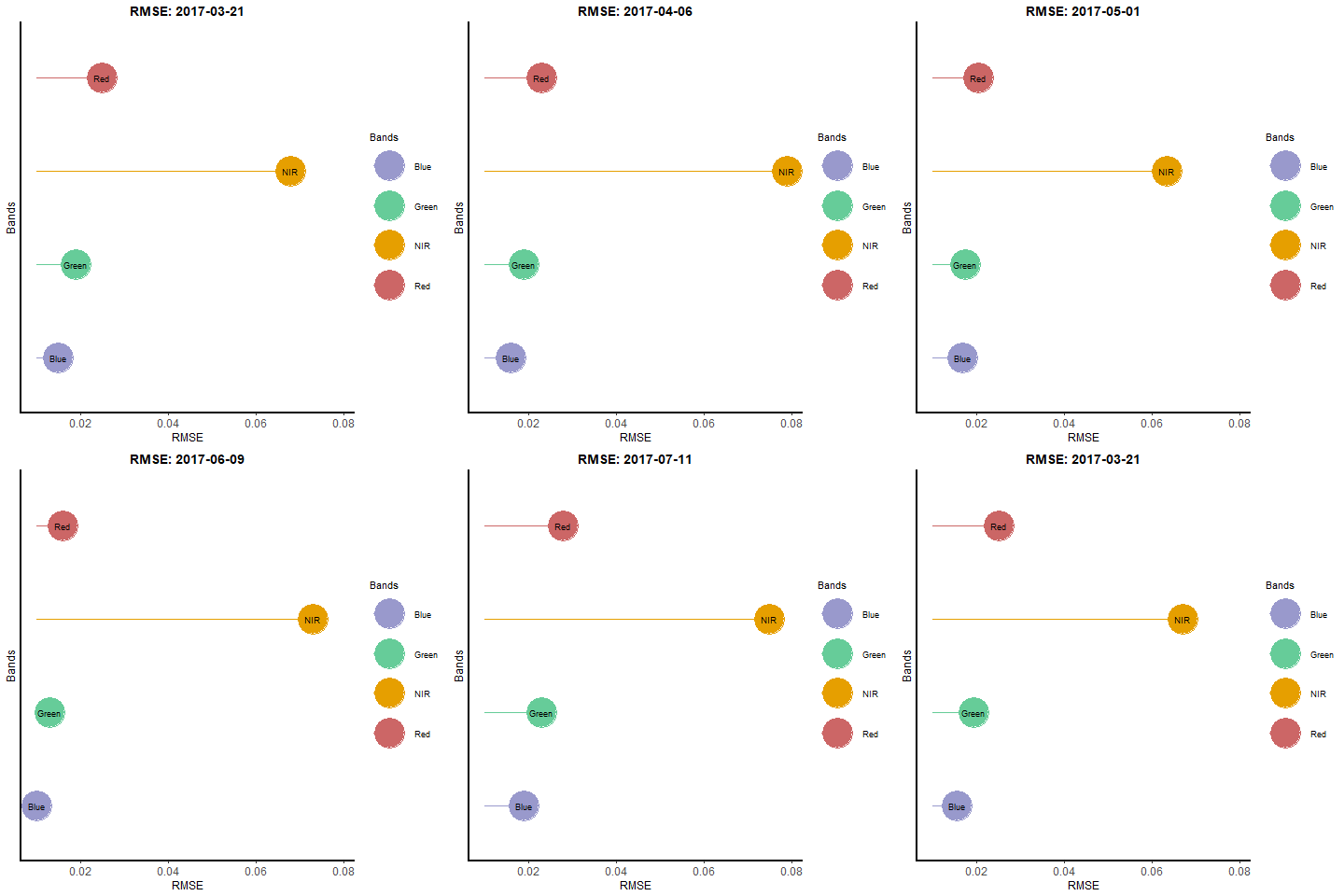
Bubble plots are an effective way of displaying data. For my study, I created these plots to describe the quality assessment of synthetic remote sensing data (combination of Landsat (30m) and Modis (500m)) used for generating daily time series of winter wheat. The code is described on my Github account.
Growth Curves in R

After producing quantitative data on the rate of development of the winter wheat crop, I produced the logistic curve of its biomass using lue and ggplot2 packages in R.
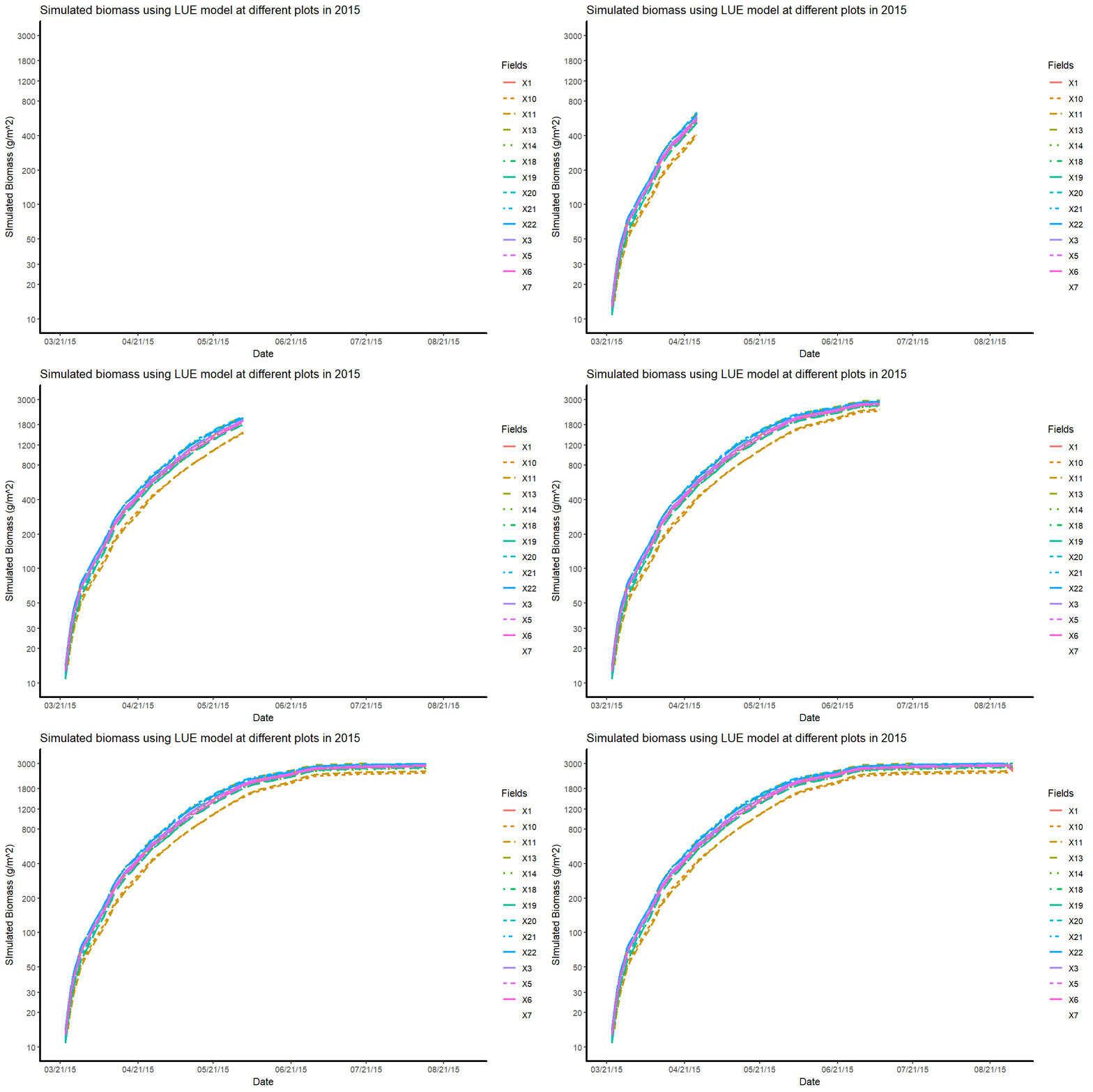
Model generated biomass curve of winter wheat using Light use efficiency model in 2015

In addition, I made use of the above mentioned packages to generate a comparative plot between actual and optimal growth rate of winter wheat. The code for this curve is provided on my GitHub account.
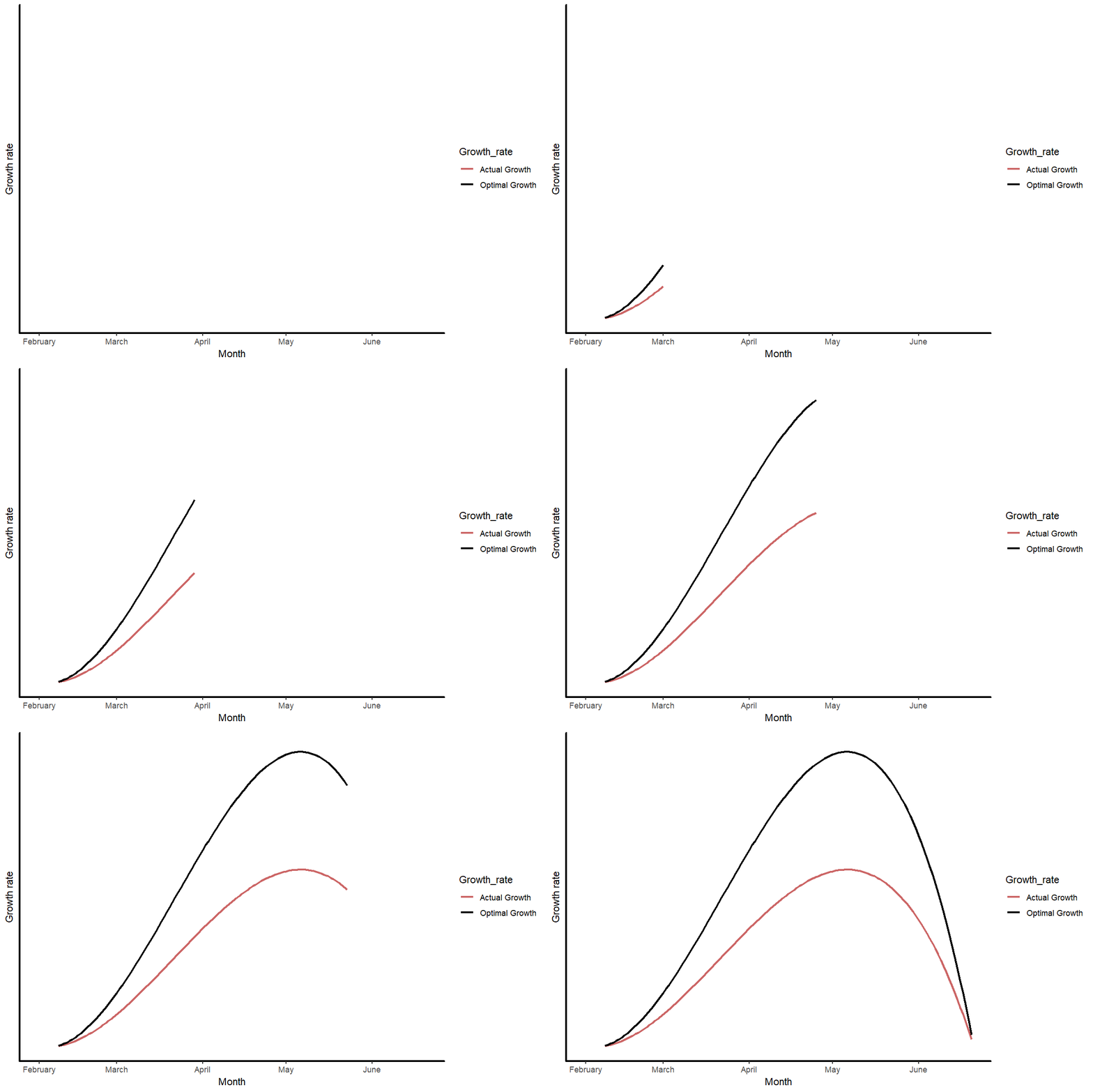
Comparison of optimal versus actual growth rate of winter wheat in DEMMIN, Germany

Maninder Singh Dhillon


follow us and share it on:

you may also like:

Successful MSc Defense by Christina Krause

Successful MSc Defense by Christina Krause

Congratulations to our EAGLE student Christina Krause, who successfully defended her MSc thesis titled "Active Learning and Parameter-Efficient Feature Adaptation for Cross-City Seismic Building Type Transfer Using DINOv2 and Street-Level Imagery" on November 12,...

Successful MSc Defense by Marlene Bauer

Successful MSc Defense by Marlene Bauer

Congratulations to our EAGLE student Marlene Bauer, who successfully defended her MSc thesis titled "Robust and Uncertainty-Aware Informal Settlement Mapping – Cross-City Generalisation Across Diverse Urban Morphologies Using High-Resolution Satellite Imagery in...

Help Us Understand Ticks: Join the MONID HABITRACK Study

Help Us Understand Ticks: Join the MONID HABITRACK Study

Lyme borreliosis and tick-borne encephalitis (TBE) are the most common tick-borne diseases in Germany, and they are becoming more relevant. Many infections go unnoticed because they cause mild symptoms or none at all. The MONID HABITRACK project, funded by the BMFTR,...

Setting Up for the 2nd EO4CAM Nutzerworkshop

Setting Up for the 2nd EO4CAM Nutzerworkshop

Right now our staff are busy hauling cases, mounting displays and testing every cable for the 2nd EO4CAM Nutzerworkshop, “Erdbeobachtung für die Klimaanpassung, behördliche Akteure in Bayern”. The doors open tomorrow, and the exhibition...

A dashboard for multi-UAS thermal data

A dashboard for multi-UAS thermal data

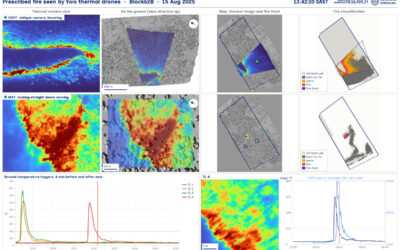
Mapping an active fire with various drones flying in parallel is hard enough. But getting the data processed, evaluated and turned into research datasets is a different story. The publication is on its way, and for now we’d like to share a dashboard by Antonio José...

bzgl. Art. 50 Verordnung (EU) 2024/1689 (AI Act):

Überwiegend werden eigene originäre Texte und Bilder des EORC genutzt, jedoch sind einige Inhalte von blog post Texten teilweise mit Hilfe von KI überarbeitet worden und einige Bilder sind ganz mit KI erstellt, die jedoch deutlich keine photorealistische Darstellungen abbilden. Aussnahmen sind KI generierte fernerkundliche Datensätze, die explizit für Forschungszwecke mit KI erstellt wurden, hier wird aber durch den assoziierten Text der wissenschaftliche Grund der KI generierten Bilder erläutert.

Share This