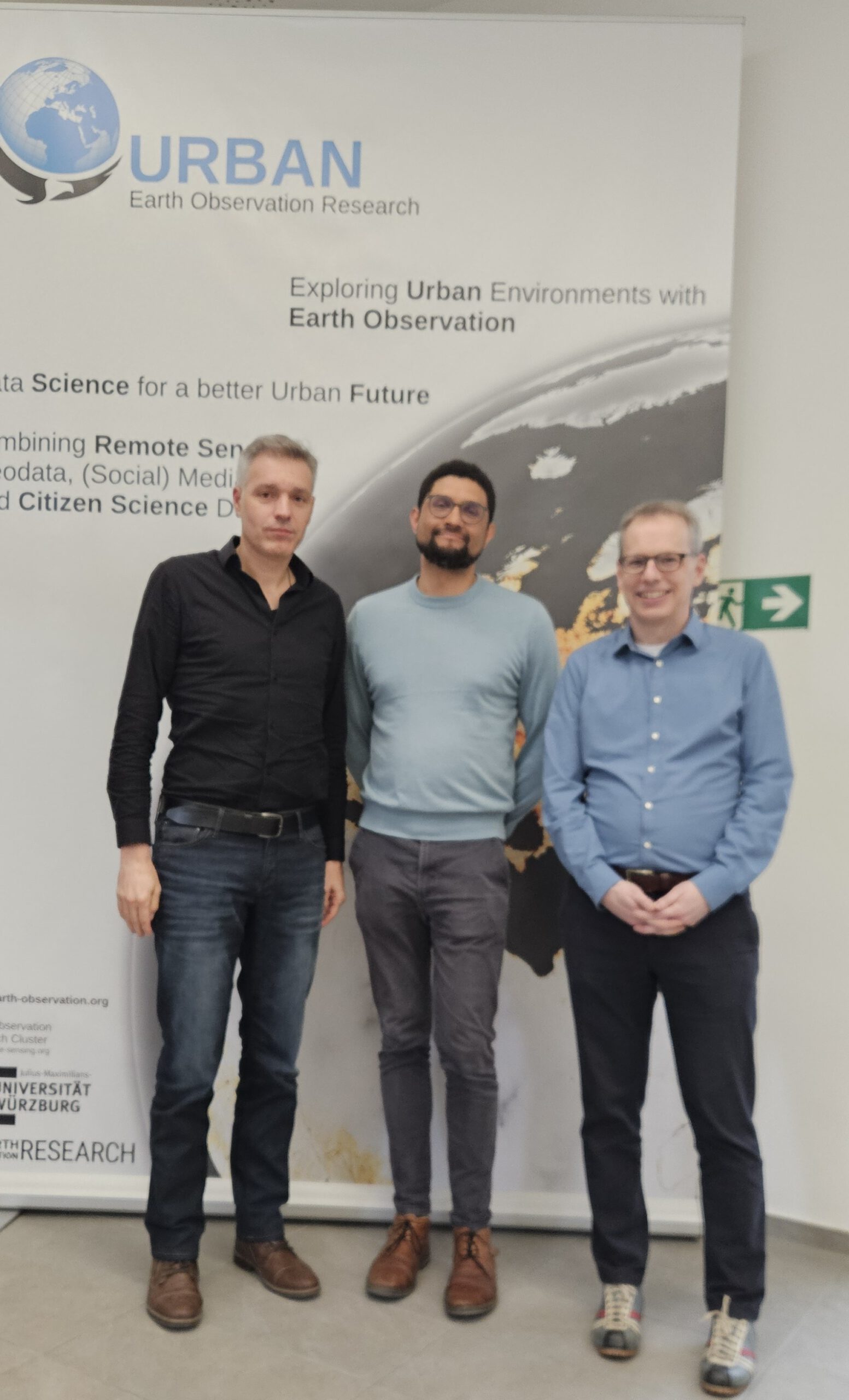

A recent EORC Talk at the Earth Observation Research Cluster (EORC) at the University of Würzburg brought together perspectives from demography, geography, and spatial analysis. Sebastian Klüsener and Tamilwai Kolowa from the Federal Institute for Population Research (BiB) presented their research on how spatial perspectives and geospatial data can deepen our understanding of population dynamics and regional demographic change.
Prof. Dr. Sebastian Klüsener opened the talk with an overview of research activities at the Federal Institute for Population Research and introduced key questions related to spatial population dynamics. His work focuses on how demographic processes such as fertility, mortality, and population ageing vary across regions and social groups. A central theme of his research is the role of social status in shaping population patterns over space and time. During the presentation, he discussed regional projections of urban–rural disparities in population ageing and presented studies exploring systematic relationships between social status and spatial context. These analyses provide important insights into how demographic inequalities emerge geographically and how they may evolve in the future.
In the second part of the talk, Tamilwai Kolowa presented research from his current thesis project, which examines small-area population change in Germany. Understanding how populations shift within urban and suburban areas can be challenging because demographic statistics are often only available at relatively coarse administrative scales. His work therefore explores how spatial data and Earth observation approaches can help overcome these limitations. By comparing different classifications of urban and rural areas and integrating spatial data at finer resolution, the project investigates patterns of urban and suburban growth in Germany. The results demonstrate how higher spatial detail can reveal internal migration dynamics and settlement changes that remain hidden in traditional demographic statistics.
The presentations highlighted how combining demographic research with spatial analysis and Earth observation can open new perspectives on population change, urban development, and regional inequalities.
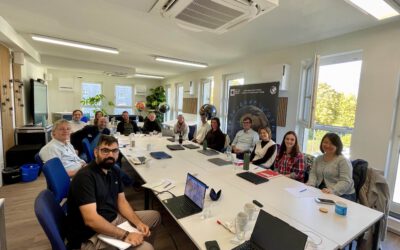
The presentations were followed by a lively discussion with numerous questions from the audience, reflecting strong interest in interdisciplinary approaches that link demographic research with spatial and environmental data. We are grateful to both speakers for visiting the EORC and for sharing their research and insights with us.