organised Special Session at ISRSE 2015

organised Special Session at ISRSE 2015

February 24, 2015

Remote Sensing in Biodiversity and Conservation

our special session at ISRSE 2015, Berlin – May 11-15 got accepted

Satellite remote sensing is an important tool for improving our understanding of biodiversity condition and trends, along with drivers of biodiversity change. It is also increasingly a management tool for biodiversity conservation.  The first use focuses on basic research for improved knowledge of what drives biodiversity in landscapes and seascapes, as the latter addresses more applied efforts for conservation.  Although improved understanding supplies the knowledge base for successful conservation, the different objectives of the research and applied communities often mean that the information flow between these two groups is less than ideal.

We aim to highlight the dual potential of remote sensing for biodiversity research and conservation applications in separate but aligned sessions.  These synergistic sessions would increase the linkages between these two communities and also serve to better integrate remote sensing science into the full spectrum of biodiversity research and conservation applications.

Based on experiences at other scientific conferences (e.g. the International Congress for Conservation Biology,  the Zoological Society of London  symposium on conservation remote sensing) we know that there is strong community interest in these topics.

These sessions will be accompanied by a variety of side-events organised by JMU, CEOS Biodiversity, GEO BON, and the Conservation Remote Sensing Network (CRSnet). The sessions would be organised jointly by JMU, CEOS Biodiversity, NASA, and DLR.

organised and chaired by Martin Wegmann, Matt Hansen, Woody Turner, Allison Leidner

more details on presenters soon

follow us and share it on:

you may also like:

EORC researchers teaching drone remote sensing at UNIS, Svalbard

EORC researchers teaching drone remote sensing at UNIS, Svalbard

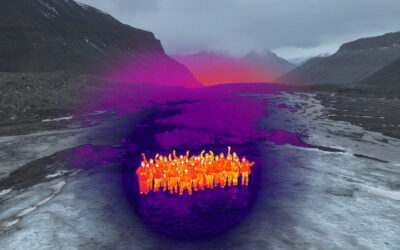
During their current visit to Svalbard, EORC researchers have been teaching UNIS students from all over Europe on how drones can be used for remote sensing in the high Arctic. Invited by our UNIS collaborators Prof. Dr. Simone Lang (UNIS) and Prof. Dr. Eero Rinne...

Upcoming PhD Defense by Sebastian Buchelt on 11th February

Upcoming PhD Defense by Sebastian Buchelt on 11th February

We are happy to announce that our colleague Sebastian Buchelt will defend his PhD thesis "Potential of Synthetic Aperture Radar time series for mapping and monitoring of small-scale periglacial processes in alpine environments" on February 11th at 12 pm at...

Talk by Dr. Philipp on AI at Airbus

Talk by Dr. Philipp on AI at Airbus

Our former EAGLE M.Sc. graduate and EORC PhD graduate Dr. Marius Philipp will give talk about AI, ML and NLP within his current work at Airbus. The talk will take place next Wednesday, 11th of Feb., at 2pm in John-Skilton Str. 4a. It will take place either in seminar...

Urban Earth Observation Lecture: Understanding Cities from Above

Urban Earth Observation Lecture: Understanding Cities from Above

As part of the EAGLE M.Sc. programme, our international students attended this winter term the Urban Earth Observation lecture by EORC professor Hannes Taubenböck. The session offered a comprehensive overview of how remote sensing has evolved into a central tool for...

EORC research on biogeomorphology highlighted by EGU blog

EORC research on biogeomorphology highlighted by EGU blog

In a recent blog by the Geomorphology Division of the European Geosciences Union (EGU), the research of our EORC PI Florian Betz, working on generally on river systems and specifically on fluvial biogeomorphology, was featured in the community blog:...

Share This