
Our Virtual teaching setup

Our Virtual teaching setup

m

June 10, 2021

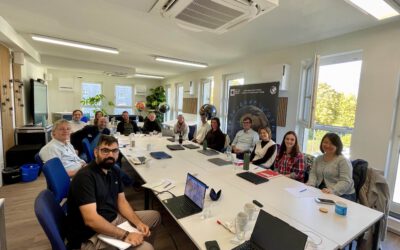
We posted a while ago some images about our virtual teaching room and mentioned that we will provide briefly the general technical background setup:

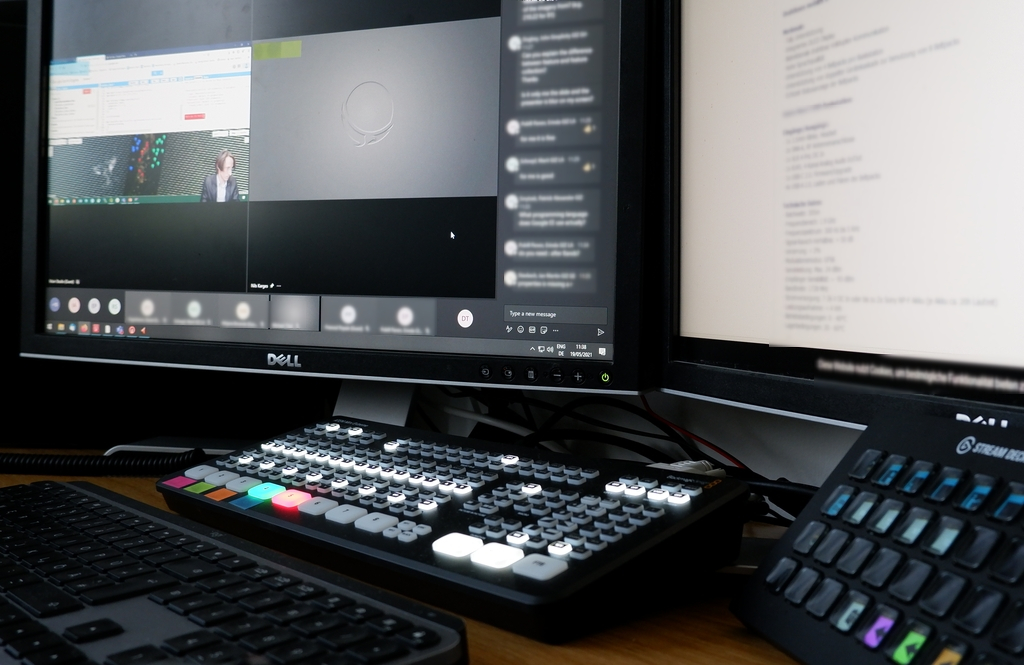
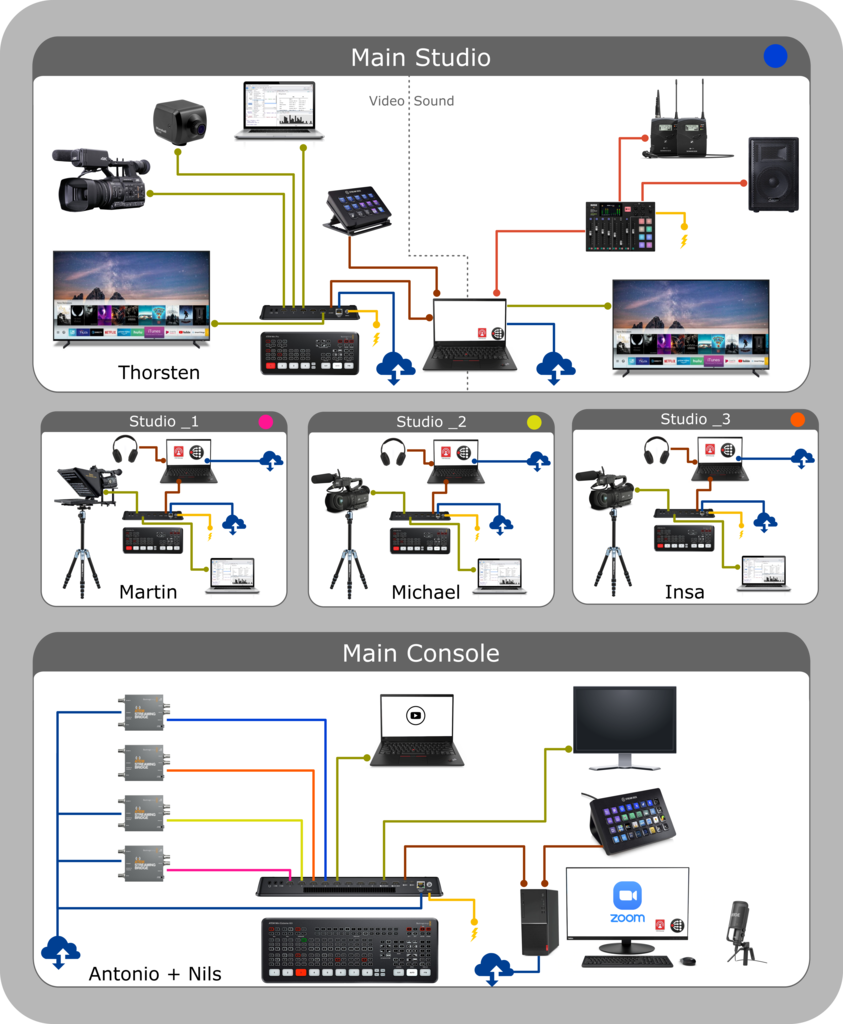
we have four lecture rooms each with a broadcast camera (that can stream for 6 hours and more), microphones and green screens plus a stream deck to change certain settings like camera position, full screen view, lecture in image etc.. All these signals are send via an ATEM assemblage to a control room and then streamed to zoom, MS teams or any other service.

Of course the quick and easy setup got more complex than we thought, e.g. good lightning is crucial as well as good sound which is a task on its own. Moreover we experiences some camera failures before we settled on the broadcasting cameras because normal cameras even though they have streaming capabilities are not build to work for several hours in a row. And last but not least, the whole setup had to be as simple as possible to use for our staff members – at the end they just arrived with their laptop, connected to hdmi and started teaching, but it was quite a journey until we reached that level.

At the moment we are working on the internal communication system and we set up an intercom system for us outside the streaming system plus some acoustic improvements which we tackle with absorbers. Additionally we try to improve the eye-contact with our participants through using teleprompters but still need to work on that one. And last but not least, we are looking for a way to easily draw something and share it with our participants – of course that has to work with our system setup again which is not as easy as it might sound.

Despite all these challenges we are very happy that we had the chance (and reason) to set it up because we also learned a lot about software and technical approaches and it increased our engagement and fun for training again after such a long time with remote teaching. However, we are also very much looking forward to seeing all our students again in-person.

if you are interested to receive all the details about devices, code, setup etc. please feel free to contact us
follow us and share it on:

you may also like:

AI chatbots in research and teaching

AI chatbots in research and teaching

Let's be honest about something: AI chatbots are not coming to our courses and our research. They are already here, and they have been for a while. ChatGPT, Claude, Perplexity, Gemini, whatever your tool of choice is, our students have been using these things for...

Drone manufacturer Wingtra visits EORC

Drone manufacturer Wingtra visits EORC

Is it possible to combine the efficiency of a fixed-wing drone with the precision of a laser scanner? That question brought researchers from EORC together with Wingtra, a Swiss company designing and manufacturing fixed-wing UAS, to exchange on UAS research and discuss...

How We Learned to Fly: The Story Behind UAS Research at EORC

How We Learned to Fly: The Story Behind UAS Research at EORC

Every research group that's ever bought a drone has a story about the first one it lost. We're no different. So let's just get that out of the way up front: this is the inside story of how UAS (Unoccupied Aerial System) research grew up at the Earth Observation...

MainPro workshop on TLS and LiDAR UAS

MainPro workshop on TLS and LiDAR UAS

This week, a workshop organized by Sebastian Buchelt within our EFRE project MainPro brought together students, researchers, and interested project partners to explore modern UAV technologies. The workshop took place in vineyards close to Würzburg and gave the...

25 Years of Remote Sensing in Würzburg

25 Years of Remote Sensing in Würzburg

Our chair of remote sensing, Professor Stefan Dech, likes to say "science is rarely a sprint, it's a marathon". And if you look at what's grown out of Würzburg over the last 25 years, you'll see exactly what he means. In 2026 the Julius-Maximilians-Universität...

Starkregen in Bayern: Beobachtungen und Dokumentation zählen

Starkregen in Bayern: Beobachtungen und Dokumentation zählen

Starkregenereignisse treten immer häufiger lokal, kurzfristig und mit hoher Intensität auf. Innerhalb weniger Stunden können sie erhebliche Überschwemmungen und Schäden verursachen. Um solche Ereignisse künftig besser zu verstehen und die wissenschaftliche Grundlage...

Share This