
We are very pleased about the project extension of WASCAL-DE-Coop in 2022 and about the continuation of the excellent collaboration with the West Africa Science Service Center on Climate Change and Adapted Land Use (WASCAL) in West Africa, the exchange with the students of the WASCAL graduate schools and the different research activities on the topics of the of human-land interactions in the context of climate change and food security in West Africa through the expansion of the land-use monitoring network and the satellite-based agricultural monitoring.
WASCAL-DE-Coop started in 2019 to strengthen the cooperation between the WASCAL Graduate Programme and the German research landscape to develop further regional competencies focusing on climate change and its impacts on agro-ecological land-use systems the development of adaptation strategies.
The WASCAL-DE-Coop project is coordinated by the Department of Remote Sensing at the Julius Maximilians University of Würzburg, Germany. WASCAL-DE-Coop is funded by the German Federal Ministry of Education and Research (BMBF) through the German Aerospace Center (DLR) under the funding code 01LG1808A.

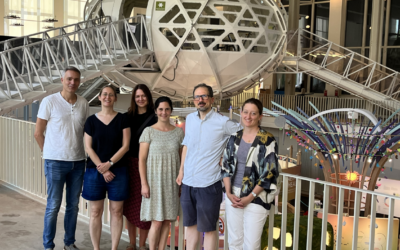
GLS-team visits Planetary Health exhibition
One of the aims of Geolingual Studies Geolingual Studies - Geolingual Studies is to ensure effective science communication beyond the scientific community and into the wider society. The Geolingual Studies team was given the opportunity to look at concepts and methods...