
5-days of Data Cube Training within the SDGs4Namibia Project

5-days of Data Cube Training within the SDGs4Namibia Project

May 27, 2021

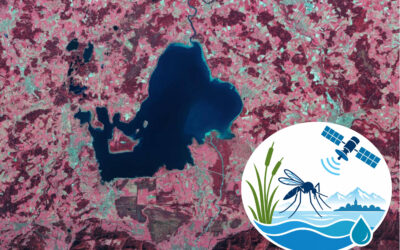
Within the GIZ funded SDGs4Namibia Project a 5-day training course (12th to 19th May) on data cubes was conducted by the Department of Remote Sensing at the University of Würzburg for our colleagues at the Namibian Statistic Agency. The five training days also included a technical orientated introduction for the staff of their IT department, but strongly focused on spatial analysis on the earth observation data cubes in the context of SDGs. The attendees build their own data cubes, put their hands on Jupyter notebooks, explored spatial data and derived a water related SDG from satellite data on the data cube.

We are happy for the intense cooperation with the Namibian Statistic Agency, although the training has to be held online. We also like to thank all Data Cube students for their great work and input in form of Jupyter notebooks and lecturing during the training! The workshop was led by Steven Hill, Sebastian Förtsch, Pawel Kluter and Dr. Insa Otte from the Data Cube team in Würzburg.

follow us and share it on:

you may also like:

GLS-team visits Planetary Health exhibition

GLS-team visits Planetary Health exhibition

One of the aims of Geolingual Studies Geolingual Studies - Geolingual Studies is to ensure effective science communication beyond the scientific community and into the wider society. The Geolingual Studies team was given the opportunity to look at concepts and methods...

Mapping Lava Tubes on Mauritius with iPhone Pro LiDAR

Mapping Lava Tubes on Mauritius with iPhone Pro LiDAR

Lava tube structures on Mauritius are quite hard to survey - tight, dark, and largely inaccessible to classical scanning equipment. As part of ongoing research by Dr. Kim Lea Holzmann (Chair of Animal Ecology and Tropical Biology, University of Würzburg), we're...

bzgl. Art. 50 Verordnung (EU) 2024/1689 (AI Act):

Überwiegend werden eigene originäre Texte und Bilder des EORC genutzt, jedoch sind einige Inhalte von blog post Texten teilweise mit Hilfe von KI überarbeitet worden und einige Bilder sind ganz mit KI erstellt, die jedoch deutlich keine photorealistische Darstellungen abbilden. Aussnahmen sind KI generierte fernerkundliche Datensätze, die explizit für Forschungszwecke mit KI erstellt wurden, hier wird aber durch den assoziierten Text der wissenschaftliche Grund der KI generierten Bilder erläutert.

Share This