our new review article about opportunities and challenges for ecologists using remote sensing lead by Nathalie Pettorelli has been published. We focused on remote sensing topics related to challenges of applied ecologists, highlighting the potential as well as caveats and of course the future developments.
- Habitat loss and degradation, overexploitation, climate change and the spread of invasive species are drastically depleting the Earth’s biological diversity, leading to detrimental impacts on ecosystem services and human well-being.
- Our ability to monitor the state of biodiversity and the impacts of global environmental change on this natural capital is fundamental to designing effective adaptation and mitigation strategies for preventing further loss of biological diversity. This requires the scientific community to assess spatio-temporal changes in the distribution of abiotic conditions (e.g. temperature, rainfall) and in the distribution, structure, composition and functioning of ecosystems.
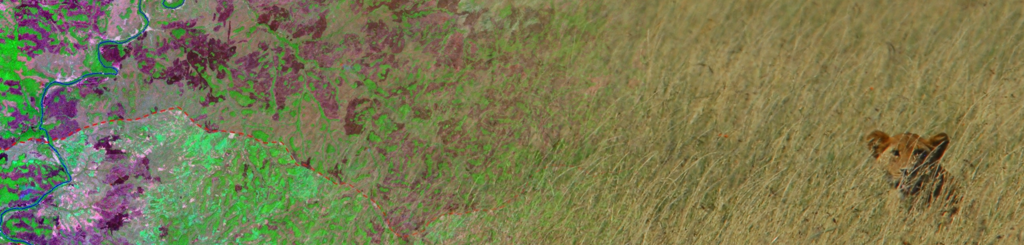
- The potential for satellite remote sensing (SRS) to provide key data has been highlighted by many researchers, with SRS offering repeatable, standardized and verifiable information on long-term trends in biodiversity indicators. SRS permits one to address questions on scales inaccessible to ground-based methods alone, facilitating the development of an integrated approach to natural resource management, where biodiversity, pressures to biodiversity and consequences of management decisions can all be monitored.
- Synthesis and applications. Here, we provide an interdisciplinary perspective on the prospects of satellite remote sensing (SRS) for ecological applications, reviewing established avenues and highlighting new research and technological developments that have a high potential to make a difference in environmental management. We also discuss current barriers to the ecological application of SRS-based approaches and identify possible ways to overcome some of these limitations.
Pettorelli, N., Laurance, W. F., O’Brien, T. G., Wegmann, M., Nagendra, H., & Turner, W. (2014). Satellite remote sensing for applied ecologists: opportunities and challenges. Journal of Applied Ecology.
http://onlinelibrary.wiley.com/doi/10.1111/1365-2664.12261/abstract