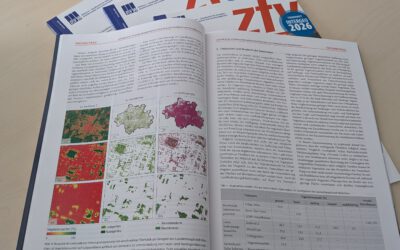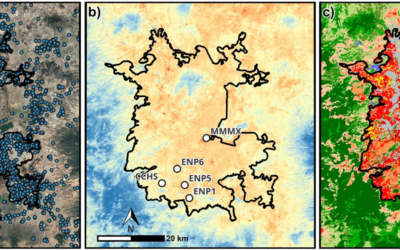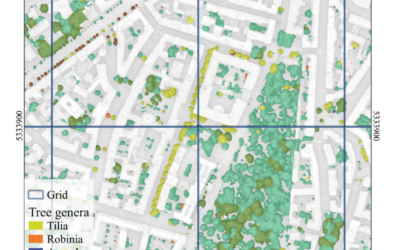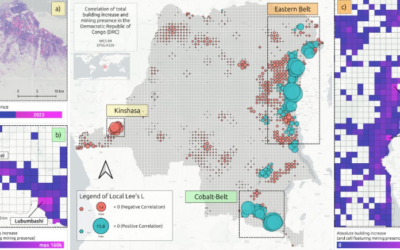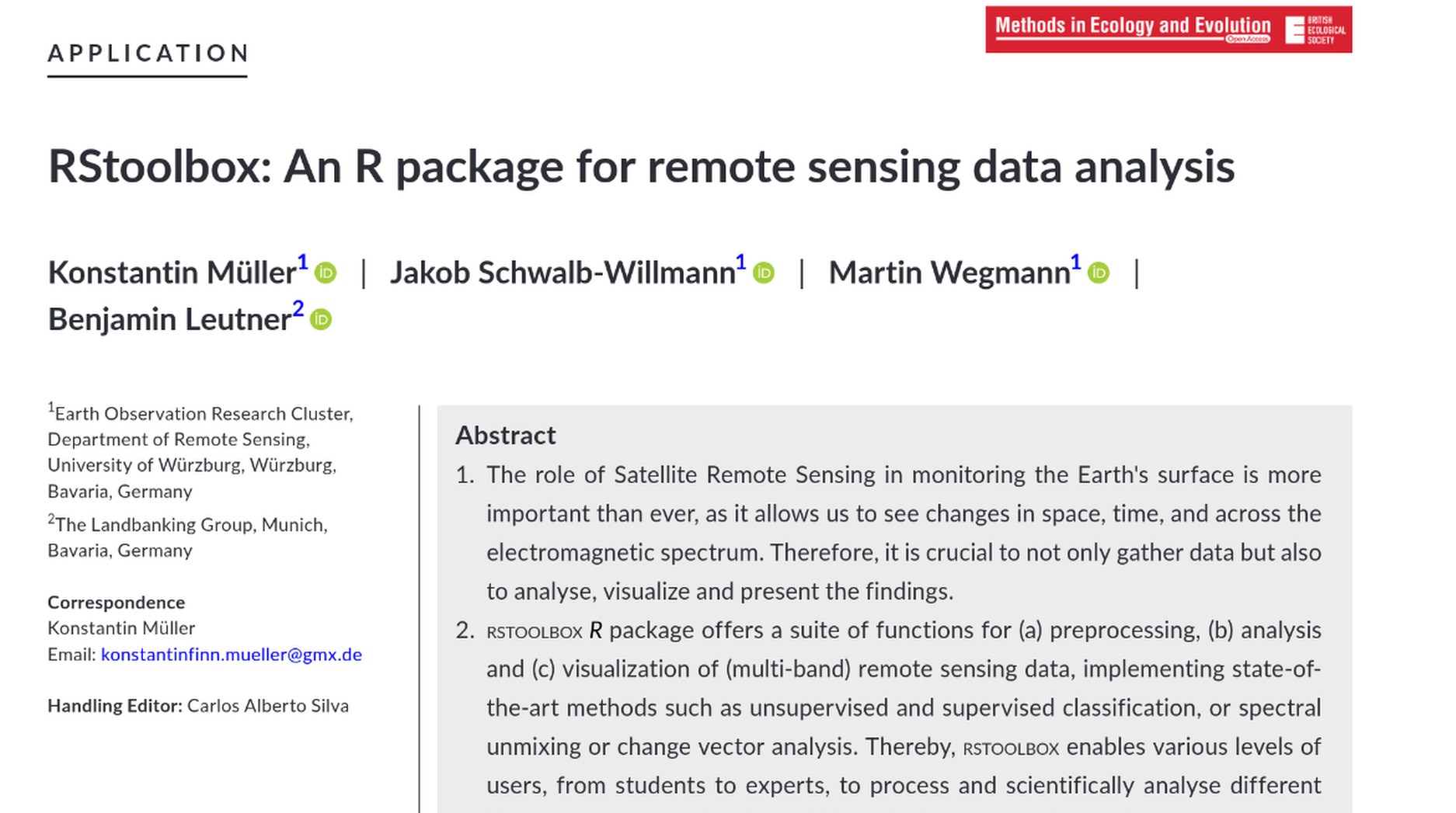

Satellite remote sensing has become an indispensable tool for monitoring the Earth’s surface, offering a unique perspective on environmental changes across space and time. With the ability to capture a wealth of information across the electromagnetic spectrum, satellite data allows us to observe and track various phenomena, from urbanization and deforestation to shifts in climate and natural disasters. However, collecting this data is only one part of the puzzle. To fully unlock its potential, we need effective methods for analyzing, visualizing, and interpreting it. This is where the RStoolbox R package steps in and we are very happy that it got published today!
, , , & (2025). RStoolbox: An R package for remote sensing data analysis. Methods in Ecology and Evolution
The RStoolbox R package offers a powerful suite of functions designed specifically for the preprocessing, analysis, and visualization of remote sensing data. With a focus on multi-band satellite imagery, the package enables users to apply state-of-the-art methods, including:
- Unsupervised and supervised classification: These techniques allow you to categorize land cover types or other features based on spectral characteristics.
- Spectral unmixing: This process helps in identifying the composition of mixed pixels, offering more precise information about the surface properties.
- Change vector analysis: This method is used to detect changes over time by comparing spectral data from different time points, a critical tool for monitoring environmental shifts.
By offering these advanced methods within a single programming environment, RStoolbox provides both novice and expert users with the flexibility to handle various types of remote sensing data.
One of the key strengths of RStoolbox is its seamless integration into existing workflows. Built on well-established data types for spatial data representation in R, the package leverages the power of popular spatial data science and remote sensing libraries. This ensures that users can easily incorporate RStoolbox into their broader analysis pipeline, whether they are using R for statistical analysis, machine learning, or visualization.
By inheriting functionality from widely adopted R packages, RStoolbox minimizes the learning curve for users already familiar with the R ecosystem. This makes it an excellent tool for researchers, students, and professionals who need a comprehensive, yet user-friendly, remote sensing solution.
To get started, RStoolbox provides multiple examples with sample data directly within the package. These examples serve as practical guides to showcase the ease of use and versatility of the package. Whether you’re processing satellite imagery for a land cover classification task or analyzing temporal changes in vegetation, the built-in sample datasets allow users to dive in quickly and begin exploring remote sensing techniques.
Read the full article here: https://besjournals.onlinelibrary..wiley.com/doi/10.1111/2041-210X.14451