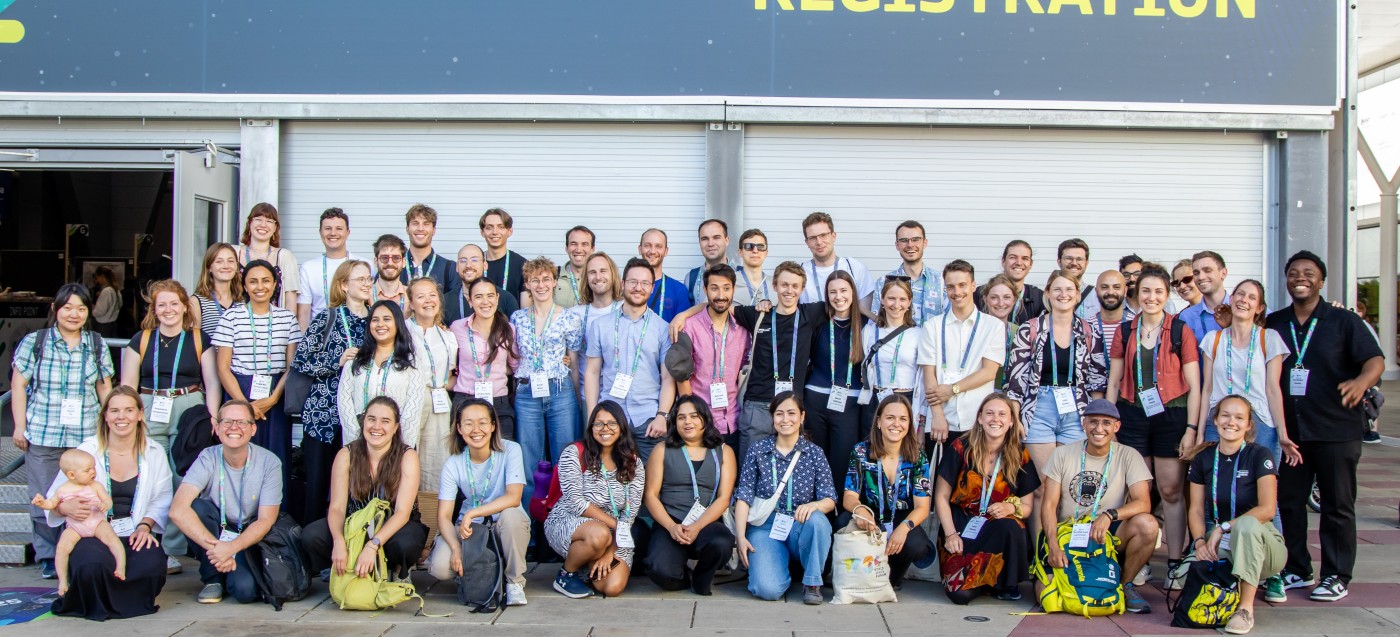

EORC Staff and EAGLE Students at ESA Living Planet Symposium 2025

EORC Staff and EAGLE Students at ESA Living Planet Symposium 2025

m

June 26, 2025

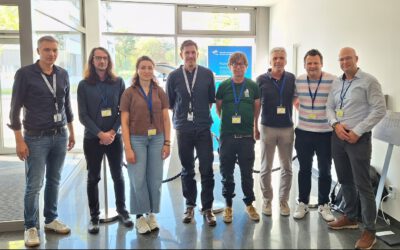
This week, our EORC team and EAGLE MSc students are joining the global Earth observation community at the ESA Living Planet Symposium (LPS) 2025 — one of the most important gatherings for Earth system scientists, remote sensing experts, and space agencies worldwide.

This week is best described as: Learning, Networking, and Showcasing Cutting-Edge Earth Observation Research

For many of our students, the LPS is not only an exciting opportunity to dive into state-of-the-art developments in Earth observation but also a part of their coursework. As part of their academic program, they are tasked with exploring the symposium, engaging with presentations, posters, and interactive sessions, and selecting the most innovative and inspiring contributions to present and reflect upon later.

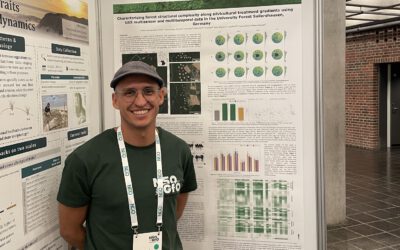
But the week offers much more than academic credits. It’s an intense learning experience — arguably more packed with fresh insights, real-world applications, and high-level exchange than a typical week of lectures. Our students are not only absorbing the latest scientific findings but also actively contributing to the conversation by presenting their own research projects to an international audience.

Meanwhile, our EORC staff members are using the symposium to stay connected with the latest trends and technologies in Earth observation, exchanging ideas with other experts, and fostering collaborations. These events are invaluable for building new partnerships and strengthening existing connections across borders and disciplines.

The ESA Living Planet Symposium is not just a showcase of satellite missions and scientific results — it’s where the future of Earth observation is shaped. We are proud to see our EAGLE students gaining confidence, engaging in scientific dialogue, and becoming part of this vibrant community.

We look forward to hearing about their highlights and impressions once they return — and perhaps seeing some of them present at future editions of LPS as early-career researchers themselves!

follow us and share it on:

you may also like:

How We Learned to Fly: The Story Behind UAS Research at EORC

How We Learned to Fly: The Story Behind UAS Research at EORC

Every research group that's ever bought a drone has a story about the first one it lost. We're no different. So let's just get that out of the way up front: this is the inside story of how UAS (Unoccupied Aerial System) research grew up at the Earth Observation...

MainPro workshop on TLS and LiDAR UAS

MainPro workshop on TLS and LiDAR UAS

This week, a workshop organized by Sebastian Buchelt within our EFRE project MainPro brought together students, researchers, and interested project partners to explore modern UAV technologies. The workshop took place in vineyards close to Würzburg and gave the...

25 Years of Remote Sensing in Würzburg

25 Years of Remote Sensing in Würzburg

Our chair of remote sensing, Professor Stefan Dech, likes to say "science is rarely a sprint, it's a marathon". And if you look at what's grown out of Würzburg over the last 25 years, you'll see exactly what he means. In 2026 the Julius-Maximilians-Universität...

Starkregen in Bayern: Beobachtungen und Dokumentation zählen

Starkregen in Bayern: Beobachtungen und Dokumentation zählen

Starkregenereignisse treten immer häufiger lokal, kurzfristig und mit hoher Intensität auf. Innerhalb weniger Stunden können sie erhebliche Überschwemmungen und Schäden verursachen. Um solche Ereignisse künftig besser zu verstehen und die wissenschaftliche Grundlage...

Seeing the World in Points: Lidar Course for the EAGLEs

Seeing the World in Points: Lidar Course for the EAGLEs

Lidar has a funny way of sneaking up on you. You think you know what it is, a laser that measures distance, fine, but then someone shows you a point cloud of a forest canopy with individual branches floating in 3D space and suddenly you realize there's a whole...

TV Crew Films EORC at MONID Habitrack Fieldwork

TV Crew Films EORC at MONID Habitrack Fieldwork

A bit of extra excitement at EORC recently: A television crew showed up to film a segment on the MONID Habitrack project financed by the BMFTR, and Dr. Ariane Droin was right in the middle of it, walking them through what Earth...

Privacy Policy

Lehrstuhl für Fernerkundung & Lehrstuhl für Urbane Fernerkundung

Erdbeobachtung an der Universität Würzburg

Share This