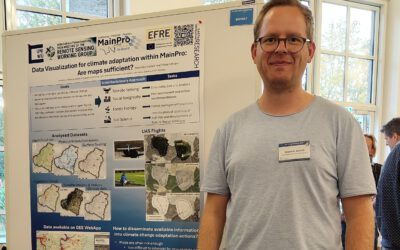
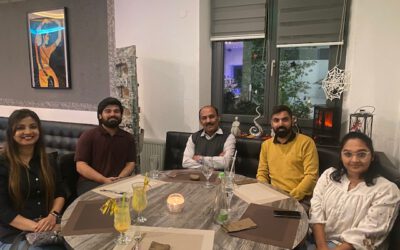
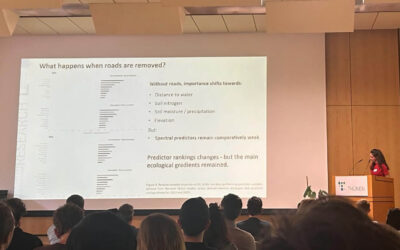
On July 10, 2025, the “EO4CAM HAP4 Forestry” workshop took place at the Bavarian State Institute of Forestry (LWF) in Freising with 17 participants from institutions such as LWF, the Bavarian State Forestry enterprise, Bavarian Institute of Forest Genetics, AELF Bad Neustadt, and the Bavarian Forest National Park.
Led by Dr. Sarah Asam (DLR) and Dr. Julian Fäth (University of Würzburg), the six-hour workshop focused on aligning EO4CAM data products with user needs and technical integration. The morning session presented updates from the “Forestry” working package, including a canopy height map, an update of the forest canopy cover loss product, beech vitality analyses, and hydrographic modeling. A key discussion centered on pest risks, with joint development of methodological ideas, such as drought stress indicators and forecasting options.
Technical data interfaces were also addressed. Lucas Angermann (DLR) demonstrated the EO4CAM test portal, which had been shared beforehand for early feedback. Stephan Millitzer (LWF) showed how EO4CAM data could already be integrated into the geoportal of “BayWIS” forestry GIS.
After a brief session on current remote sensing developments, the event ended with a discussion on long-term collaboration, including setting up an email list to support ongoing exchange. The workshop confirmed the strong interest in EO4CAM data and emphasized the value of coordinated efforts for sustainable forest management in Bavaria.


Credits: EO4CAM