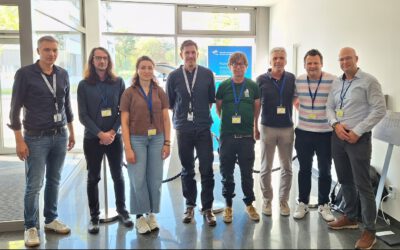


How can municipalities effectively reduce the impacts of increasingly frequent heavy rainfall events? This question brought together local and regional stakeholders on 24 February 2026 at Wartmannsroth town hall in the district of Bad Kissingen, Germany. Participants included municipal and district representatives, water management and nature conservation authorities, forestry and agricultural stakeholders, planning experts, and representatives of the UNESCO Rhön Biosphere Reserve.
The Rhön region serves as a pilot area within the EO4CAM project, providing an important testing ground for translating scientifically derived Earth observation data into practical decision support for local climate adaptation.
Researchers from the Earth Observation Research Cluster (EORC) at the University of Würzburg presented terrain-based analyses derived from digital terrain models. Indicators such as flow accumulation and soil moisture concentration help identify potential runoff pathways and water accumulation zones. Combined with simplified runoff modelling, these analyses reveal critical locations where heavy rainfall may trigger increased surface runoff, erosion, or local flooding.
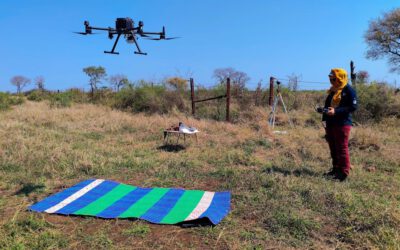
During subsequent discussions, the data-driven insights were compared with existing planning activities, documented past events, and local experiential knowledge. A full-day field visit allowed participants to assess selected hotspots on site and jointly explore nature-based water retention measures in forests and agricultural landscapes.
The event highlighted how combining remote sensing, terrain analysis, and local expertise can support municipalities in developing targeted and actionable climate adaptation measures.