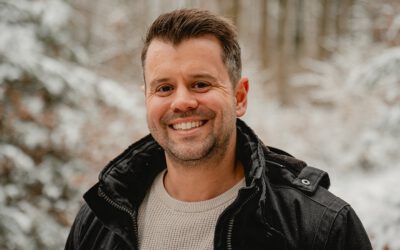

Spotlight about our Researchers: Julian Fäth

Spotlight about our Researchers: Julian Fäth

May 6, 2026

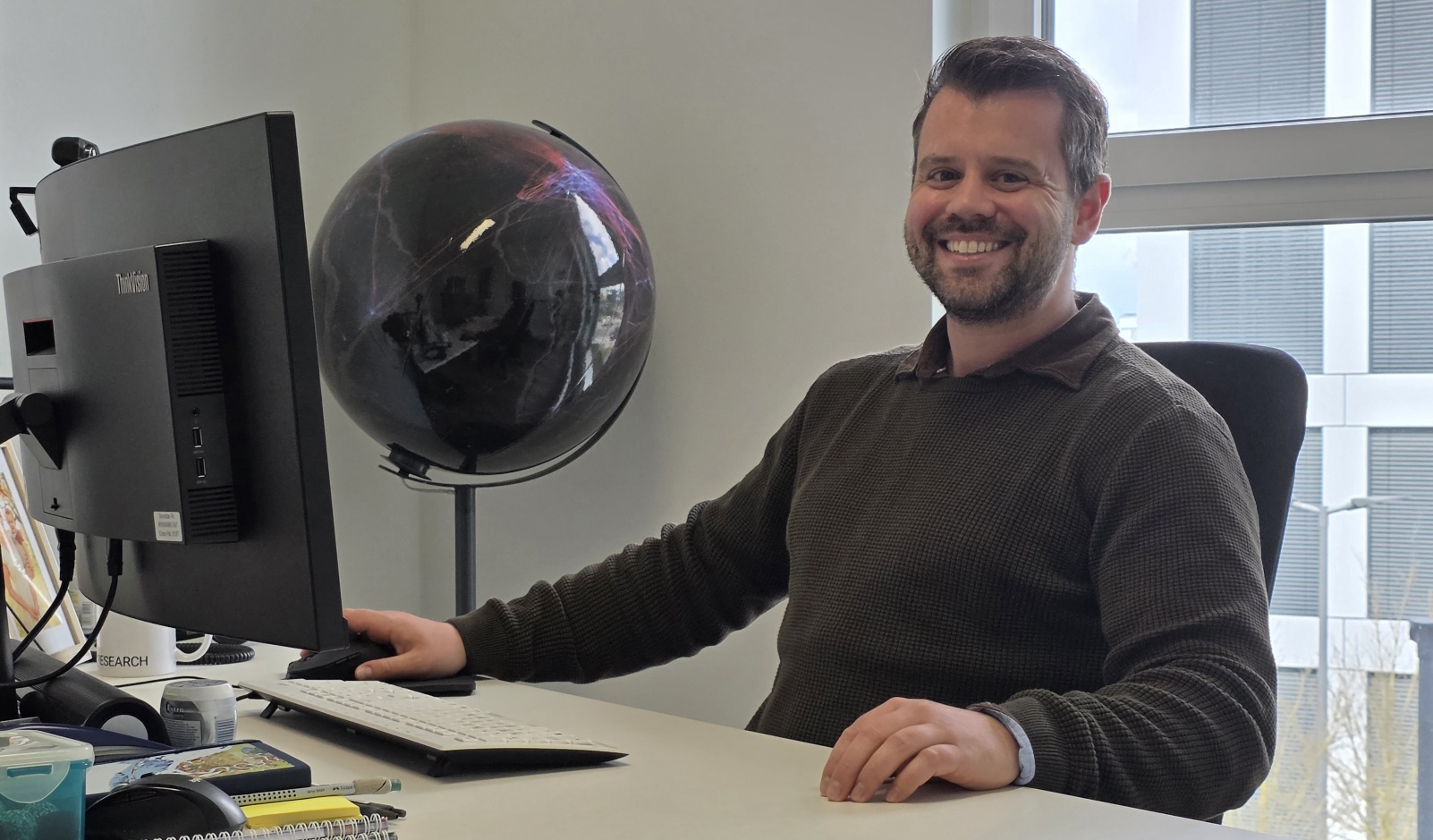
At the Earth Observation Research Cluster (EORC), researchers develop innovative approaches to monitor environmental change from local to regional scales. Julian Fäth contributes to this work by combining remote sensing, field measurements, and hydrological analysis to better understand the condition and dynamics of forest ecosystems.

Forests in a Changing Climate

Julian’s research focuses on how forests respond to environmental stressors such as drought, soil moisture variability, and climate change. By integrating satellite observations with field-based measurements, his work helps reveal how factors such as soil water availability influence tree vitality and forest resilience.

This research provides important insights into the functioning of forest ecosystems and supports improved monitoring of forest health under changing climatic conditions.

Bridging Field Science and Earth Observation

Before joining EORC, Julian studied forest science at the Technical University of Munich, where he also completed his PhD on forest nutrition and water balance. His work has long focused on linking traditional forest science methods—such as soil analyses and moisture measurements—with modern geophysical and remote sensing techniques.

This interdisciplinary background allows him to connect detailed field observations with large-scale Earth observation data.

Remote Sensing for Climate Adaptation

At EORC, Julian works as a postdoctoral researcher within the EO4CAM project, where he leads the forestry work package at the University of Würzburg. The project aims to develop Earth observation products that support climate adaptation planning for environmental authorities, particularly in the forest sector.

By combining ecological expertise with advanced geospatial analysis, Julian’s work helps translate remote sensing research into practical tools for sustainable forest management.

follow us and share it on:

you may also like:

Lecturer Spotlight: Mirjana Bevanda

Lecturer Spotlight: Mirjana Bevanda

There's a particular moment in the EAGLE program that shows that EAGLE is different, it is the moment the students realize their thesis isn't just another task to receive a M.Sc., their internship or InnoLab isn't just ECTS points, but it's a real world application....

Lecturer Spotlight: Julian Faeth

Lecturer Spotlight: Julian Faeth

Dr. Julian Fäth is a postdoctoral researcher at our EORC. His teaching combines remote sensing, forest ecology and geospatial data science with a strong focus on operational applications and climate adaptation. Since 2018, Julian has been actively involved in...

Lecturer Spotlight: Martin Bachmann

Lecturer Spotlight: Martin Bachmann

Martin's the lecturer who actually built the systems behind the hyperspectral data EAGLE students learn to analyze. He's a research scientist with the Land Surface Dynamics Department at DLR's German Remote Sensing Data Center in Wessling, and his over twenty years of...

Lecturer Spotlight: Tanja Kraus

Lecturer Spotlight: Tanja Kraus

Tanja is the lecturer whose work keeps landing directly on the desks of the people who actually have to act on it: Bavarian ministries, municipalities, foresters, farmers and planners. She joined DLR's German Remote Sensing Data Center (DFD) in 2002 and has been...

Lecturer Spotlight: Michael Wurm

Lecturer Spotlight: Michael Wurm

Michael's the guy you want in front of the class when it's time to actually open up an image and start segmenting it. At EAGLE he teaches the urban side of things: environmental exposure, pollutants, green space, noise, traffic, air pollution, urban heat islands. And...

Lecturer Spotlight: Florian Betz

Lecturer Spotlight: Florian Betz

If you've spent any time around EORC, you've probably crossed paths with Florian at some point, maybe standing knee deep in a riverbed somewhere in Central Asia, or deep in conversation about river dynamics. Florian is a Principal Investigator at the Earth Observation...

bzgl. Art. 50 Verordnung (EU) 2024/1689 (AI Act):

Überwiegend werden eigene originäre Texte und Bilder des EORC genutzt, jedoch sind einige Inhalte von blog post Texten teilweise mit Hilfe von KI überarbeitet worden und einige Bilder sind ganz mit KI erstellt, die jedoch deutlich keine photorealistische Darstellungen abbilden. Aussnahmen sind KI generierte fernerkundliche Datensätze, die explizit für Forschungszwecke mit KI erstellt wurden, hier wird aber durch den assoziierten Text der wissenschaftliche Grund der KI generierten Bilder erläutert.

Privacy Policy

Lehrstuhl für Fernerkundung & Lehrstuhl für Urbane Fernerkundung

Erdbeobachtung an der Universität Würzburg

Share This