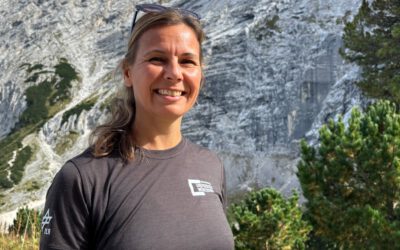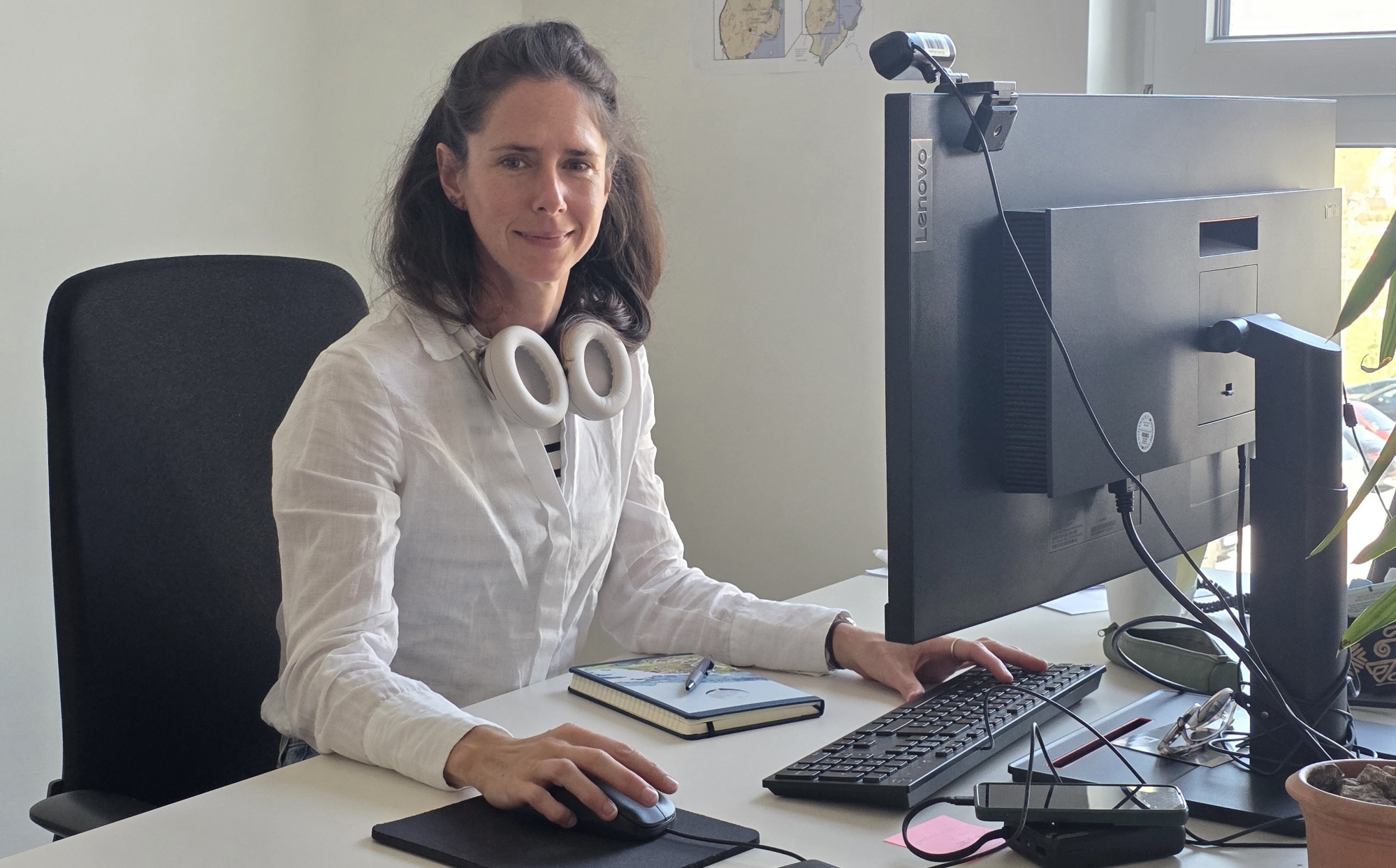

Understanding how ecosystems respond to climate variability and human activities is one of the major challenges in environmental science. Dr. Insa Otte, a researcher at the Earth Observation Research Cluster (EORC) at the University of Würzburg, focuses on using remote sensing and geospatial analysis to monitor environmental change across diverse landscapes in tropical ecosystems in Africa.
From Climate Research to Earth Observation
Insa studied Geography at Philipps-University Marburg, where she also completed her PhD in Environmental Informatics. Her doctoral research investigated how global climate change and local land-use change influence atmospheric water input along an elevation gradient at Mount Kilimanjaro, linking climate processes with ecosystem dynamics.
Following her PhD, she continued her work on climate and environmental monitoring as a researcher in the DFG Kilimanjaro project and later at the German Meteorological Service (Deutscher Wetterdienst), where she contributed to improving statistics and methodologies related to extreme rainfall events.
Since 2020, Insa has been a research fellow at the Department of Remote Sensing at the University of Würzburg, where she combines climate science, remote sensing, and spatial data analysis to better understand ecosystem processes and environmental change.
Monitoring Ecosystems with Earth Observation
Insa’s research focuses on the integration of remote sensing, GIS, and spatio-temporal data analysis to monitor environmental processes and ecosystem dynamics. Her work spans a wide range of environments, including subtropical and tropical ecosystems, with a particular interest in climate change impacts and extreme precipitation events in Africa.
She is also involved in developing datasets and indicators derived from satellite observations—such as long-term vegetation and albedo datasets—to better analyze environmental change and ecosystem functioning across large regions.
These approaches allow researchers to track changes in vegetation, land degradation, and agricultural systems over time, supporting better environmental monitoring and decision-making.
Strengthening Earth Observation Capacity in Africa
A major focus of Insa’s current work is international collaboration and capacity building. She coordinates the EOCap4Africa project, which aims to strengthen the use of Earth observation in ecosystem conservation across Africa.
The project works closely with partner universities in Ghana, Rwanda, the Democratic Republic of Congo, and Botswana, developing educational modules that train students and conservation practitioners to apply remote sensing for ecosystem monitoring and management.
By building expertise in Earth observation among future scientists and decision-makers, the project helps expand the use of satellite data for sustainable ecosystem management.
Research at the Interface of Climate, Ecosystems, and Data Science
Insa’s work highlights the importance of interdisciplinary approaches in Earth observation research. By combining satellite data, climate information, and spatial modeling, she contributes to understanding how ecosystems respond to environmental pressures such as climate variability, land-use change, and land degradation.
Her research has contributed to studies on vegetation dynamics, agricultural systems, and environmental monitoring in regions such as East and Southern Africa, demonstrating how satellite-based observations can support sustainable land management and climate adaptation strategies.
Looking Ahead
As environmental challenges grow increasingly complex, Insa’s work demonstrates the power of combining remote sensing technology, climate science, and international collaboration. Through both research and capacity building, she contributes to advancing Earth observation as a key tool for understanding and protecting ecosystems worldwide.