New publication: Estimating over- and understorey canopy density by LiDAR data

New publication: Estimating over- and understorey canopy density by LiDAR data

August 27, 2015

A new publication recently appeared by Forestry opens some new outlook in leveraging airborne LiDAR derivatives for monitoring the vertical structure of temperate mixed forest stands. Led by Dr. Hooman Latifi from University of Würzburg, the study focuses on associating aerially-mapped habitat characteristics with 3D metrics extracted from fullwave LiDAR data to model canopy density across multiple stand stories.Whereas the
majority of methods applied so far typically concentrate on the structure of the overstorey, the main focus here is on the understorey layers of stands, which are of particular importance for wildlife and forest management applications, especially in protected areas.
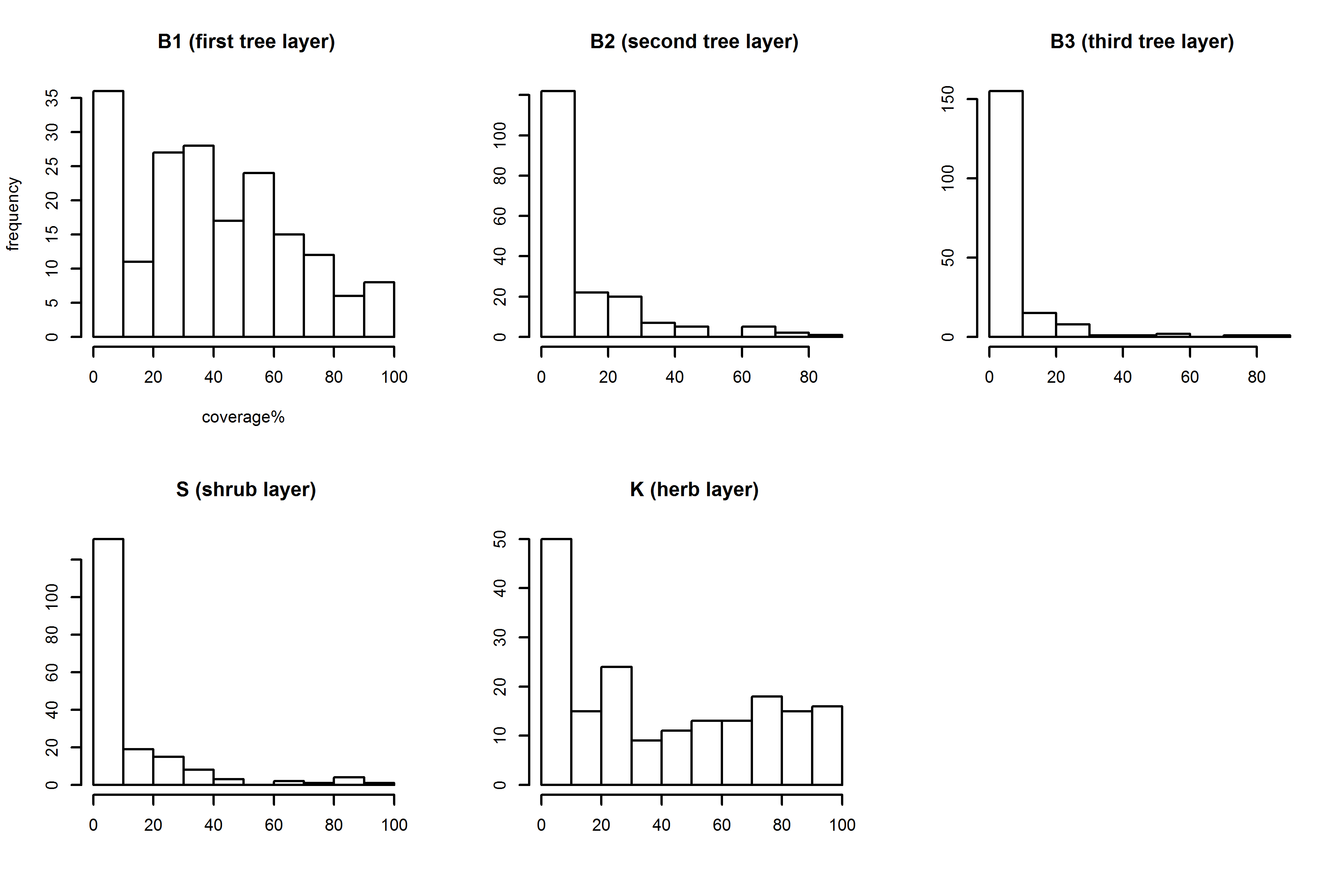
LiDAR metrics and information on forest habitat types were combined via regression models to investigate LiDAR metrics that are significantly correlated with vegetation density. The top canopy and the herbal layer showed strong correlations with the applied LiDAR metrics. Moreover, the results suggest that the relationship between LiDAR predictors and vegetation density depends on the forest type. In conclusion, this study highlights the value of the LiDAR metrics for characterizing the structural properties of lower forest layers, with direct and indorect implications for wildlife and forest management.

The published version of this article can be retrieved through the following link.

Latifi, H., Heurich, M., Hartig, F., Müller, J., Krzystek, P., Jehl, H., Dech, S. 2015. Estimating over- and understorey canopy density of temperate mixed stands by airborne LiDAR data. Forestry, DOI.10.1093/forestry/cpv032

follow us and share it on:

you may also like:

Ticks from Above: UAS Fieldwork for the MONID Habitrack Project

Ticks from Above: UAS Fieldwork for the MONID Habitrack Project

Forest edges are tricky places. They're where woodland meets open ground, where light and shade trade off every few meters, and where, it turns out, ticks tend to do really well. That last bit is exactly why Dr. Ariane Droin, Sofica Garcia de Leon, Dr. Jakob...

New paper on GDP estimatation from space

New paper on GDP estimatation from space

Reliable and up-to-date sub-national data on the gross domestic product (GDP) data remain scarce in many regions across the globe. However, in a new study we show how high-resolution GDP estimates can be derived from multisource remote sensing and auxiliary inputs...

New paper on the acoustic perception of urban environments

New paper on the acoustic perception of urban environments

The acoustic perception of urban environments contributes a lot to well-being in cities. In a new publication titled "Der Einfluss morphologischer und ökologischer Variablen auf die menschliche Wahrnehmung der Klanglandschaft in städtischen Gebieten in Würzburg,...

Share This