
Contributions to the UN-SPIDER International Conference on Space-based Solutions for Disaster Management

Contributions to the UN-SPIDER International Conference on Space-based Solutions for Disaster Management

March 13, 2024

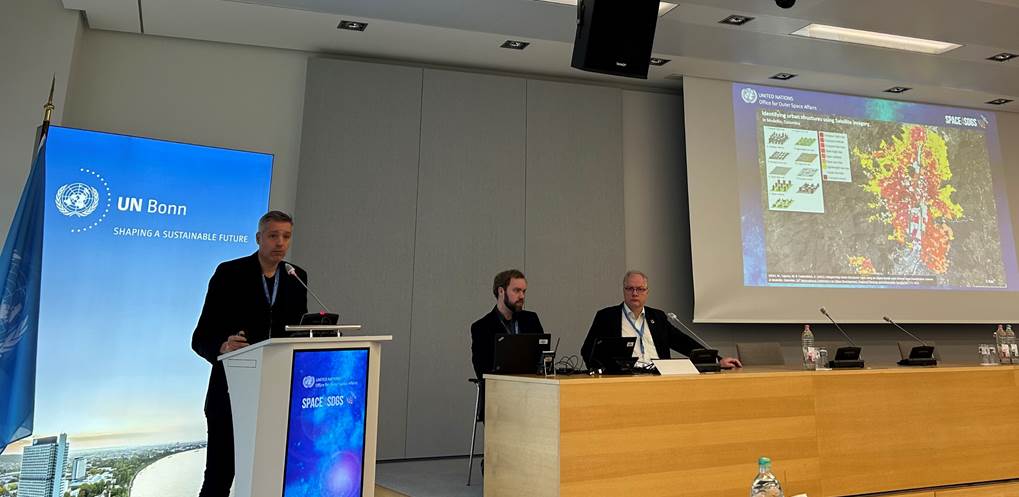
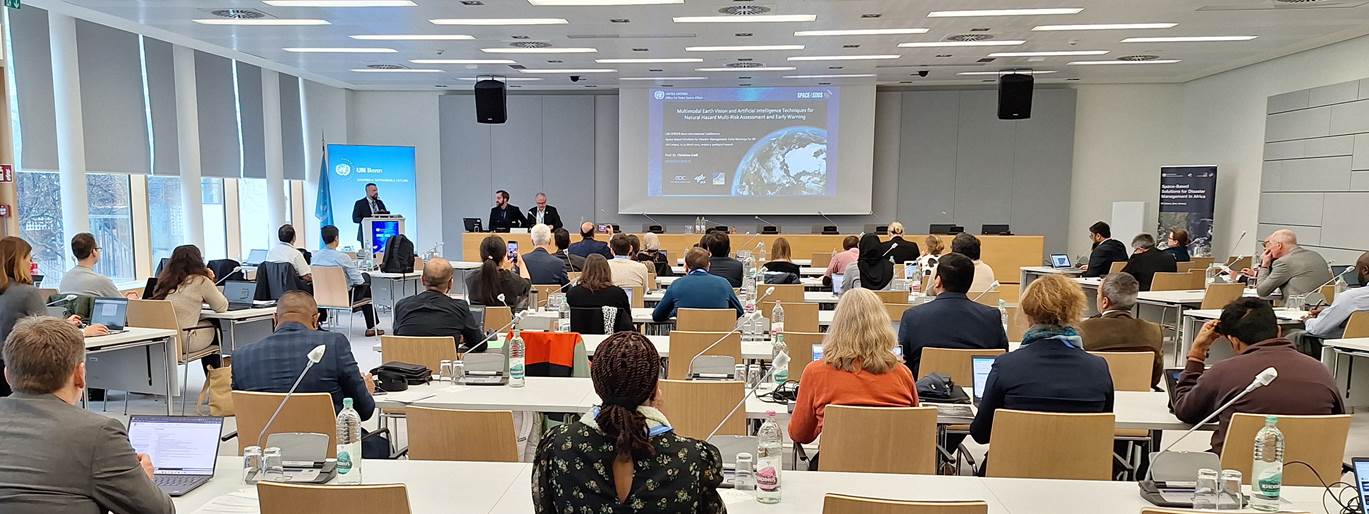
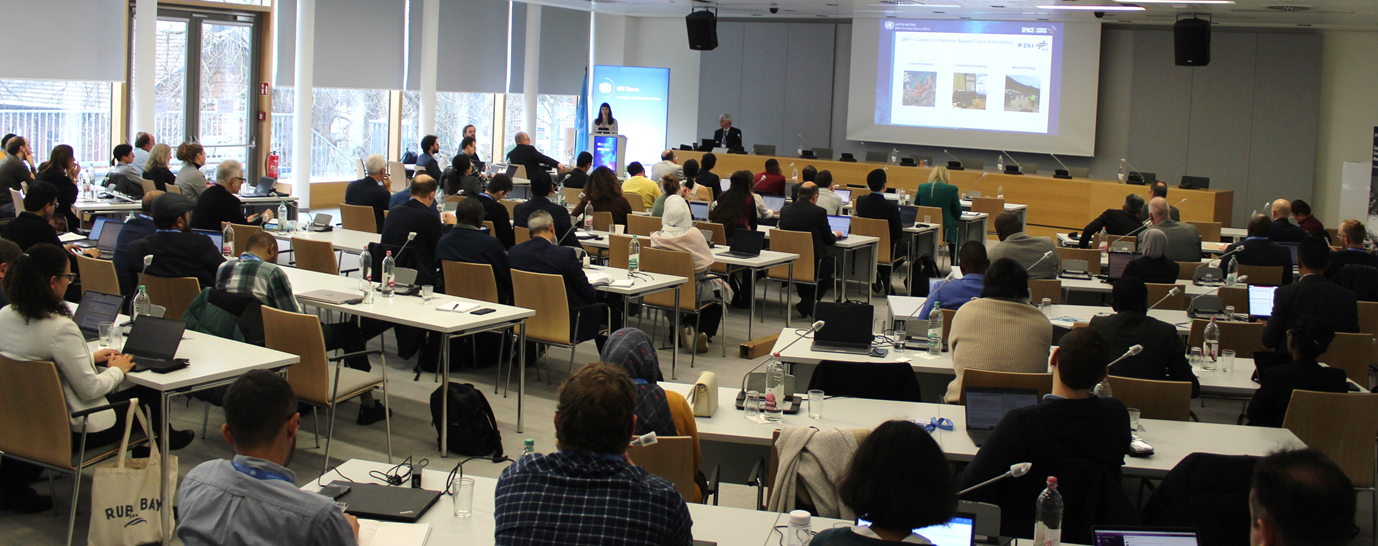
The “UN-SPIDER Bonn International Conference Space-based Solutions for Disaster Management: Early Warnings for All” takes place from the 12th to the 14th of March in Bonn, Germany. The conference is organized by United Nations Office for Outer Space Affairs (UNOOSA) / UN-SPIDER Center for Remote Sensing of Land Surfaces (ZFL) and the University of Bonn in cooperation with the German Aerospace Center (DLR).


The DLR supported not only the organization of the UN-SPIDER event, but also contributed presentations on on-going research works: Johanna Roll from the Earth Observation Center (EOC) of the DLR gave a talk titled “Automatic Monitoring of Warnings and Early Triggering of Satellites During Flood Events”. Our lecturer Prof. Dr. Christian Geiß gave a talk titled “Multimodal Earth Vision for Natural Hazard Multi-Risk Assessment and Early Warning“. And, our Professor Hannes Taubenböck presented the work carried out in the BMBF-funded inform@risk project. His talk was titled “Landslide Risk Assessment and Mitigation in Cities“.


follow us and share it on:

you may also like:

Würzburger Förderpreis awarded to our URBAN:Pulse project

Würzburger Förderpreis awarded to our URBAN:Pulse project

“A remote sensing scientist, a social geographer, an informatics researcher, a sports researcher, a psychologist, a linguist and an economist meet ... what sounds like the start of a joke, was the start of a great interdisciplinary research project.” That’s how Hannes...

bzgl. Art. 50 Verordnung (EU) 2024/1689 (AI Act):

Überwiegend werden eigene originäre Texte und Bilder des EORC genutzt, jedoch sind einige Inhalte von blog post Texten teilweise mit Hilfe von KI überarbeitet worden und einige Bilder sind ganz mit KI erstellt, die jedoch deutlich keine photorealistische Darstellungen abbilden. Aussnahmen sind KI generierte fernerkundliche Datensätze, die explizit für Forschungszwecke mit KI erstellt wurden, hier wird aber durch den assoziierten Text der wissenschaftliche Grund der KI generierten Bilder erläutert.

Share This