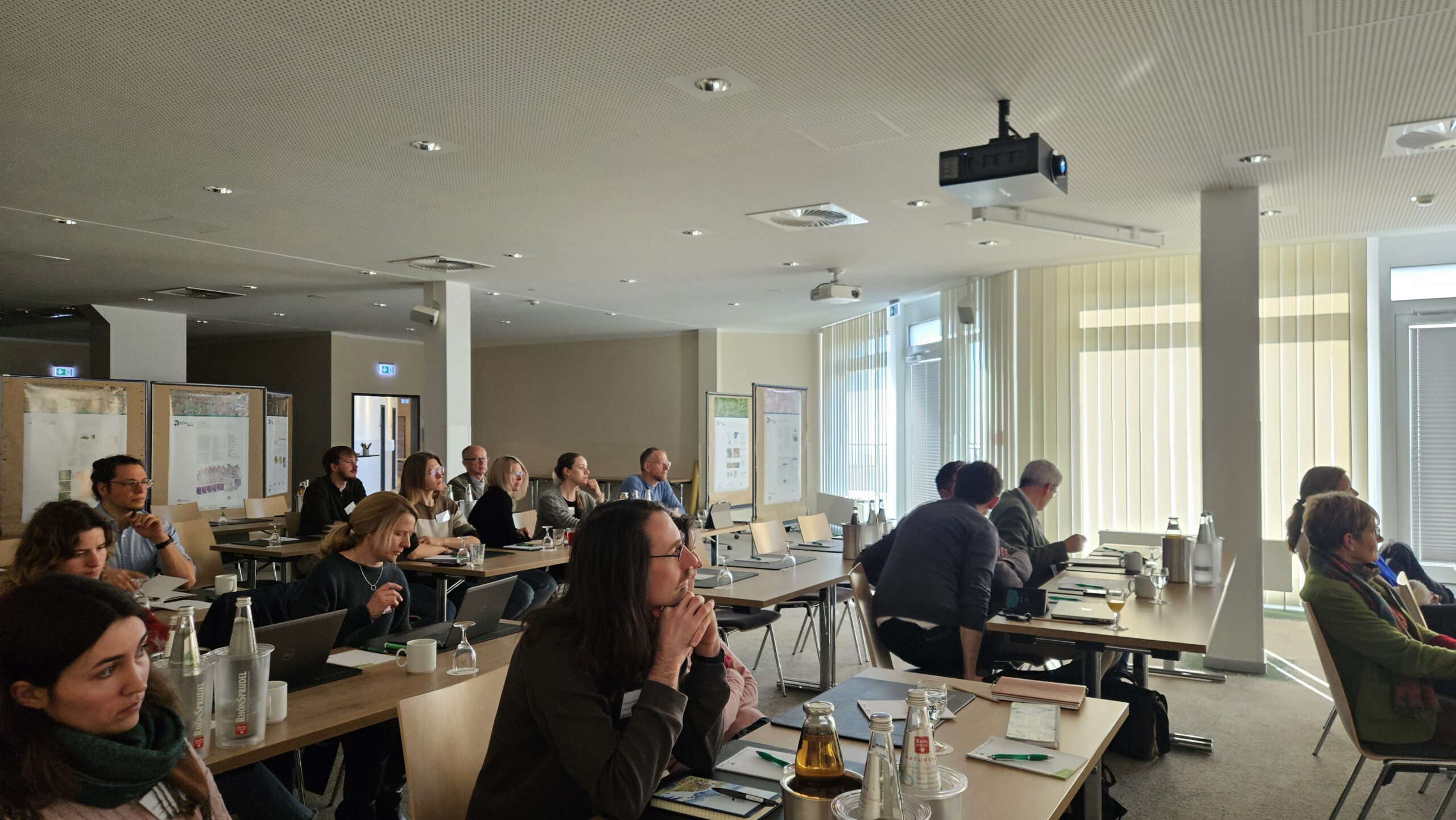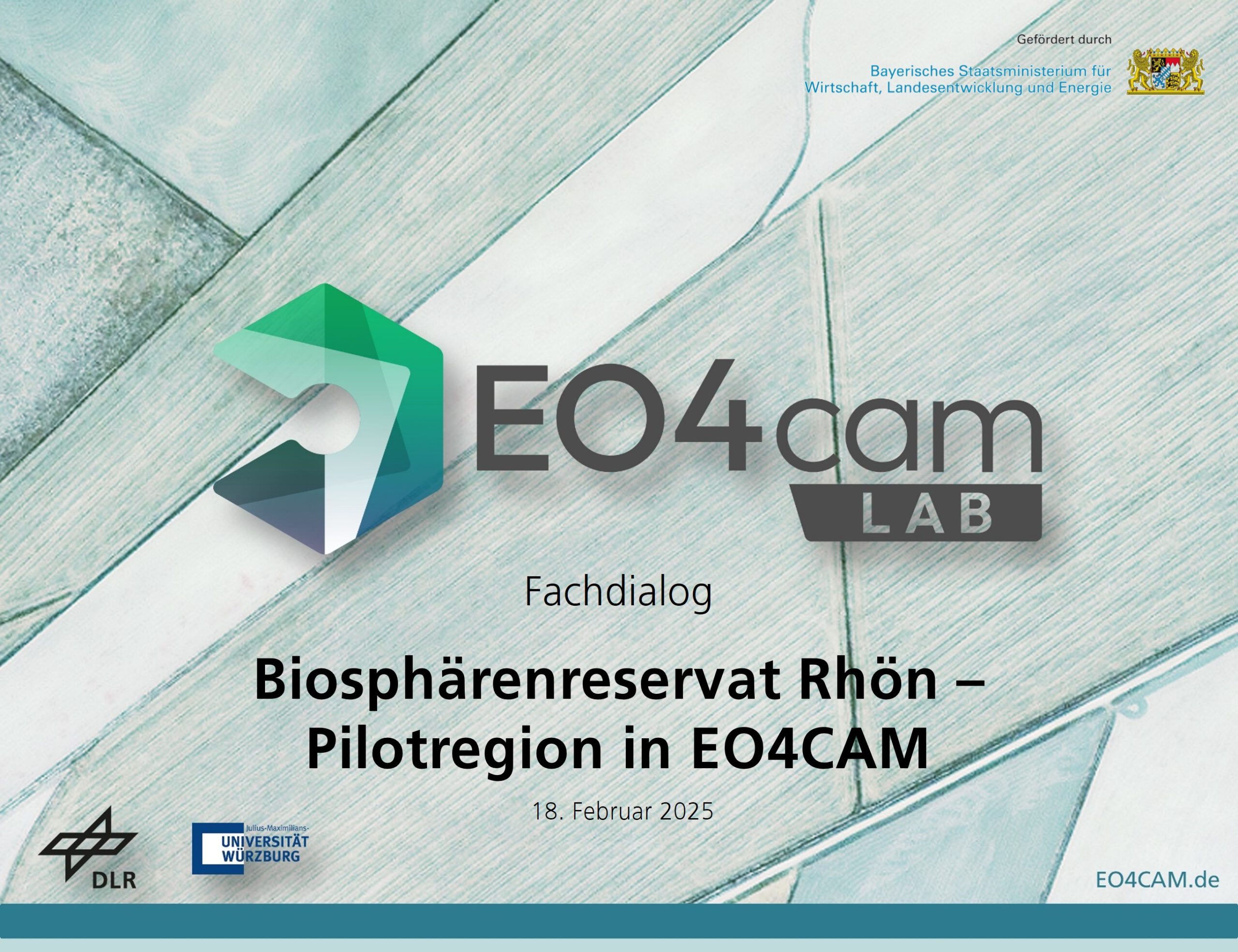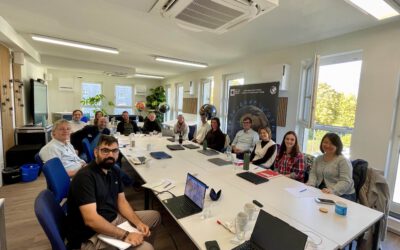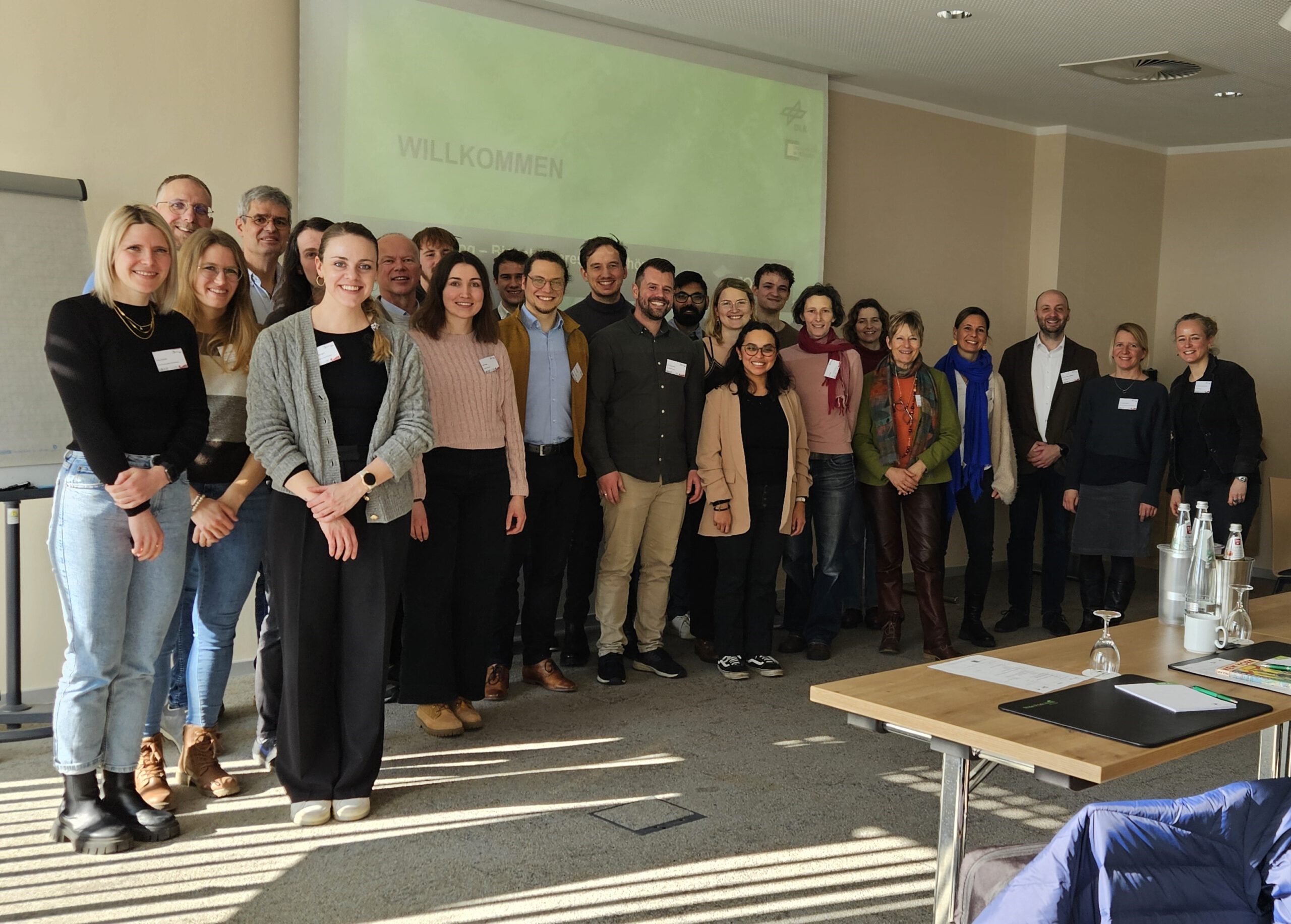

On February 18, 2024, the EO4CAM project, with team members from the Earth Observation Center at the DLR and the EORC at the University of Würzburg, organized an expert dialogue in the Rhön. This dialogue focused on the UNESCO Rhön Biosphere Reserve (BRR) as a pilot region in EO4CAM, aiming to network and exchange between science, administration, and practice on Earth observation (EO) for climate adaptation in the BRR. Participants in the dialogue included the BRR management center, climate protection and adaptation managers from the region, representatives of the Bavarian Farmers’ Association and the Landscape Conservation Association Bad Neustadt a.d. Saale, the Office for Food and Rural Development Bad Neustadt, the Environmental Office Rhön-Grabfeld, and the Government of Lower Franconia with the Department of Water Management.EO4CAM project members informed the participants about the current EO-based developments and research activities focusing on urban areas, agriculture, forestry, and georisks. Statements on the importance of remote sensing for protected area management and an overview of the thematic priorities of the BRR by the biosphere management center supported this information.Using two specific application cases processed in EO4CAM on heavy rainfall events in Bavaria, challenges in landscape water balance and flash flood management were particularly discussed. Further discussions aimed at EO4CAM’s contribution to developing data and information for implementing and promoting concrete measures such as hedge structures and water retention. Important target values mentioned here are the reduction of runoff peaks and flow velocities and the reduction of the erosive potential and soil loss. The exchange among the participants highlighted the strong demand for tailored data products for various regional user groups.The expert dialogue impressively demonstrated how EO and modeling can contribute to the sustainable development of protected areas. Close cooperation between science and practice is essential to exploit this technology’s potential fully.