
EO4CAM met the Bavarian administration of the UNESCO Biosphere Reserve Rhön

EO4CAM met the Bavarian administration of the UNESCO Biosphere Reserve Rhön

July 24, 2024

With an area of around 243 thousand hectares, the Rhön biosphere reserve is one of Germany’s fourth largest biosphere reserves. Located in the center of Germany, the Rhön is of enormous importance for the large-scale protection of natural and cultural landscapes, considering nature-friendly ways of living and economic action.

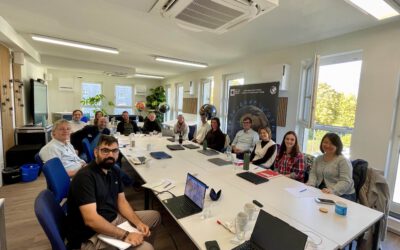
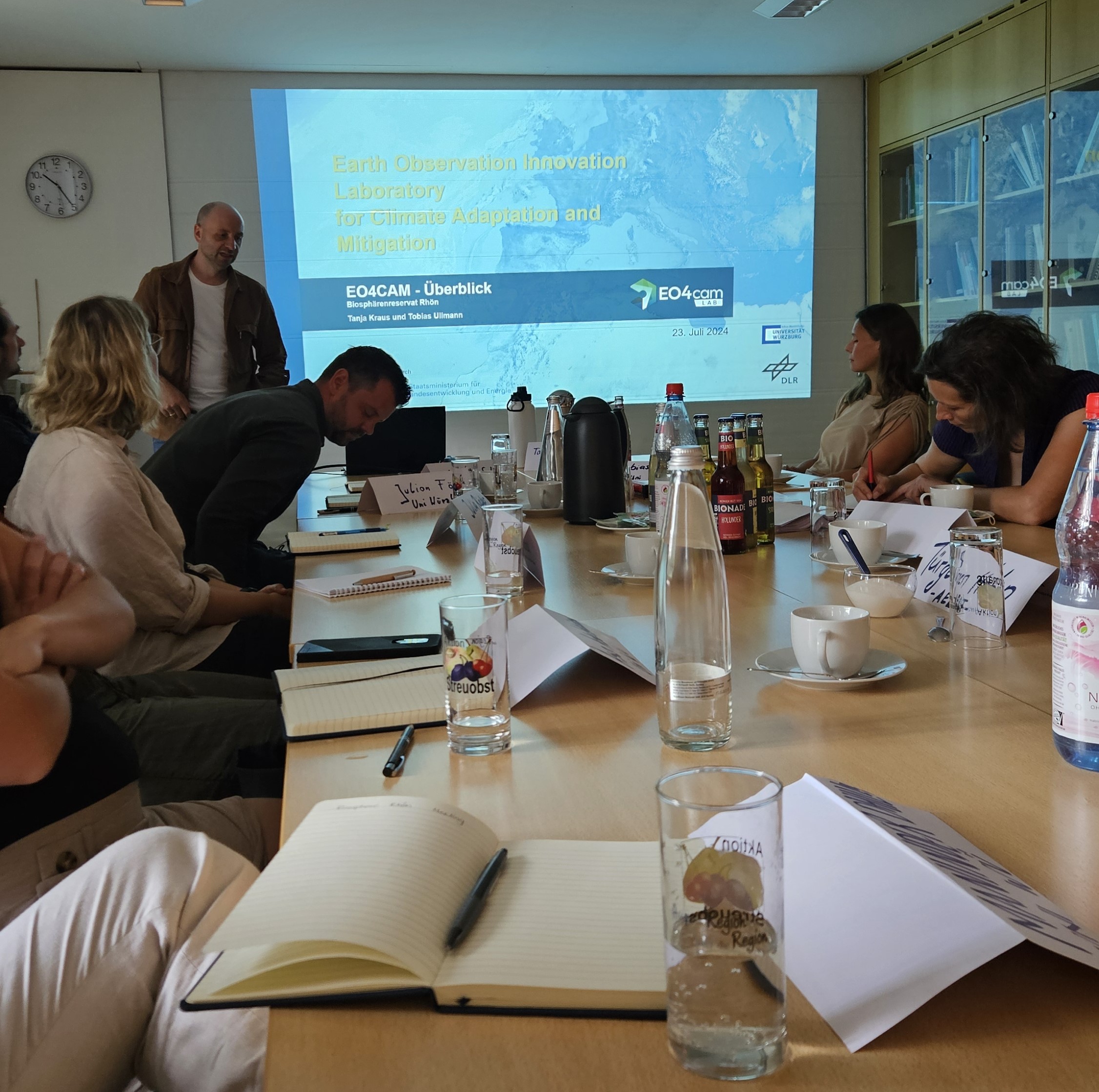
On July 23, part of the EO4CAM project team at DFD/DLR and the EORC of the University of Würzburg met with representatives of the Bavarian administration of the UNESCO Biosphere Reserve Rhön at the management center in Oberelsbach. The meeting was dedicated to presenting the project, but especially to the mutual exchange and discussion of the Bavarian administration’s user requirements for earth observation for climate adaptation. Another focus was on joint research in the Rhön biosphere reserve as a potential pilot region in EO4CAM. Following the meeting, the participants went directly into the forest to visit beech tree sites and discuss the possible consequences of climate change on the stands.

follow us and share it on:

you may also like:

Remote sensing insights into biogas flowering mixtures

Remote sensing insights into biogas flowering mixtures

Perennial wildflower mixtures are gaining importance as an alternative to maize in biogas production. As highlighted in the praxis-agrar article on crop diversification with biogas flowering mixtures, they combine agricultural use with clear ecological benefits....

PhD submitted by Julia Rieder

PhD submitted by Julia Rieder

We are pleased to share that our PhD student Julia Rieder has successfully submitted her doctoral thesis! Her dissertation, entitled “Abiotic and biotic drivers of drought responses in European beech (Fagus sylvatica L.) inferred from field and LiDAR data”,...

New Funded Project on Automated Detection of Mining Areas

New Funded Project on Automated Detection of Mining Areas

In a newly launched research project funded by the KSB Foundation, we focus on the automated identification of mining areas based on remote sensing data. The aim is to systematically detect large-scale mining activities and to track their spatial and temporal...

Share This