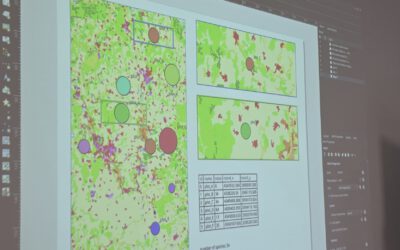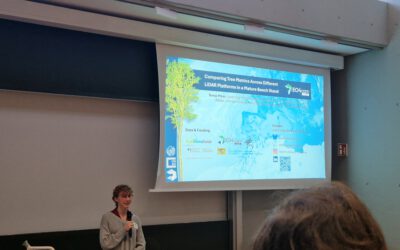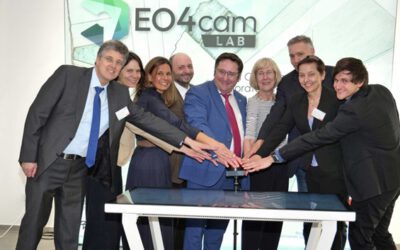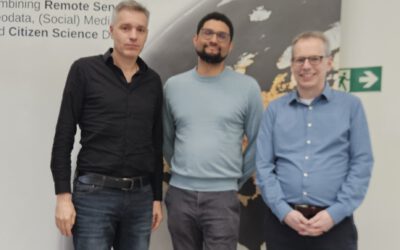
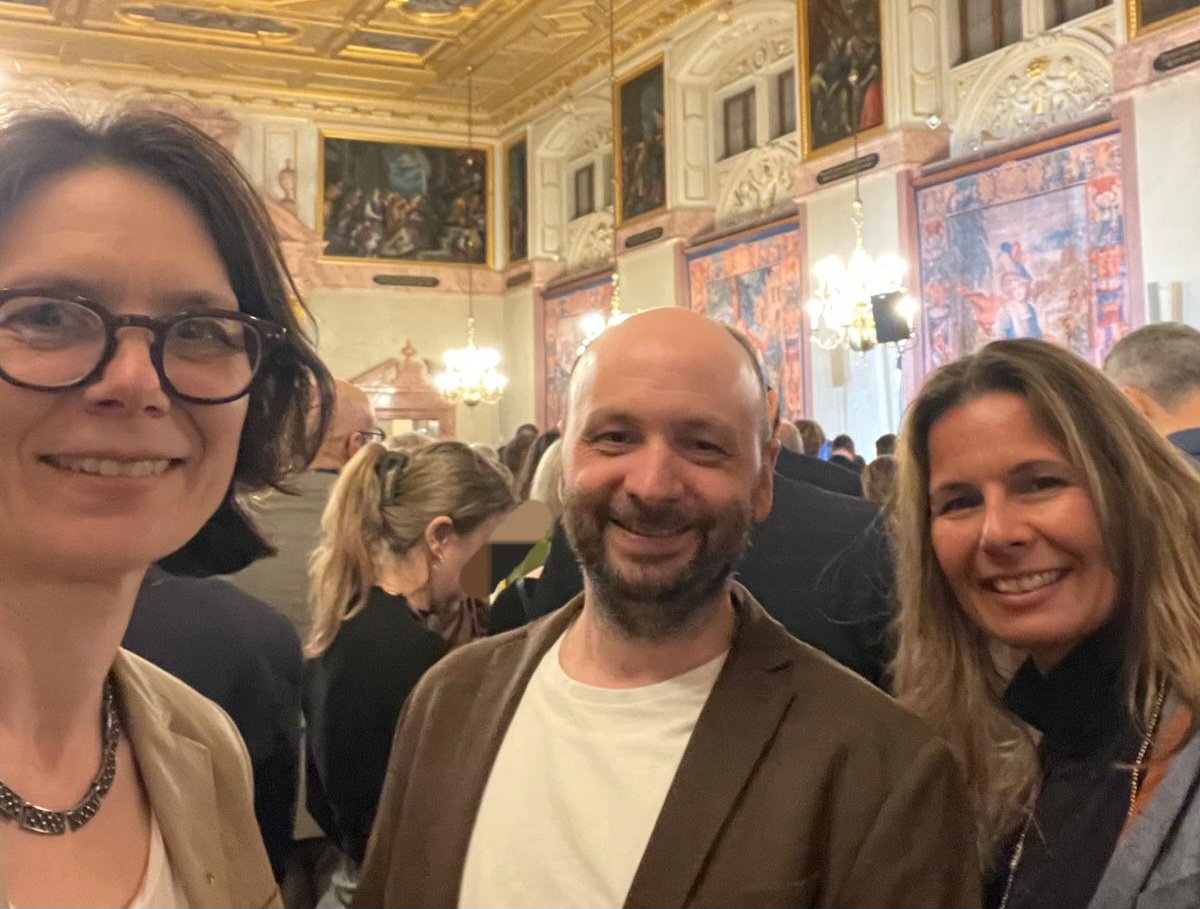

Yesterday, the space tech incl the remote sensing community gathered in the historic halls of Neues Rathaus München for the annual Space Summit Munich – an event that brought together scientists, industry leaders, and policymakers to discuss the future of Earth observation and space-based technologies.
Among the participants was the Earth Observation Research Cluster (EORC), represented by Tobias Ullmann and DLR colleagues and EAGLE lecturer Doris Klein and Tanja Kraus, who joined the summit to exchange ideas, showcase ongoing research, and strengthen collaborations within the European and international remote sensing community.
A Unique Setting for Scientific Exchange
The summit took place in one of Munich’s most iconic venues, providing a fitting backdrop for discussions on cutting-edge space technologies. Beneath the ornate ceilings and surrounded by historical artwork, attendees engaged in conversations ranging from satellite data applications to emerging challenges in climate monitoring.
The event’s format encouraged informal networking, allowing researchers to connect across disciplines and institutions. This environment proved particularly valuable for fostering new partnerships and exploring interdisciplinary approaches to Earth observation.
EORC’s Presence and Contributions
EORC’s participation highlighted its ongoing commitment to advancing remote sensing science. Tobias engaged with fellow researchers and stakeholders on topics including:
- Innovative methods for New space tech sensors for e.g. snow depth estimation or forest conditions
- Integrating in-situ and air-/space-borne observations for improved environmental monitoring
- Addressing key challenges in data harmonization and scalability
These discussions reflect EORC’s broader mission to bridge methodological gaps and contribute to robust, data-driven insights into environmental processes.
Strengthening the Remote Sensing Community
Events like the Space Summit Munich play a crucial role in shaping the future of remote sensing. By bringing together diverse actors—from academia and research institutions to public authorities—the summit facilitates knowledge exchange and helps align research priorities with societal needs.
For EORC, the event was an excellent opportunity to:
- Reconnect with long-standing collaborators
- Establish new contacts within the space and Earth observation sectors
- Gain insights into emerging trends and funding opportunities
Looking Ahead
As the demand for high-quality Earth observation data continues to grow, collaboration across institutions and disciplines becomes increasingly important. EORC remains committed to contributing to this evolving landscape through innovative research and active participation in events like the Space Summit Munich.
We thank the organizers and all participants for an inspiring evening and look forward to continuing the conversations sparked at this year’s summit.