EORC Contributions to the Centenary Atlas of the Geographical Society of Würzburg (with German version below)
Satellite-based Earth observation has become a cornerstone of contemporary geographical research, particularly for analyzing global dynamics, environmental change, and land-use conflicts. This perspective is prominently represented in the “Atlas 100 Years of the Geographical Society of Würzburg 1925–2025“, published to mark the centenary of the Geographical Society of Würzburg (GGW).
The atlas includes three contributions by researchers from the Earth Observation Research Cluster (EORC) at the Institute of Geography and Geology, Julius-Maximilians-University Würzburg. Together, they demonstrate how Earth observation data enable the analysis of spatiotemporal processes across scales – from global urbanization to climate change impacts in remote regions.
“Urban Geography from Space: Dynamics, Dimensions and Forms of Global Urbanization”
(Hannes Taubenböck, Johannes Mast, Henri Debray)
This contribution uses remote sensing data to analyze urban growth patterns worldwide. It highlights differences in urban density, expansion dynamics, and morphological forms, illustrating how satellite-based approaches support comparative global urban research and inform sustainable urban development and resilience strategies.
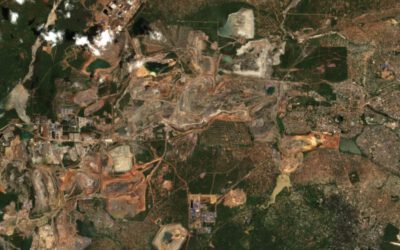
“Protected Areas and Cocoa Cultivation in West Africa”
(Michael Thiel)
Focusing on land-use dynamics, this chapter examines the spatial relationship between cocoa farming and protected areas. Earth observation data reveal patterns of agricultural expansion and potential conflicts with conservation objectives, underlining the value of remote sensing for evidence-based biodiversity and development assessments.
“Impacts of Climate Change in the Western Canadian Arctic”
(Tobias Ullmann, Leon Nill)
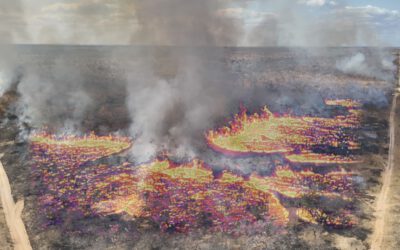
The western Canadian Arctic is among the regions most affected by climate change. Using satellite observations, this contribution documents changes in permafrost, vegetation, and landscape dynamics, emphasizing the crucial role of Earth observation for monitoring remote and environmentally sensitive areas.
The GGW centenary atlas – geography in a spatiotemporal perspective
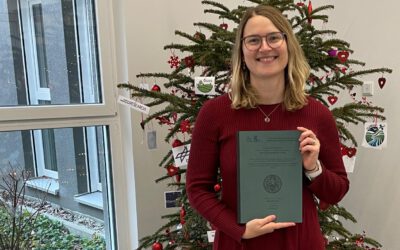
These EORC contributions are embedded in the “Atlas 100 Years of the Geographical Society of Würzburg 1925–2025“, published as Volume 128 of the Würzburger Geographische Arbeiten. The atlas was edited by Hubert Job, Jürgen Kempf, Katrin Lang-Novikov and Eric Losang at the Institute of Geography and Geology in cooperation with the GGW.
The high-quality printed volume comprises 200 pages and features 69 richly illustrated double-page contributions by Würzburg-based geographers and closely associated colleagues. Conceived as a popular-science publication, the atlas invites readers to explore and compare regions and themes, with a strong emphasis on historical spatiotemporal change.
Introductory greetings are provided by Dr Ute Wardenga, President of the German Society for Geography (DGfG), Martin Heilig, Mayor of Würzburg, the President of Julius-Maximilians-University Würzburg, and Prof. Dr Hubert Job, Chair of the GGW.
By combining a century of geographical scholarship with state-of-the-art methods, the centenary atlas highlights the evolving role of geography – and showcases Earth observation as a key approach for addressing global environmental and societal challenges.
EORC-Beiträge im Jubiläumsatlas der Geographischen Gesellschaft Würzburg
Satellitengestützte Erdbeobachtung ist ein zentrales Werkzeug moderner Geographie – insbesondere dort, wo globale Dynamiken, Umweltveränderungen und Nutzungskonflikte analysiert werden. Diese Perspektive spiegelt sich auch im „Atlas 100 Jahre Geographische Gesellschaft Würzburg 1925–2025” wider, der anlässlich des hundertjährigen Bestehens der Geographischen Gesellschaft Würzburg (GGW) erschienen ist.
Gleich drei Beiträge stammen von Kolleginnen und Kollegen des Earth Observation Research Cluster (EORC) am Institut für Geographie und Geologie der Julius-Maximilians-Universität Würzburg JMU). Sie zeigen exemplarisch, wie Erdbeobachtungsdaten helfen, raumzeitliche Entwicklungen sichtbar zu machen – von der globalen Urbanisierung über Landnutzungskonflikte bis hin zu den Folgen des Klimawandels in der Arktis.
„Stadtgeographie aus dem Weltraum: Dynamiken, Dimensionen und Formen der globalen Urbanisierung”
(Hannes Taubenböck, Johannes Mast, Henri Debray)
Der Beitrag analysiert Urbanisierungsprozesse weltweit auf Basis konsistenter Fernerkundungsdaten. Sichtbar werden Unterschiede in Wachstumsdynamiken, Siedlungsdichte und urbanen Formen. Die Arbeit verdeutlicht, wie satellitenbasierte Analysen eine vergleichende, globale Stadtforschung ermöglichen und eine wichtige Grundlage für Fragen nachhaltiger Stadtentwicklung und urbaner Resilienz liefern.
„Schutzgebiete und Kakao-Anbau in Westafrika”
(Michael Thiel)
Am Beispiel des Kakao-Anbaus untersucht dieser Beitrag die räumliche Beziehung zwischen landwirtschaftlicher Expansion und Schutzgebieten. Erdbeobachtungsdaten erlauben es, Nutzungsmuster, Grenzverschiebungen und potenzielle Zielkonflikte systematisch zu erfassen. Der Beitrag macht deutlich, wie Fernerkundung zur evidenzbasierten Bewertung von Biodiversitäts- und Entwicklungsfragen beitragen kann.
„Folgen des Klimawandels in der westlichen kanadischen Arktis”
(Tobias Ullmann, Leon Nill)
Die westliche kanadische Arktis zählt zu den besonders sensiblen Regionen des globalen Klimasystems. Mithilfe satellitengestützter Beobachtungen dokumentiert der Beitrag Veränderungen von Permafrost, Vegetation und Landschaftsstrukturen. Er unterstreicht die zentrale Rolle der Erdbeobachtung für das Monitoring abgelegener Regionen und für das Verständnis klimabedingter Umweltveränderungen.
Der Jubiläumsatlas der GGW – Geographie im Zeitvergleich
Die drei EORC-Beiträge sind Teil des „Atlas 100 Jahre Geographische Gesellschaft Würzburg 1925–2025“, der als Band 128 der Würzburger Geographischen Arbeiten erschienen ist. Herausgegeben wurde der Atlas von Hubert Job, Jürgen Kempf, Katrin Lang-Novikov und Eric Losang am Institut für Geographie und Geologie der JMU in Verbindung mit der GGW.
Der hochwertige Print umfasst 200 Seiten mit 69 zweiseitigen, reich bebilderten Beiträgen Würzburger Geographinnen und Geographen sowie eng verbundener Kolleginnen und Kollegen. Der Atlas versteht sich als populärwissenschaftliche Lektüre, die zum Stöbern und Entdecken einlädt und bewusst auf historische Zeitvergleiche setzt, um raumzeitliche Entwicklungen sichtbar zu machen.
Eingeleitet wird der Atlas durch Grußworte der Präsidentin der Deutschen Gesellschaft für Geographie (Dr. Ute Wardenga), des Oberbürgermeisters der Stadt Würzburg (Martin Heilig), des Präsidenten der JMU Würzburg sowie des Vorsitzenden der GGW (Prof. Dr. Hubert Job).
Mit dem Jubiläumsatlas verbindet die GGW 100 Jahre geographischer Forschung mit aktuellen methodischen Ansätzen – und zeigt, welchen Beitrag insbesondere die Erdbeobachtung zur Analyse globaler Herausforderungen leisten kann.