
EORC participates in the Final Technical Workshop on WRAP 2.0 with WASCAL

EORC participates in the Final Technical Workshop on WRAP 2.0 with WASCAL

October 15, 2024

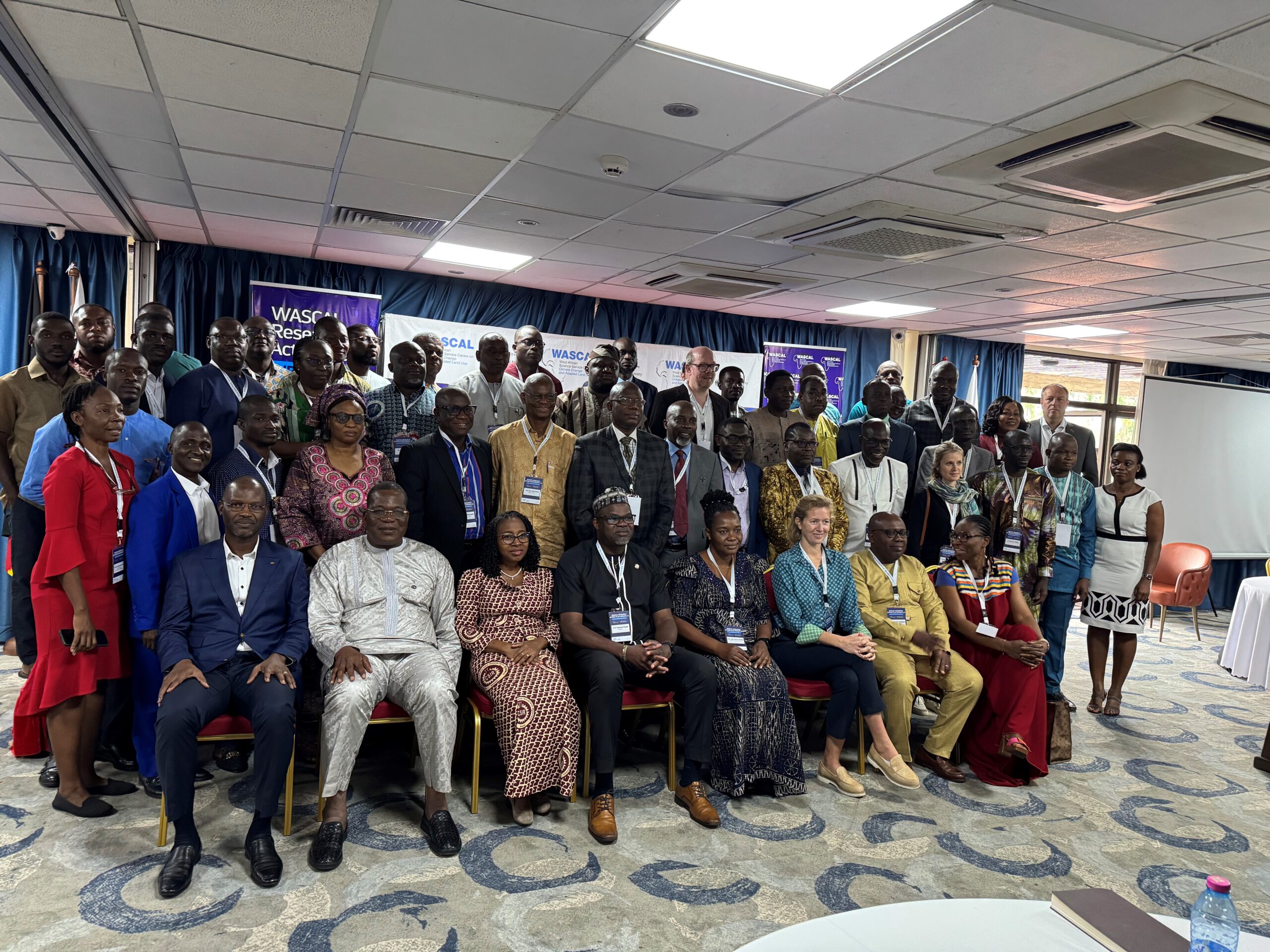
The final technical workshop on WASCAL Reasearch and Action Plan 2.0 is currently taking place in Accra (Ghana). The final results of our MIGARWARE and LANDSURF projects will be presented there by our partners Prof. Heiko Paeth (LANDSURF) from Climatology group at University of Würzburg and Dr. Justice Nana Inkomm (MIGRAWARE) form University of Halle-Wittenberg. Our colleague Dr. Michael Thiel personally takes part in the workshop in Accra. Further information about the workshop can be found on the webside of the funder of the WRAP 2.0 program, the Federal Ministry of Education and Research (short in english, full text in German) and soon on the webpage of WASCAL.

 

you may also like:

MainPro Project Meeting: Next Project Phase Launched

MainPro Project Meeting: Next Project Phase Launched

On Friday, November 21st, a MainPro project meeting was held to exchange ideas with our cooperating small and medium-sized enterprises (SMEs). Within our MainPro project, we aim to identify the changes caused by climate change in the Main Valley and its surroundings...

HABITRACK: New Project for Predicting Vector-Borne Diseases

HABITRACK: New Project for Predicting Vector-Borne Diseases

We are very pleased to announce the successful acquisition of the third-party funded BMFTR project HABITRACK. The proposal was led on the EORC side by Ariane Droin and Hannes Taubenböck, together with strong partners from research, medicine, and public health:...

Visit at the Institute for Geoinformatics (IFGI) at University of Münster

Visit at the Institute for Geoinformatics (IFGI) at University of Münster

Two days ago, our PostDoc Dr. Jakob Schwalb-Willmann visited the Institute for Geoinformatics at University of Münster to give a talk at IFGI’s GI Forum titled “Can animals be used to classify land use? Employing movement-tracked animals as environmental informants using deep learning”.