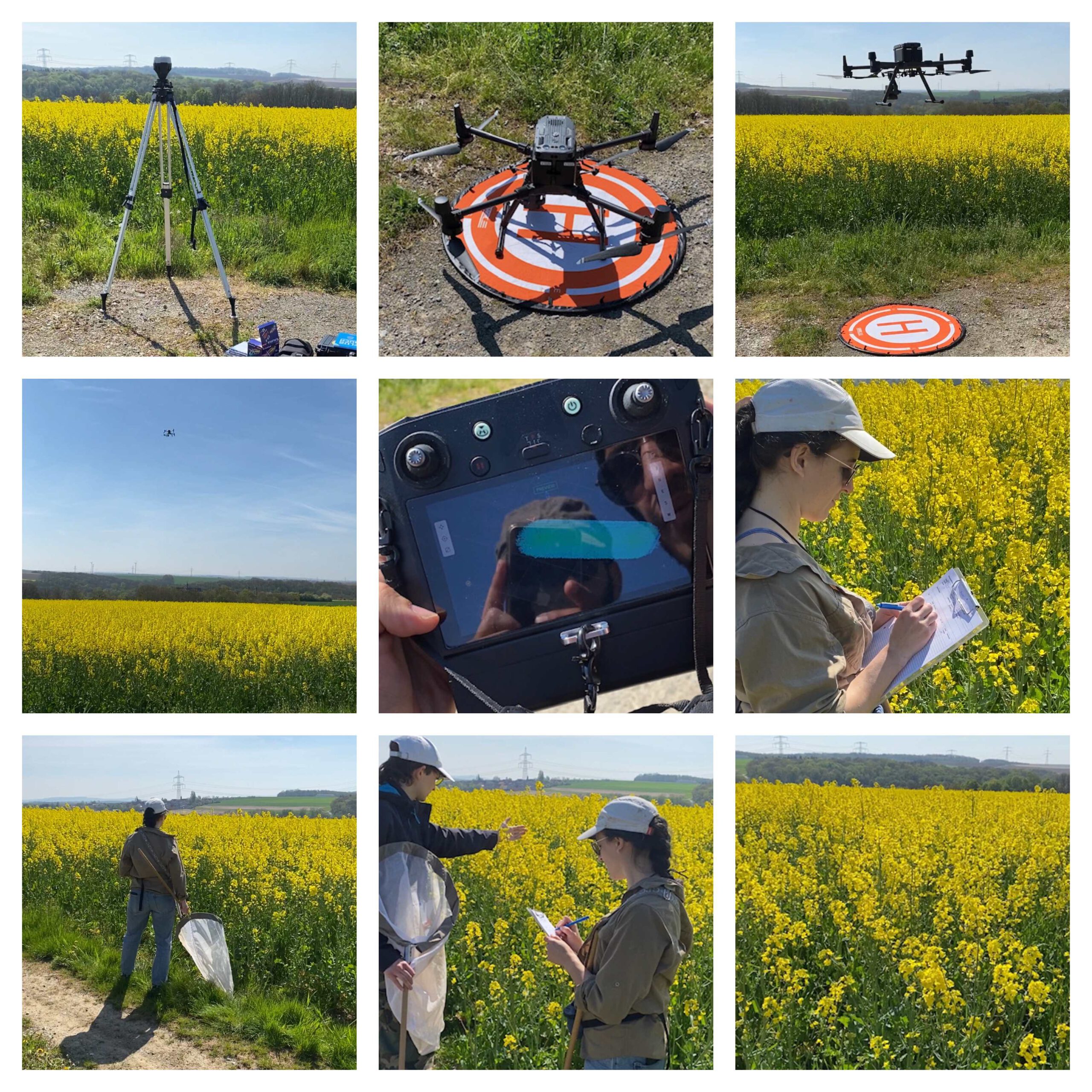

Department of Remote Sensing at the University of Würzburg began our first fieldwork during the stunning oilseed rape flowering season. We are using cutting-edge technology to revolutionise the way we monitor crops.
In collaboration with biologists, our team uses lidar and multispectral drones to calculate crop yields and classify flower covers of oilseed rape. We can make informed decisions about fertilisation, irrigation, and pest control by correlating our results with in-situ measurements of several flowers and pollinators. This research is essential for promoting agricultural sustainability and minimising our impact on the environment.
Join us on this exciting journey towards a more sustainable future for agriculture. We eagerly anticipate sharing our results and promoting open-access principles to ensure our findings reach as many people as possible!
In collaboration with biologists, our team uses lidar and multispectral drones to calculate crop yields and classify flower covers of oilseed rape. We can make informed decisions about fertilisation, irrigation, and pest control by correlating our results with in-situ measurements of several flowers and pollinators. This research is essential for promoting agricultural sustainability and minimising our impact on the environment.
Join us on this exciting journey towards a more sustainable future for agriculture. We eagerly anticipate sharing our results and promoting open-access principles to ensure our findings reach as many people as possible!