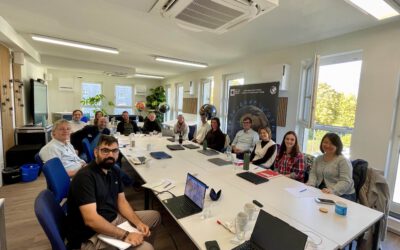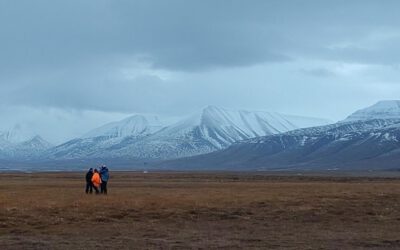
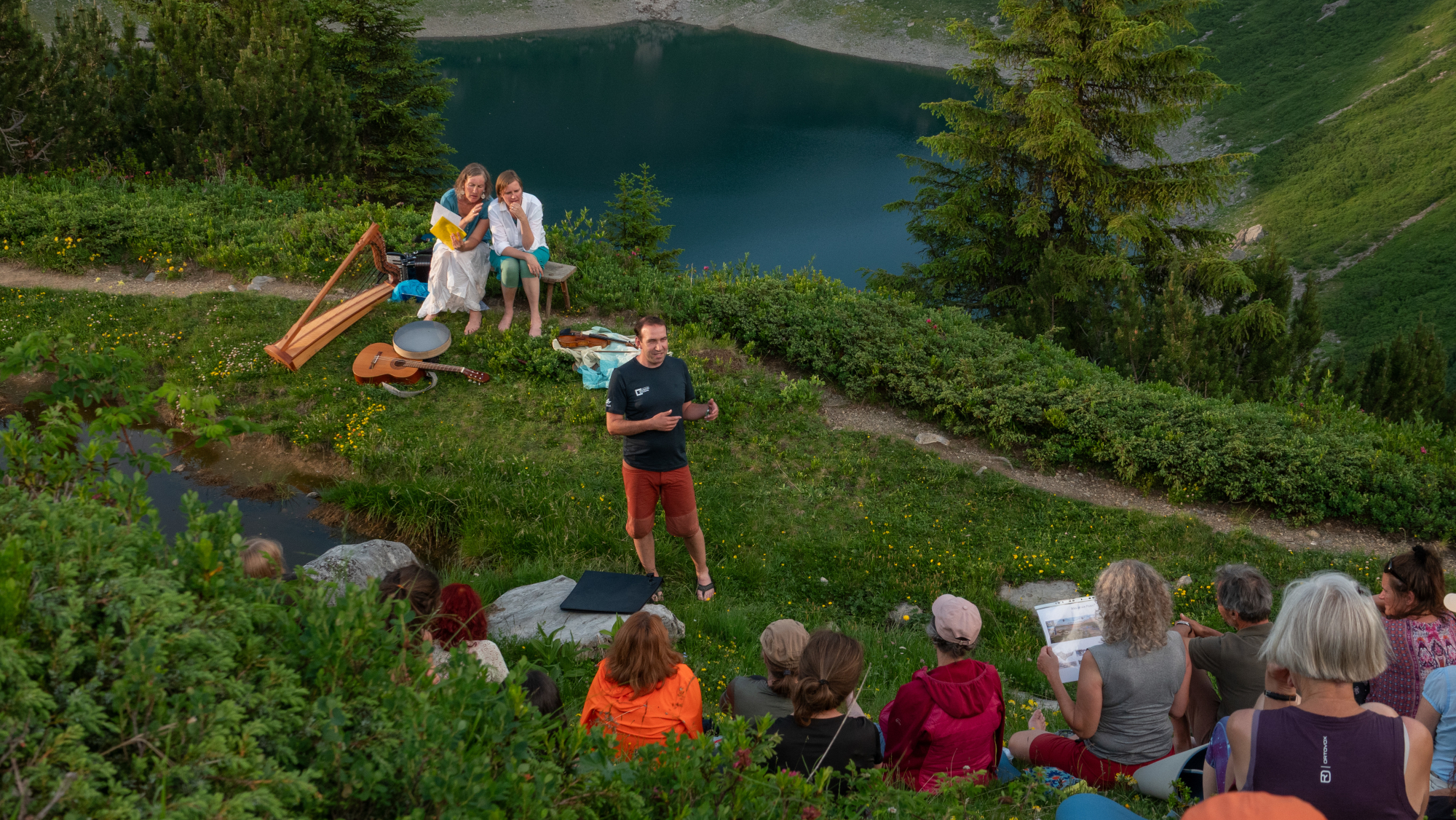

Last weekend, EORC PI Florian Betz has partipated in an excursion to the source of the Lech River in the Austrian Alps, where a mixed group of mucisians, river activists and people interested in music, water or both came together to explore how music can contribute to rethinking and strengthening human relationships with rivers. The excursion was closely connected to Flow, a collaborative arts–science project with Cities and Memory, the University of Padova and the University of Würzburg, which tells the story of the Lech through sound, field recordings, satellite imagery and artistic interpretation.
In Flow, the Lech is followed from its alpine source to its confluence with the Danube. Along this course, artists reimagine the river’s landscapes, histories and transformations through sound. Standing at the Formarinsee therefore offered a particularly meaningful starting point: the place where the river begins, and where questions of flow, movement, memory and human connection become tangible in the landscape.
As part of the excursion, Florian Betz shared insights from his research dedicated to better understand how rivers work and why their natural dynamics are crucial for biodiversity and the provision of ecosystem services. Rivers are not static lines in the landscape, but evolving systems shaped by water, sediment, disturbance and time. From its source area, the Lech develops into a dynamic river corridor in which erosion, deposition, channel change and floodplain succession create a mosaic of habitats. This spatial and temporal complexity is a key driver of ecological richness.
These themes also connect directly to current research at EORC, where we study riverscapes using the latest approaches of satellite time series analysis to better understand how hydrological dynamics, geomorphological processes and vegetation patterns interact. The Lech serves as an important example of how river corridors can be observed across scales — from field-based impressions and local soundscapes to satellite-based analyses of long-term landscape change.
The event at the Formarinsee highlighted how scientific and artistic perspectives can complement one another. While remote sensing and river science help reveal patterns, processes and changes that are often difficult to see from the ground, music can make the rhythms, uncertainties and emotional dimensions of rivers perceptible in another way. Bringing together both perspectives opens new spaces for communicating river research and for asking what a more attentive and respectful relationship with rivers might sound like.